
Business
JUST-IN : Foreign Direct Investment FDI, Drops 80% As Investors Favour Bonds

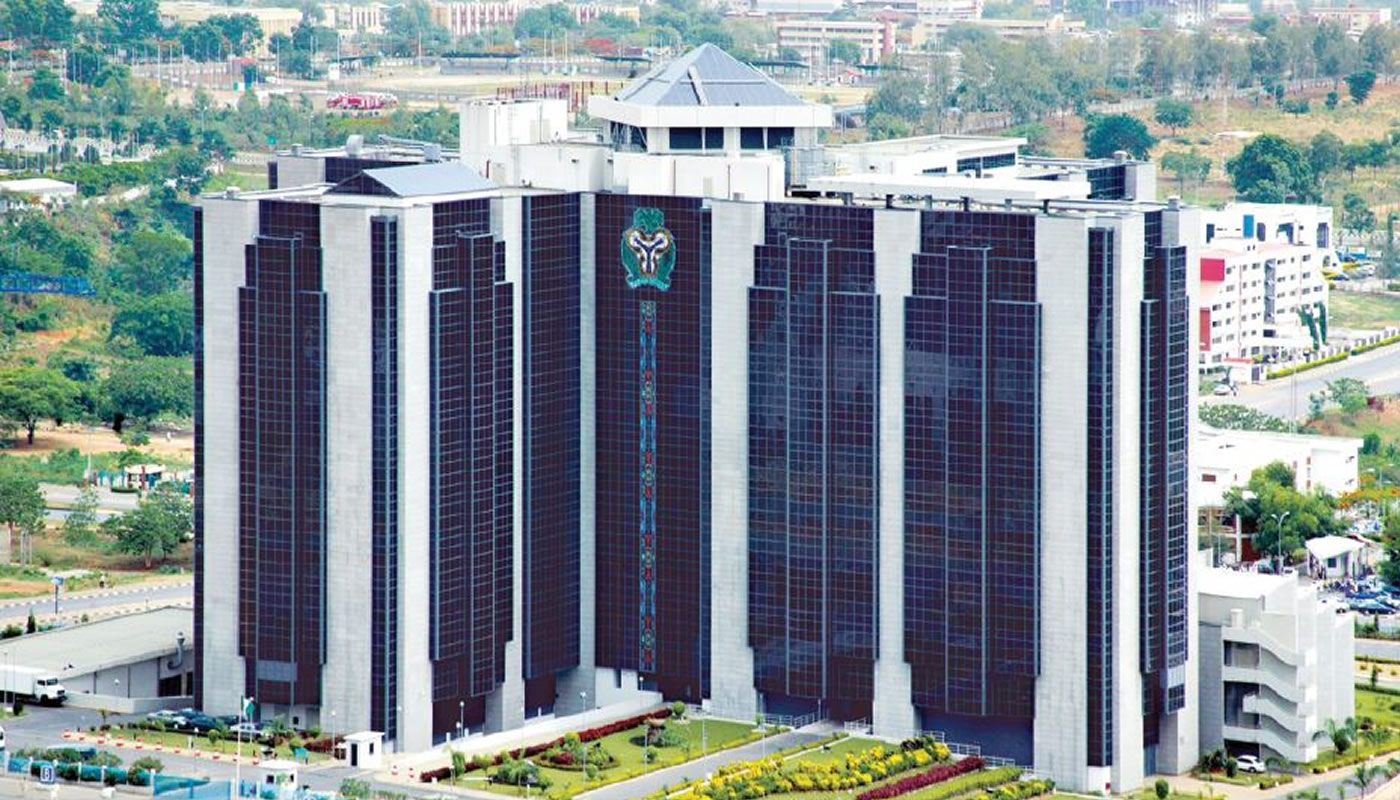
Foreign direct investment into Nigeria plunged by 80 per cent in January 2026 as foreign investors increasingly channelled funds into bonds and money market instruments, despite a sharp rise in overall capital inflows, the latest Economic Report of the Central Bank of Nigeria has shown.
The report revealed that FDI fell to $30m in January from $150m in December 2025, while foreign portfolio investment surged to $3.37bn from $940m over the same period, showing investors’ preference for debt assets over long-term productive investments.
According to the CBN, “Direct investment fell by 80.0 per cent to $0.03 billion in the review period.” The apex bank, however, noted that total capital inflow into the economy rose significantly during the month.
“The economy recorded a higher inflow of capital during the review period, driven mainly by the significant increase in portfolio investment inflow,” the report stated.
Overall capital importation climbed to $3.52bn in January 2026, compared with $1.25bn recorded in December 2025, largely on the back of increased foreign participation in the domestic fixed-income market.
The report stated that foreign portfolio investment accounted for $3.37bn of the total inflow. “A disaggregation showed that inflow of foreign portfolio investment amounted to $3.37 billion, a surge from the $0.94 billion in December 2025, due to significantly higher inflows for the purchase of bonds and money market instruments,” the CBN said.
Further analysis showed that portfolio investment accounted for 95.72 per cent of total capital inflows during the review period, while direct investment contributed only 0.77 per cent.
Other investment, consisting mainly of loans, accounted for 3.51 per cent of total inflows and declined to $120m from $160m in the preceding month.
The figures suggest that while foreign investors are returning to Nigeria’s financial markets, particularly attracted by high yields on fixed-income securities, appetite for long-term investments in factories, infrastructure, and other productive ventures remains subdued.
Sectoral analysis in the report showed that the banking industry was the biggest beneficiary of foreign capital inflows, attracting 75.15 per cent of the total funds imported into the economy in January.
Related News
Tinubu’s weight-loss programme three years later
Personal loans hit N1.96tn as consumer credit grows
Women dairy farmers key to food security, livestock growth – FG
Financing activities accounted for 22.20 per cent of total inflows, while production and manufacturing received just 1.16 per cent. Investments in shares accounted for 0.76 per cent, with trading and other sectors making up the balance.
The development came amid improved performance in Nigeria’s external sector. The CBN reported that the country recorded a stronger trade position during the review period, supported by higher export earnings and sustained capital inflows.
External reserves rose to $48.88bn in January 2026, providing import cover of 8.93 months for goods and services. The naira also appreciated by 2.43 per cent at the Nigerian Foreign Exchange Market to N1,416.52/$ from the level recorded in the preceding month.
The report suggests that although macroeconomic conditions and foreign exchange stability have encouraged increased foreign participation in Nigeria’s financial markets, investors continue to favour liquid debt instruments over long-term commitments in the real sector of the economy.
President Bola Tinubu earlier said Nigeria is on course to attract close to $20bn in foreign direct investment in 2026 alone. He attributed the figure to his administration’s systematic removal of regulatory bottlenecks, macroeconomic stabilisation, and transparency reforms.
Tinubu said, “Removing all the bottlenecks gives you the necessary incentives for direct foreign investment into the country. This year alone, I can beat my chest that Nigeria is attracting close to $20bn in foreign direct investments.”
The PUNCH earlier reported that foreign direct investment accounted for less than four per cent of total capital imported into Nigeria in 2025, despite a significant increase in overall foreign inflows.
Data from the National Bureau of Statistics indicated that total capital importation rose to $23.22bn in 2025 from $12.32bn recorded in 2024, reflecting a strong rise in foreign inflows during the year. However, FDI contributed only $923.01m, representing 3.97 per cent of the total.
This compares with $674.71m recorded in 2024, when FDI accounted for 5.48 per cent of total inflows, showing that although FDI grew by $248.30m year on year, its share declined as other investment categories expanded at a faster pace.

DETAILS:
2008 TOYOTA CAMRY;
AUTOMATIC;
READY FOR A DRIVE HOME
PRICE: 7MILLION NAIRA ONLY
AVAILABLE FOR INSPECTION AT ALAGBAKA, AKURE
CALL OR WHATSAPP US ON: 07058116666, 09011000444. for other properties such as lands, houses etc.
EMAIL: karisworthy@gmail.com

DETAILS:
USED 2008 TOYOTA CAMRY;
AUTOMATIC;
READY FOR A DRIVE HOME
PRICE: 7MILLION NAIRA ONLY
AVAILABLE FOR INSPECTION AT ALAGBAKA, AKURE
CALL OR WHATSAPP US ON: 07058116666, 09011000444. for other properties such as lands, houses etc.
EMAIL: karisworthy@gmail.com
-

 Breaking News11 months ago
Niger Delta Group hails Tinubu, NUPRC for ₦373bn host community fund and 536 life-changing projects
-

 Breaking News10 months ago
Ex-EFCC Exhibit Keeper Kaduna Zonal Directorate, Allegedly Steals ₦22m
-

 Breaking News9 months ago
Terrorists Want ₦2m ‘levy’ in Katsina Community Despite Peaceful Agreement
-

 Business4 months ago
BREAKING NEWS: Zenith Bank Rewards Investors with ₦410.69bn Dividend at AGM
-

 Breaking News8 months ago
Breaking News: Nigerian Air Force Reportedly Kills 750 Terrorists in Borno State
-

 Business11 months ago
House of Representatives probes $35m modular refinery project
-

 Breaking News4 months ago
Plaintiff To Pay ₦1m Fines For Delay In Jonathan Eligibility Suit
-

 Breaking News4 months ago
DEFAMATION OF CHARACTER: SERAP On Appeal Against The ₦100m Judgment In Favour of DSS Officials