
Breaking News
DEFAMATION OF CHARACTER: SERAP On Appeal Against The ₦100m Judgment In Favour of DSS Officials

The Socio-Economic Rights and Accountability Project has filed an appeal against the ₦100 million defamation judgment delivered against it by the Federal Capital Territory High Court in Abuja in favour of officials of the Department of State Services.
In a statement issued on Tuesday by SERAP Deputy Director, Kolawole Oluwadare, the organisation described the judgment delivered on May 5, 2026, by Justice Yusuf Halilu as “a travesty and a miscarriage of justice.”
According to SERAP, the appeal was filed on Friday, May 8, 2026, by senior advocate Tayo Oyetibo, alongside an application seeking a stay of execution pending the determination of the appeal.
SERAP stated, “The Notice of Appeal already filed will be amended upon receipt of the Certified True Copy of the judgment to incorporate key portions of the judgment that further highlight its flawed nature.”
The organisation added that the appeal and accompanying application for stay of execution provide “adequate legal protection” pending further proceedings.
Justice Halilu had ordered SERAP to pay ₦100 million in damages to DSS officials, Sarah John and Gabriel Ogundele, over publications made on SERAP’s X handle alleging that DSS operatives unlawfully occupied its Abuja office in September 2024.
The court also ordered the organisation to publish apologies on its website, in newspapers, and on television stations, in addition to paying ₦1 million litigation costs and 10 per cent annual post-judgment interest until full payment.
In its appeal, SERAP argued that the judgment was “legally defective, procedurally flawed, and unsupported by evidence.”
“The decision rests on fundamental legal and evidential errors that go to the root of jurisdiction and fairness in adjudication. The court’s decision is therefore perverse and a nullity,” SERAP stated.
The organisation further argued that the trial court relied on defective evidence, including a witness statement that it claimed was not sworn before a Commissioner for Oaths.
“The lower court erred in law by relying on the witness statement on oath of the 1st Respondent when the 1st Respondent admitted under cross-examination that the said statement was not sworn before a Commissioner for Oaths,” it said.
SERAP also challenged the court’s finding on defamation, arguing that the publications did not directly identify the DSS officials personally.
“The publications complained of did not mention the Respondents by name, rank, photograph, or any unique identifier,” the appeal read.
The organisation maintained that the trial court wrongly relied on the subjective perception of DSS personnel instead of applying the objective legal test required in defamation cases.
Related News
SERAP also argued that the lower court failed to uphold its defences of justification, qualified privilege, and fair comment.
“There was also evidence that the publications were made by SERAP on an occasion of qualified privilege to inform the public about actions of state security agencies that reasonably appear intrusive and intimidating,” it stated.
The organisation further claimed that the DSS officials failed to prove actual reputational or financial harm resulting from the publication.
“The Respondents did not adduce evidence of any suspension, investigation, disciplinary proceedings, or professional setback allegedly caused by the publications,” SERAP argued.
In its application for stay of execution, SERAP warned that enforcing the judgment could cripple its operations and disrupt ongoing human rights advocacy and accountability programmes.
“The effect of the decision of the Court is that the operations of SERAP, Nigeria’s foremost accountability non-profit organisation committed to the promotion of human rights, rule of law, transparency, and accountability in governance, will be severely disrupted, if not entirely shut down,” the organisation stated.
It added, “Thousands of individuals and communities depend on SERAP’s work, including victims of human rights violations and beneficiaries of its advocacy, investigations, and legal interventions.”
SERAP also argued that immediate enforcement of the judgment would affect its constitutional right to pursue an appeal.
“The enforcement of the judgment would deprive SERAP of its constitutional right of appeal, as it would be unable to adequately finance the prosecution of its appeal to the Court of Appeal,” it said.
The case originated from a suit filed by the DSS officials following posts published by SERAP on September 9, 2024, alleging that DSS officers unlawfully occupied its office and harassed its staff.
In his judgment, Justice Halilu held that the publication was defamatory and had psychologically affected the claimants.
“It is most necessary for care and due diligence to be taken by SERAP before tweeting or releasing any particular information with respect to the action of an agency of government for public consumption,” the judge had ruled.
Although the claimants initially sought ₦5 billion in damages, the court awarded ₦100 million instead, describing it as “a paltry sum.”

DETAILS:
2008 TOYOTA CAMRY;
AUTOMATIC;
READY FOR A DRIVE HOME
PRICE: 7MILLION NAIRA ONLY
AVAILABLE FOR INSPECTION AT ALAGBAKA, AKURE
CALL OR WHATSAPP US ON: 07058116666, 09011000444. for other properties such as lands, houses etc.
EMAIL: karisworthy@gmail.com
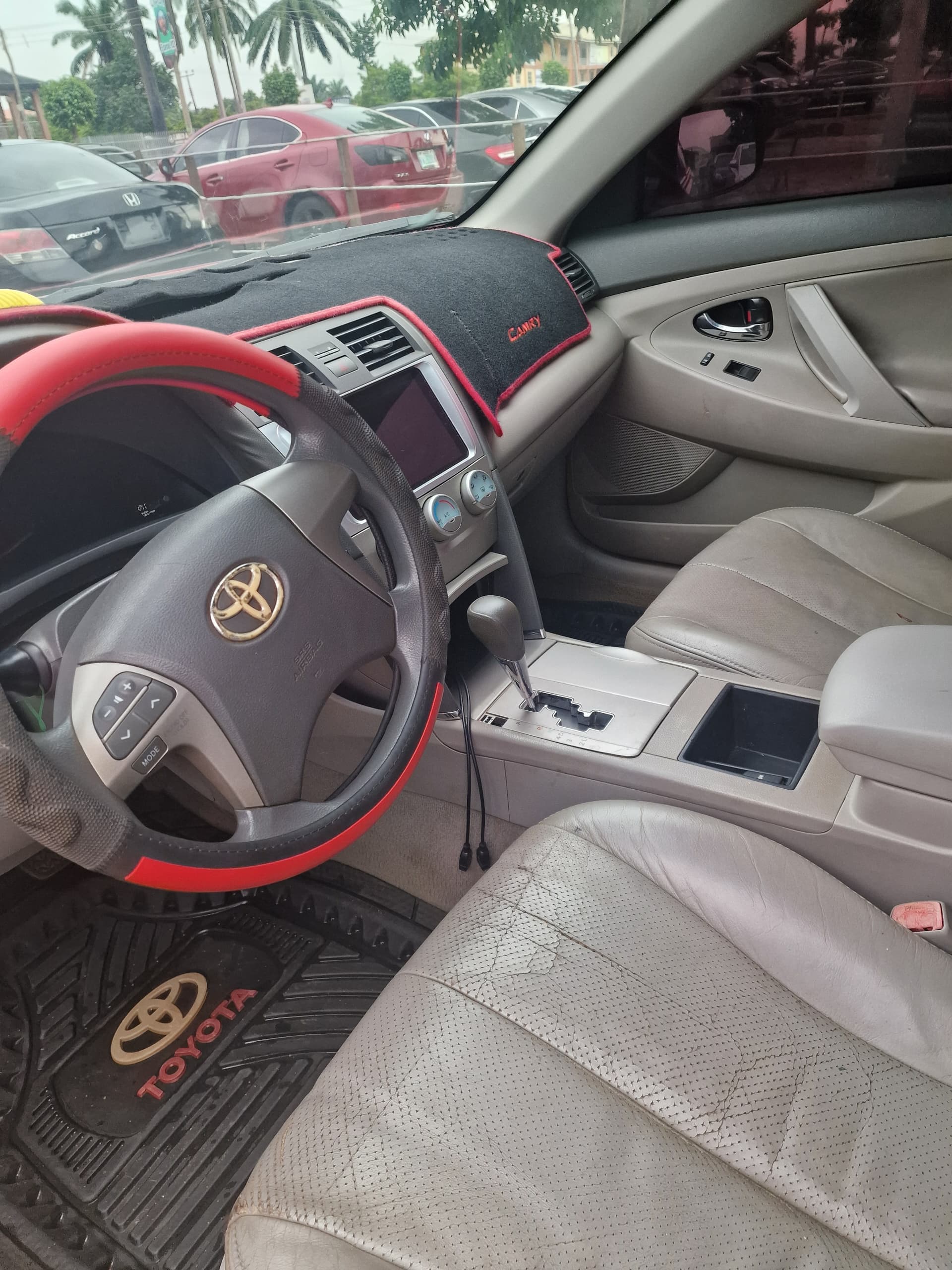
DETAILS:
USED 2008 TOYOTA CAMRY;
AUTOMATIC;
READY FOR A DRIVE HOME
PRICE: 7MILLION NAIRA ONLY
AVAILABLE FOR INSPECTION AT ALAGBAKA, AKURE
CALL OR WHATSAPP US ON: 07058116666, 09011000444. for other properties such as lands, houses etc.
EMAIL: karisworthy@gmail.com
-

 Breaking News11 months ago
Niger Delta Group hails Tinubu, NUPRC for ₦373bn host community fund and 536 life-changing projects
-

 Breaking News10 months ago
Ex-EFCC Exhibit Keeper Kaduna Zonal Directorate, Allegedly Steals ₦22m
-

 Breaking News9 months ago
Terrorists Want ₦2m ‘levy’ in Katsina Community Despite Peaceful Agreement
-

 Breaking News8 months ago
Breaking News: Nigerian Air Force Reportedly Kills 750 Terrorists in Borno State
-

 Business11 months ago
House of Representatives probes $35m modular refinery project
-

 Business4 months ago
BREAKING NEWS: Zenith Bank Rewards Investors with ₦410.69bn Dividend at AGM
-

 Breaking News4 months ago
Plaintiff To Pay ₦1m Fines For Delay In Jonathan Eligibility Suit
-

 Breaking News10 months ago
UCL: Osimhen Statement after Galatasaray’s 3-1 Win over Bodo/Glimt