
Breaking News
International Lawyers Move to Overturn Kanu’s Life Sentence Through Global Legal Action

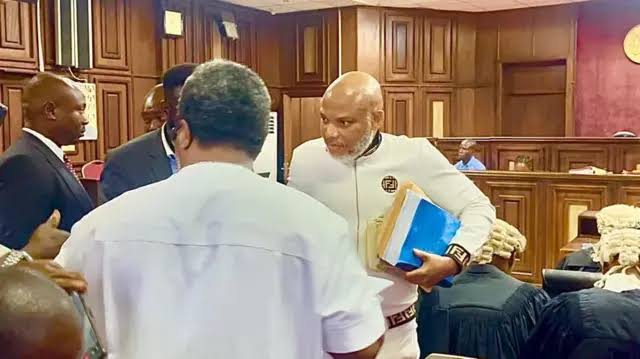
International legal efforts are now being mobilised to challenge the life sentence handed to the leader of the Indigenous People of Biafra (IPOB), Mazi Nnamdi Kanu.
His legal team says lawyers across different countries are working together to overturn the conviction through coordinated global legal action.
According to the defence, the judgment that sentenced Kanu to life imprisonment is deeply flawed.
They insist the decision is riddled with constitutional and jurisdictional defects that make it legally unsustainable under Nigerian law.
In a detailed legal brief prepared by one of Kanu’s lawyers, Njoku Jude Njoku Esq, the team argued that the Federal High Court lacked the authority to convict Kanu under the Terrorism Prevention (Amendment) Act 2013.
The lawyers said the law had already been repealed before judgment was delivered and replaced by the Terrorism Prevention and Prohibition Act 2022.
They relied on Section 36(12) of the 1999 Constitution, which states that no person can be convicted for an offence that is not defined by a law in force at the time of trial and conviction. The defence argued that convicting Kanu under a repealed law amounts to a clear violation of his constitutional rights.
The lawyers also referenced Section 122 of the Evidence Act and the Supreme Court ruling in NNPC v. Fawehinmi. They maintained that courts are required to take judicial notice of repealed statutes and that failure to do so strips the court of jurisdiction.
They further claimed that Justice Omotosho had earlier acknowledged on record that a conviction based on a repealed law would be unlawful. According to them, the court later reversed this position in the final judgment, an action they described as judicial estoppel, citing Ogoejeofo v. Ogoejeofo.
The defence described the process as a “constitutional ambush,” stressing that Kanu was unrepresented at the time the alleged reversal occurred. They argued that this denied him fair hearing and due process.
On jurisdiction, the lawyers faulted the court for postponing the determination of jurisdictional objections until judgment. They said this approach runs contrary to the principle established in Madukolu v. Nkemdilim, which holds that jurisdiction must be settled before a court takes any further step.
According to the defence, proceeding with the trial without first resolving jurisdictional issues rendered every subsequent action a nullity in law.
They also criticised the court’s reliance on a savings clause to justify prosecution under a repealed statute. The lawyers argued that “savings clauses are intended only to manage lawful transition, not to preserve extinguished laws.”
They further stated that “the judgment improperly blended provisions of repealed and extant terrorism statutes,creating what they described as “a fictional hybrid law unknown to Nigerian criminal jurisprudence.”
Addressing the substance of the charges, the defence argued that the alleged “offences were based on broadcasts made from the United Kingdom.” They insisted that Nigerian criminal jurisdiction is territorial unless clearly extended by statute.
According to them, the prosecution failed to establish the legal basis for extraterritorial jurisdiction. They said this includes the failure to prove double criminality under UK law, as required by the Terrorism Prevention and Prohibition Act.
They also noted that “no evidence was led to show that the alleged broadcasts were received, heard or acted upon in Nigeria.”
On Kanu’s arrest, the lawyers reiterated that “he was abducted from Kenya rather than lawfully extradited.” They stressed that “no extradition request was made, no Kenyan court authorised his transfer,” and added that “Kenyan courts have since declared the rendition illegal.”
The defence maintained that “Nigerian courts cannot derive jurisdiction from an unlawful arrest or benefit from executive illegality.” They cited the African Charter on Human and Peoples’ Rights and the Supreme Court decision in Abacha v. Fawehinmi to support their position.
They further argued that “reliance on the doctrine of male captus bene detentus could not cure” what they described as “fundamental statutory and constitutional violations.”
According to them, Nigerian law clearly prescribes extradition procedures and does not permit abduction.
The legal team disclosed that “Lawyers in several countries are now reviewing the case with a view to challenging the conviction through domestic appeals, constitutional actions and international legal mechanisms.”
They concluded that the combined weight of the alleged errors, including prosecution under a repealed law, failure to resolve jurisdiction, defects in extraterritorial claims and illegal rendition, makes the conviction unsafe.
“The only lawful outcome, in our view, is the discharge and acquittal of Mazi Nnamdi Kanu,” the defence stated.
Breaking News
Breaking: Nigerian Workers Demand N300,000 Minimum Wage, FG Faces Fresh Salary Pressure
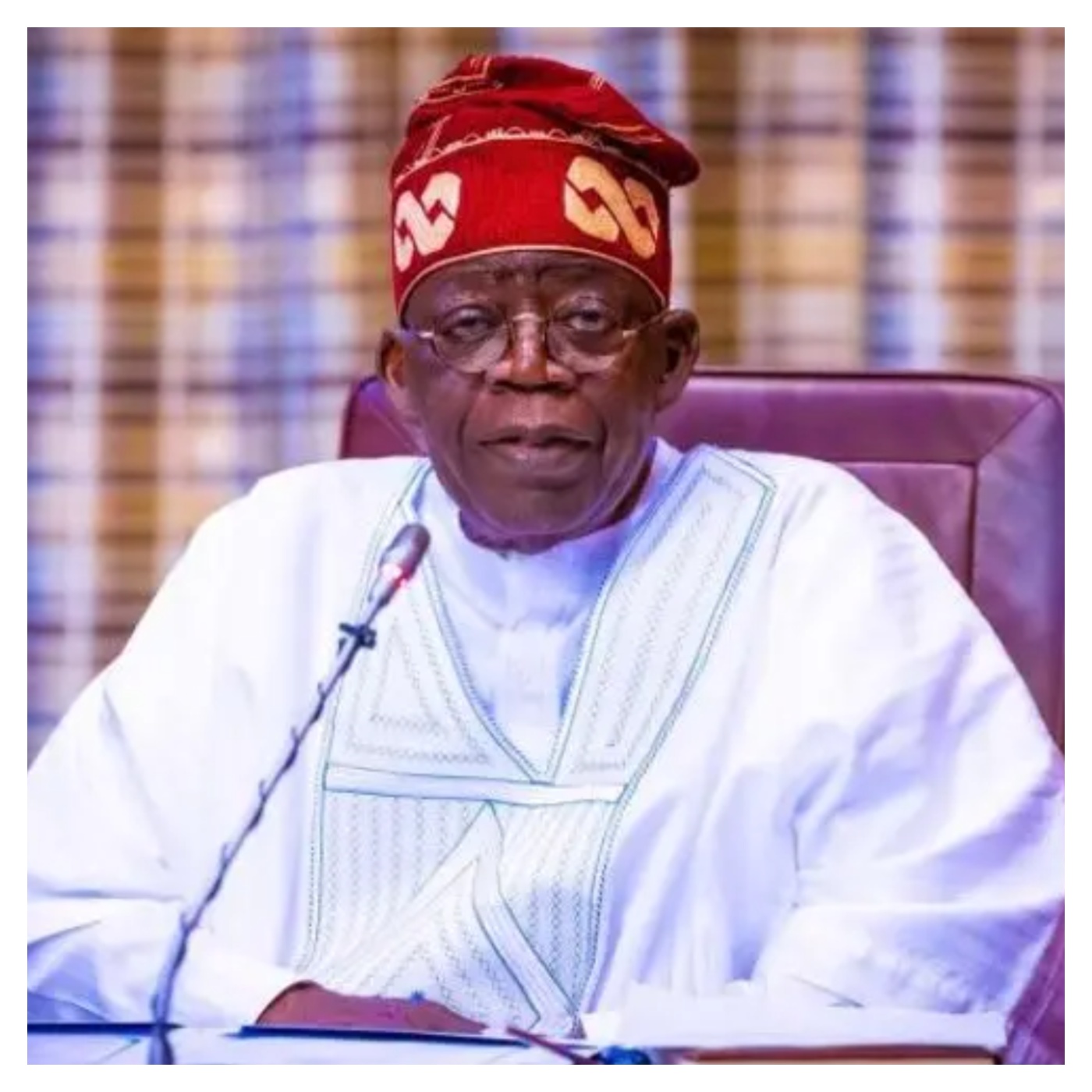
The Federal Workers Forum, FWF, has demanded an immediate increase in the federal minimum wage from N70,000 to N300,000, noting that the current salary structure can no longer sustain civil servants amid Nigeria’s rising cost of living.
The Forum made the demand in a letter dated September 2, 2026, addressed to President Bola Ahmed Tinubu and the National Assembly, with the Senate President, Speaker of the House of Representatives, Chief Justice of Nigeria and Head of the Civil Service of the Federation listed among the recipients.
The workers also proposed a new salary structure that would place the highest-paid Level 17 officer on a monthly salary of N1.5 million, while Level 1 Step 1 workers would earn N300,000.
“We call for justice and immediate wage review now, adjust the federal minimum wage to N300,000 and a maximum wage of N1.5m for the Level 17 officers,” the Forum said.
Recommended
The FWF argued that the Federal Government had not fully implemented the 2024 minimum wage agreement, claiming that federal workers had yet to receive the full consequential adjustment and associated allowances.
“It will surprise you to hear that the Federal Government has not fully implemented the new national minimum wage since July 2024. We have been in the battle for full consequential adjustment of the new minimum wage,” it said.
Recall that the Nigeria Labour Congress, NLC, in August 2026, demanded an upward review of the minimum wage to N500,000.
In July 2024, President Bola Tinubu’s government increased the minimum wage to N70,000 per month from N30,000.
However, the cost of living for many Nigerians has tripled between 2024 and 2026.
You may like

The Federal Government has said Nigeria will never support a military coup or any unconstitutional change of government, following claims that the country backed a failed coup attempt in the Niger Republic.
The Minister of State for Foreign Affairs, Sola Enikanolaiye, made this known in a statement issued on Thursday.
According to the statement, the claims circulating on social media are baseless and misleading.
Enikanolaiye said Nigeria remained committed to democracy, constitutional rule and political stability in West Africa and would not support any attempt to remove a government through unconstitutional means.
Recommended
“Nigeria will never support illegality or unconstitutional change of government anywhere, no matter who is involved or which country is concerned,” he said.
The minister also rejected claims that Nigeria, through its membership of the Economic Community of West African States (ECOWAS), supported or endorsed the military takeover in Niger.
He said the Federal Government had already stated its position on the situation in Niger in an earlier statement issued by the Ministry of Foreign Affairs on August 30, 2026.
According to him, Nigeria remains deeply concerned about developments in Niger and wants the country to return peacefully to stability and constitutional order.
Enikanolaiye said Nigeria’s close historical, cultural and fraternal ties with Niger made peace and stability in the neighbouring country particularly important.
“Nigerians at home and abroad should disregard the videos and narratives circulating online, they are intended to create confusion and tarnish Nigeria’s image,” the statement said.
You may like
-

 Breaking News11 months ago
Niger Delta Group hails Tinubu, NUPRC for ₦373bn host community fund and 536 life-changing projects
-

 Breaking News10 months ago
Ex-EFCC Exhibit Keeper Kaduna Zonal Directorate, Allegedly Steals ₦22m
-

 Breaking News9 months ago
Terrorists Want ₦2m ‘levy’ in Katsina Community Despite Peaceful Agreement
-

 Business4 months ago
BREAKING NEWS: Zenith Bank Rewards Investors with ₦410.69bn Dividend at AGM
-

 Breaking News9 months ago
Breaking News: Nigerian Air Force Reportedly Kills 750 Terrorists in Borno State
-

 Breaking News4 months ago
Plaintiff To Pay ₦1m Fines For Delay In Jonathan Eligibility Suit
-

 Business11 months ago
House of Representatives probes $35m modular refinery project
-

 Breaking News4 months ago
DEFAMATION OF CHARACTER: SERAP On Appeal Against The ₦100m Judgment In Favour of DSS Officials