
Breaking News
BREAKING NEWS: FH Court Adjourns Sylva Asset Forfeiture Matter To July 16

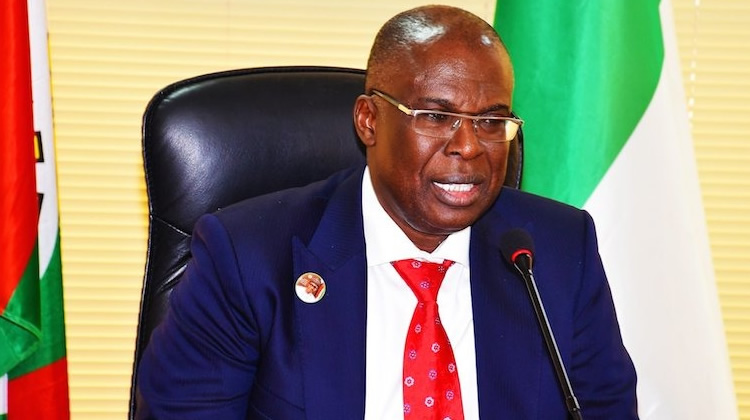
The Federal High Court sitting in Abuja on Monday adjourned further proceedings in the forfeiture suit instituted by the Economic and Financial Crimes Commission against nine properties linked to former Bayelsa State Governor, Timipre Sylva, until July 16.
The trial judge, Justice Obiora Egwuatu, fixed the date following counsel to the EFCC, Oluwaleke Atolagbe’s, inability to file a report of compliance with the interim forfeiture order earlier granted by the court.
Justice Egwuatu had, on April 24, ordered the interim forfeiture of the nine properties to the Federal Government after Atolagbe moved an ex parte motion marked FHC/ABJ/CS/607/2026.
The properties are said to be linked to Sylva, who also served as Minister of State for Petroleum Resources.
In granting the interim order, the court also approved the EFCC’s request for the publication of the order in two national newspapers within seven days of receiving the certified true copy of the ruling, directing interested persons to show cause within 14 days why the assets should not be permanently forfeited to the Federal Government.
The properties, located in choice areas of Abuja, include residential and commercial buildings spread across Maitama, Wuse II, Garki, Mpape and Dakibiyu.
The matter had earlier been adjourned to May 25 for a compliance report.
At the resumed sitting on Monday, Benson Ibezim appeared for parties connected to properties listed as numbers one and nine in the EFCC’s schedule.
The properties comprise four blocks of terraces located at Dakibiyu and two blocks of buildings in Garki, currently occupied by the National Information Technology Development Agency.
Alex Ejiesieme (SAN), represented parties seeking to show cause in respect of properties listed as numbers two and five in the schedule.
The properties include a duplex with a penthouse and an office complex in Maitama, as well as eight one-bedroom flats at No. 8 Misratah Street, Wuse II, Abuja.
Ajayi Olowo appeared for the property listed as number seven in the schedule, described as two blocks containing 12 units of flats located at Thaba Tseka Crescent, Wuse II.
Related News
Democracy has come to stay, Atiku hails ADC primaries
Atiku votes in Adamawa, says ADC primary step to recover Nigeria
Prioritise security over election wins, Archbishop urges politicians
Emmanuela Imonikeh, on the other hand, represented parties connected to the third property listed as “one standalone duplex at Palm Springs Estate, Mpape.”
During proceedings, Atolagbe informed the court that approximately six parties had already filed affidavits to show cause in respect of some of the properties.
He, however, noted that no individual or entity had indicated interest in the remaining three properties listed in the schedule.
The unclaimed properties are listed as numbers 4, 6 and 8. They include a 10-unit block of flats located in Wuse Zone 4; a six-unit block of flats at No. 1, Mubi Close; and a standalone duplex situated at No. 18, Nile Lake, Plot 1271, Maitama.
The EFCC lawyer further disclosed that the commission had filed a motion on notice on May 22 seeking a final forfeiture order in respect of the three unclaimed properties, on the grounds that no party had come forward to contest the interim forfeiture order.
The court, however, observed that the motion was not yet in the court’s file.
Responding to questions from the bench on whether all parties who had shown cause were served with the motion, Atolagbe stated that only one of the parties had so far been served.
He added that the commission had complied with the court’s earlier directive by publishing the enrolled interim forfeiture order in Punch newspapers and Tribune, although he admitted that an affidavit of compliance had yet to be filed.
Following the development, Justice Egwuatu directed the EFCC counsel to publish the motion on notice seeking final forfeiture of the three unclaimed properties in the same manner the interim order was published.
The judge also ordered the lawyer to serve all parties yet to be served and to file a report of compliance relating to the interim forfeiture order in the interest of a fair hearing.
Justice Egwuatu further directed the EFCC to respond to all processes already filed by parties seeking to contest the forfeiture proceedings, and adjourned the matter until July 16 for a report of compliance.
Nigeria’s economy expanded by 3.89 per cent in real terms in the first quarter of 2026 amid a decline in crude oil production, with growth driven largely by agriculture, telecommunications, financial services, construction, and trade activities.
Data released by the National Bureau of Statistics on Monday showed that the country’s Gross Domestic Product grew faster than the 3.13 per cent recorded in the corresponding period of 2025, extending the economy’s recovery momentum amid continued dominance of the non-oil sector.
The bureau stated, “Gross Domestic Product grew by 3.89 per cent (year-on-year) in real terms in the first quarter of 2026, higher than the 3.13 per cent recorded in the first quarter of 2025.”
It added that agriculture grew by 3.15 per cent during the quarter, compared with 0.07 per cent in the corresponding quarter of 2025, while industry recorded a growth rate of 3.50 per cent from 3.42 per cent a year earlier.
The services sector grew by 4.31 per cent, slightly below the 4.33 per cent recorded in the same period of 2025.
The report showed that the services sector remained the largest component of the economy, contributing 57.73 per cent to aggregate GDP, compared with 57.50 per cent in the first quarter of 2025.
In nominal terms, aggregate GDP at basic prices rose to N110.79tn in the first quarter of 2026 from N94.05tn in the corresponding period of 2025, representing a year-on-year growth of 17.79 per cent.
Despite the overall improvement in economic growth, crude oil production declined during the quarter.
According to the NBS, “The nation in the first quarter of 2026 recorded an average daily oil production of 1.55 million barrels per day (mbpd), lower than the daily average production of 1.62 mbpd recorded in the same quarter of 2025 and lower than the fourth quarter of 2025 production volume of 1.58 mbpd.”
The oil sector, nevertheless, recorded real growth of 2.57 per cent year-on-year, higher than the 1.87 per cent recorded in the corresponding quarter of 2025.
However, its contribution to total real GDP declined marginally to 3.92 per cent from 3.97 per cent a year earlier.
The non-oil sector continued to account for the bulk of economic activity.
“The non-oil sector grew by 3.94 per cent in real terms during the reference quarter (Q1 2026),” the report stated.
The bureau explained that the sector’s performance was driven mainly by telecommunications, crop production, trade, cement manufacturing, financial institutions, real estate, construction, and road transportation activities.
Related News
Experts push Lagos redevelopment as population rises
Beyond public debate: What Union Bank case is really about
Marketers fear scarcity as cooking gas hits N1,500/kg
The non-oil economy contributed 96.08 per cent to real GDP during the quarter, slightly above the 96.03 per cent recorded in the same period of 2025.
A breakdown of sectoral performance showed that agriculture contributed 23.16 per cent to real GDP, although this was slightly lower than the 23.33 per cent contribution recorded in the corresponding period of 2025.
Crop production remained the dominant agricultural activity, accounting for 66.76 per cent of the sector’s nominal value.
Manufacturing also strengthened during the period, recording real growth of 3.29 per cent, higher than both the corresponding quarter of 2025 and the preceding quarter. The sector accounted for 9.57 per cent of real GDP.
The Information and Communication sector emerged as one of the strongest growth drivers, expanding by 10.98 per cent in real terms and contributing 11.31 per cent to total GDP, compared with 10.59 per cent in the first quarter of 2025.
Similarly, the Finance and Insurance sector grew by 8.54 per cent in real terms and contributed 3.76 per cent to GDP, while the construction sector expanded by 6.38 per cent and accounted for 4.85 per cent of economic output.
The NBS identified trade as the largest contributor to real GDP in the first quarter of 2026, accounting for 17.89 per cent of output. Crop production followed with 17.38 per cent, while real estate contributed 13.10 per cent. Telecommunications and Information Services accounted for 9.19 per cent, construction contributed 4.85 per cent, and crude petroleum and natural gas represented 3.92 per cent.
Other sectors posting positive real growth included transportation and storage at 7.41 per cent, accommodation and food services at 4.36 per cent, arts, entertainment and recreation at 11.25 per cent, and water supply, sewerage, waste management and remediation services at 10.32 per cent.
However, the Electricity, Gas, Steam and Air Conditioning Supply sector contracted by 15.30 per cent in real terms, while the Other Services sector recorded a decline of 1.96 per cent.
The latest GDP figures, however, fell short of projections by the World Bank, which had expected stronger economic expansion this year despite recent adjustments to its outlook.
The PUNCH earlier reported that the World Bank, in its April 2026 Africa’s Pulse report, revised Nigeria’s growth forecast downward, citing rising global uncertainties and volatility in energy markets.
The Washington-based lender projected that Africa’s largest economy would grow by 4.1 per cent in 2026 and 4.2 per cent in 2027, down from its earlier forecast of 4.4 per cent for both years.
The bank attributed the downgrade to heightened geopolitical tensions, weaker global demand, and instability in oil prices, warning that these factors could weigh on growth prospects despite ongoing macroeconomic reforms and improvements in non-oil economic activity.
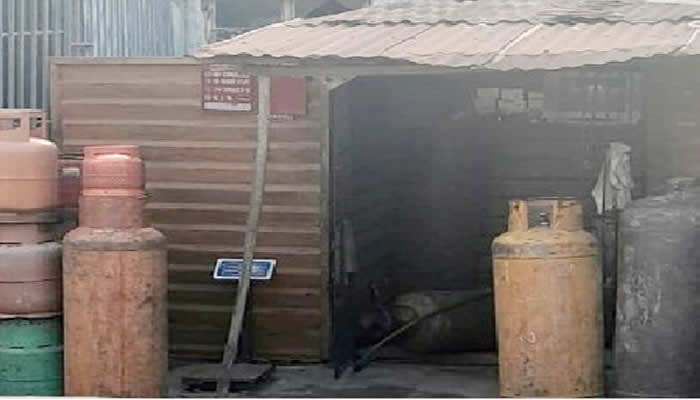
The Nigerian Association of Liquefied Petroleum Gas Marketers has raised the alarm over the erratic supply and rising cost of Liquefied Petroleum Gas, otherwise known as cooking gas, warning that the situation could trigger scarcity and worsen hardship for millions of Nigerians.
The association said cooking gas is now selling for over N1,500 per kilogramme, while marketers currently pay between N25.2m and N26.2m for 20 metric tonnes of the product, depending on location. The product is sold at between N1,600 and N2,000 by many other dealers.
Checks by our correspondent on Sunday confirmed that the essential commodity jumped from less than N1,000/kg recently to around N1,500 or more, depending on the location.
In a statement jointly signed by the National President of NALPGAM, Edu Inyang, and the Executive Secretary, Mr Bassey Essien, the association described the development as “sad and rather very pathetic”.
So This Happened (EP 396) reviews: Ex-minister gets 75-year sentence
“The citizens of Nigeria have woken up to buy cooking gas, which should be a social item, at a prohibitive cost of over N1,500 per kg, while the marketers are made to pay as much as N25,200,000 or, depending on the location, N26,200,000 for 20 metric tonnes of cooking gas.
“We feel that if the situation is not immediately checked, the citizens may rise against the owners of gas filling stations,” the marketers expressed fears.
They said the development had brought untold hardship to millions of Nigerian households, small businesses, food vendors, and low-income families who rely on LPG for daily cooking and livelihood.
According to the association, the situation is “seriously eroding the substantial progress made by the government” on the usage of clean energy in the country. The group maintained that its members across the country were facing difficulties sourcing LPG due to “persistent supply shortages, high depot prices, logistics bottlenecks and uncontrollable rising operational costs”.
“We observe that where product is available, it is sold at rates far beyond the reach of average Nigerians,” the association stated.
Related News
Nigeria’s economy grows 3.89% in Q1 amid lower oil output – NBS
Experts push Lagos redevelopment as population rises
Beyond public debate: What Union Bank case is really about
NALPGAM warned that the crisis was undermining years of progress achieved through Federal Government policies and investments aimed at deepening LPG penetration and promoting clean cooking energy.
“While millions of Nigerians have embraced cooking gas as a result of the national clean energy transition agenda, it is sad to state that those gains are at risk as households are struggling to refill cylinders, small businesses are folding under rising energy costs, while many families are reverting to firewood and charcoal despite the serious implications for public health, environmental degradation, and deforestation,” it said.
The association further warned that failure to urgently address the crisis could lead to “accelerated food inflation, the collapse of small-scale LPG retail businesses, job losses, reduced investor confidence, and a significant setback to Nigeria’s clean energy and climate commitments”.
NALPGAM called on the Federal Government, the Ministry of Petroleum Resources, the Nigerian Midstream and Downstream Petroleum Regulatory Authority, the Nigerian National Petroleum Company Limited, domestic producers, terminal operators, international suppliers, and other stakeholders to take urgent and coordinated steps to stabilise the market before it degenerates further.
The association recommended immediate measures to improve the availability and accessibility of LPG nationwide. It also called for increased domestic LPG allocation to the Nigerian market, transparent distribution of available supply, reduction of bottlenecks in importation and distribution, and interventions to stabilise retail prices.
It requested investment in storage and distribution infrastructure as well as policies that support affordability and sustainability in the sector. “We cannot stand by and watch millions of Nigerian families suffer in silence while access to clean cooking energy becomes increasingly difficult and unaffordable.
“For years, the government and industry operators have worked to move Nigerians away from unsafe fuels. Those gains are now under serious threat. “Households cannot refill cylinders, small businesses are struggling to survive, and vulnerable households are returning to firewood and charcoal with dire health and environmental consequences.
“We therefore make a passionate and patriotic appeal to the Federal Government for urgent intervention to stabilise supply and pricing. NALPGAM is ready to collaborate to have lasting solutions, but decisive action is needed now,” the statement said.
-

 Breaking News6 months ago
Terrorists Want ₦2m ‘levy’ in Katsina Community Despite Peaceful Agreement
-

 Breaking News6 months ago
Ex-EFCC Exhibit Keeper Kaduna Zonal Directorate, Allegedly Steals ₦22m
-

 Breaking News7 months ago
Niger Delta Group hails Tinubu, NUPRC for ₦373bn host community fund and 536 life-changing projects
-

 Breaking News5 months ago
Breaking News: Nigerian Air Force Reportedly Kills 750 Terrorists in Borno State
-

 Business7 months ago
House of Representatives probes $35m modular refinery project
-

 Breaking News6 months ago
Breaking: Robbery Suspects Caught After Leaving Phone At The Scene
-

 Breaking News7 months ago
UCL: Osimhen Statement after Galatasaray’s 3-1 Win over Bodo/Glimt
-

 Breaking News5 months ago
Nasarawa Insecurity: Suspects Apprehended, Man Hunt Ongoing – Gov Sule