
Breaking News
Breaking: Multi-Factor Authentication For Foreign Card Transactions- CBN Orders Banks

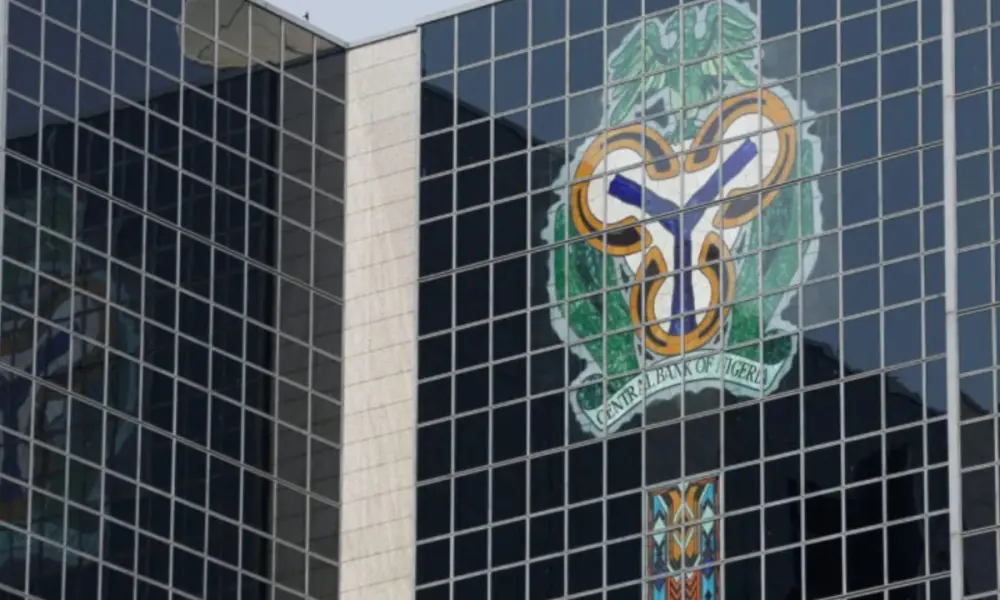
The Central Bank of Nigeria, CBN, has introduced fresh measures aimed at improving the reliability and security of foreign-issued payment card usage across the country, directing banks and other financial institutions to adopt multi-factor authentication for such transactions.
The new directive was conveyed in a circular dated December 18, 2025, issued by the CBN’s Financial Policy and Regulation Department and signed by its Director, Dr Rita I. Sike.
Addressed to all deposit money banks and non-bank financial institutions, the circular, titled “Facilitation of Seamless Use of Foreign Cards,” stipulates that multi-factor authentication must be applied to all withdrawals and online transactions above daily, weekly, and monthly thresholds of $200, $500, and $1,000 respectively, or their naira equivalents.
According to the apex bank, the policy is designed to strengthen transaction security while enhancing the payment experience for tourists and Nigerians returning from the diaspora.
The CBN noted that the initiative seeks to boost convenience, safety, and overall user confidence in the use of foreign-issued cards nationwide.
Under the new framework, banks and non-bank acquirers are required to ensure seamless access to local currency withdrawals, payments, and transfers for holders of foreign cards across Nigeria.
Institutions must also maintain high system uptime to prevent service disruptions during transaction processing.
The CBN further directed that all automated teller machines, point-of-sale terminals, and online payment platforms be properly configured to accept international cards routed through Nigerian acquirers.
These platforms must fully comply with global card association standards and possess the appropriate certifications or recertifications to guarantee smooth transaction processing.
In addition, all settlements arising from foreign card transactions are to be conducted strictly in naira, with financial institutions expected to maintain adequate liquidity to meet settlement obligations promptly.
To curb fraud, the regulator mandated the deployment of advanced transaction-monitoring systems capable of identifying unusual or suspicious usage patterns involving foreign cards. Merchants accepting foreign card payments are also to be subjected to enhanced know-your-customer and anti-money laundering requirements.
Where necessary, merchants must request valid identification and ensure that card-present transaction receipts are duly signed.
Any transaction deemed suspicious must be reported without delay to the Nigerian Financial Intelligence Unit, in line with existing regulatory requirements.
The CBN also emphasised the need for transparency in pricing. Banks and acquirers are required to clearly disclose applicable exchange rates and charges to customers before transactions are completed.
Exchange rates must be market-based, aligned with the prevailing official rate, and fully disclosed upfront. Transactions are to proceed only after customers have expressly accepted the terms, with proof of such consent properly documented.
As part of merchant capacity building, acquirers are mandated to conduct quarterly training sessions for merchants and agent networks on dispute resolution and chargeback management.
The apex bank warned that consumer complaints related to foreign card transactions must be resolved within stipulated timelines, stressing that unresolved cases escalated to the CBN would attract appropriate sanctions.
Tourists and returning Nigerians who encounter difficulties using foreign-issued cards were advised to lodge complaints with the CBN’s Consumer Protection and Financial Inclusion Department.
To further improve user experience, especially for visitors, financial institutions were instructed to recalibrate their fraud-monitoring systems to reduce unnecessary declines of legitimate foreign card transactions. For low-value payments, card acceptance devices must also support contactless payment options.
The circular equally introduced stricter requirements for chargeback and dispute management.
Acquirers are to establish auditable chargeback processes consistent with card scheme rules and CBN guidelines, covering timely case handling, evidence gathering, refunds, and post-incident reviews.
Transaction records, including terminal approval slips, signed receipts, and descriptions of goods or services, must be retained for a minimum of 12 months and made available within 24 hours upon request.
Breaking News
Breaking: Nigerian Workers Demand N300,000 Minimum Wage, FG Faces Fresh Salary Pressure

The Federal Workers Forum, FWF, has demanded an immediate increase in the federal minimum wage from N70,000 to N300,000, noting that the current salary structure can no longer sustain civil servants amid Nigeria’s rising cost of living.
The Forum made the demand in a letter dated September 2, 2026, addressed to President Bola Ahmed Tinubu and the National Assembly, with the Senate President, Speaker of the House of Representatives, Chief Justice of Nigeria and Head of the Civil Service of the Federation listed among the recipients.
The workers also proposed a new salary structure that would place the highest-paid Level 17 officer on a monthly salary of N1.5 million, while Level 1 Step 1 workers would earn N300,000.
“We call for justice and immediate wage review now, adjust the federal minimum wage to N300,000 and a maximum wage of N1.5m for the Level 17 officers,” the Forum said.
Recommended
The FWF argued that the Federal Government had not fully implemented the 2024 minimum wage agreement, claiming that federal workers had yet to receive the full consequential adjustment and associated allowances.
“It will surprise you to hear that the Federal Government has not fully implemented the new national minimum wage since July 2024. We have been in the battle for full consequential adjustment of the new minimum wage,” it said.
Recall that the Nigeria Labour Congress, NLC, in August 2026, demanded an upward review of the minimum wage to N500,000.
In July 2024, President Bola Tinubu’s government increased the minimum wage to N70,000 per month from N30,000.
However, the cost of living for many Nigerians has tripled between 2024 and 2026.
You may like
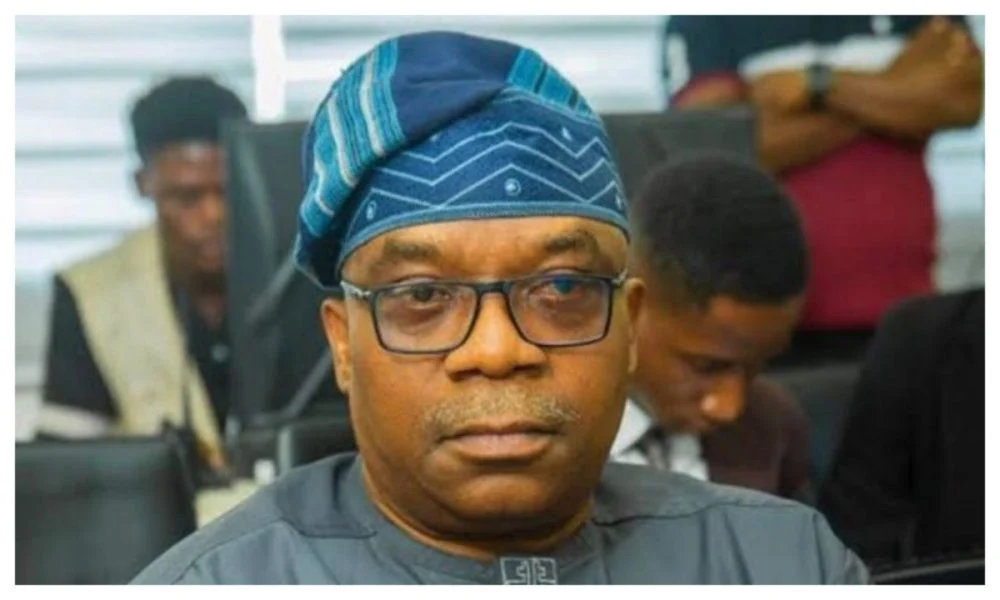
The Federal Government has said Nigeria will never support a military coup or any unconstitutional change of government, following claims that the country backed a failed coup attempt in the Niger Republic.
The Minister of State for Foreign Affairs, Sola Enikanolaiye, made this known in a statement issued on Thursday.
According to the statement, the claims circulating on social media are baseless and misleading.
Enikanolaiye said Nigeria remained committed to democracy, constitutional rule and political stability in West Africa and would not support any attempt to remove a government through unconstitutional means.
Recommended
“Nigeria will never support illegality or unconstitutional change of government anywhere, no matter who is involved or which country is concerned,” he said.
The minister also rejected claims that Nigeria, through its membership of the Economic Community of West African States (ECOWAS), supported or endorsed the military takeover in Niger.
He said the Federal Government had already stated its position on the situation in Niger in an earlier statement issued by the Ministry of Foreign Affairs on August 30, 2026.
According to him, Nigeria remains deeply concerned about developments in Niger and wants the country to return peacefully to stability and constitutional order.
Enikanolaiye said Nigeria’s close historical, cultural and fraternal ties with Niger made peace and stability in the neighbouring country particularly important.
“Nigerians at home and abroad should disregard the videos and narratives circulating online, they are intended to create confusion and tarnish Nigeria’s image,” the statement said.
You may like
-

 Breaking News11 months ago
Niger Delta Group hails Tinubu, NUPRC for ₦373bn host community fund and 536 life-changing projects
-

 Breaking News10 months ago
Ex-EFCC Exhibit Keeper Kaduna Zonal Directorate, Allegedly Steals ₦22m
-

 Breaking News9 months ago
Terrorists Want ₦2m ‘levy’ in Katsina Community Despite Peaceful Agreement
-

 Business4 months ago
BREAKING NEWS: Zenith Bank Rewards Investors with ₦410.69bn Dividend at AGM
-

 Breaking News8 months ago
Breaking News: Nigerian Air Force Reportedly Kills 750 Terrorists in Borno State
-

 Business11 months ago
House of Representatives probes $35m modular refinery project
-

 Breaking News4 months ago
Plaintiff To Pay ₦1m Fines For Delay In Jonathan Eligibility Suit
-

 Breaking News4 months ago
DEFAMATION OF CHARACTER: SERAP On Appeal Against The ₦100m Judgment In Favour of DSS Officials