
Breaking News
Chapter of APC Hails Tinubu’s Emergence As 2027 Presidential Candidate

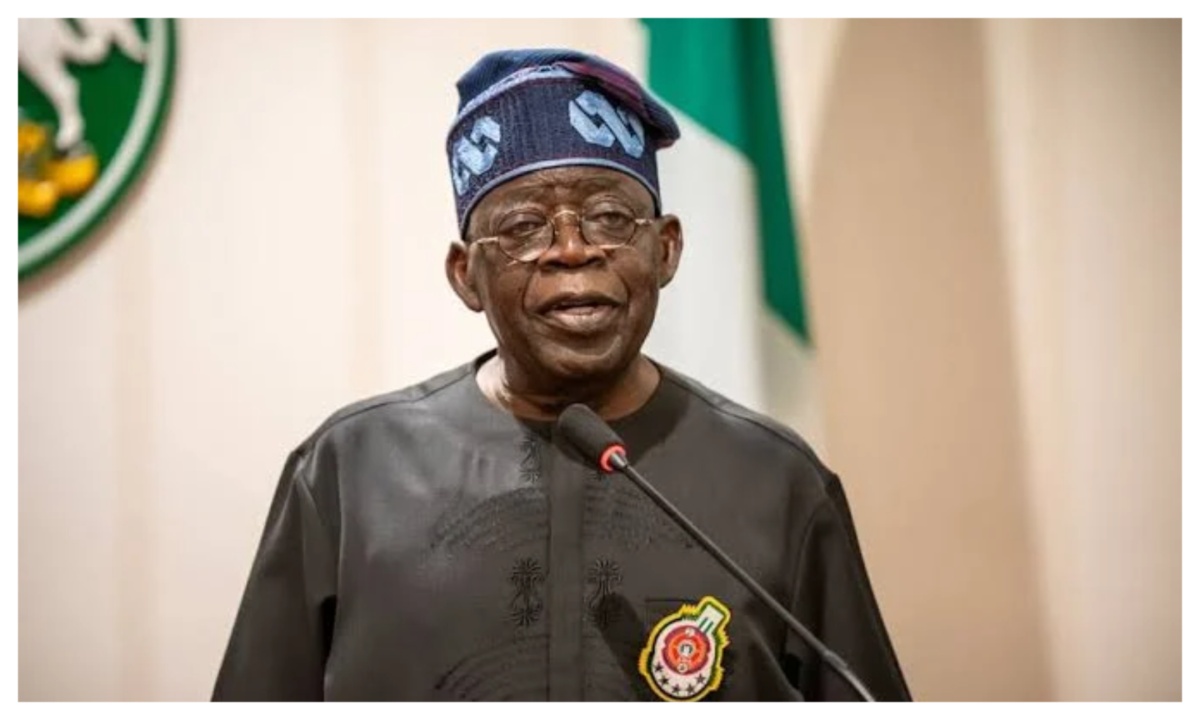
The United States chapter of the All Progressives Congress, APC, has congratulated President Bola Tinubu on his emergence as the party’s presidential candidate for the 2027 general elections, describing the outcome as a strong endorsement of his leadership and reform agenda.
In a statement signed by its chairman, Professor Tai Balofin, on Monday, the group said the President’s victory at the APC primaries reflected the confidence party members and Nigerians have in his administration and vision for the country.
According to the chapter, the “overwhelming mandate” secured by Tinubu during the primaries showed broad acceptance of his leadership style and commitment to national transformation.
The group particularly defended the administration’s economic reforms, admitting that many Nigerians were currently facing hardship but insisting that the policies were necessary to stabilise and reposition the economy for long-term growth.
Balofin said the Renewed Hope Agenda represented “a comprehensive roadmap” focused on structural reforms, fiscal discipline, improved revenue generation and investments in key sectors of the economy.
“While the journey has been challenging, the fruits of these reforms will soon become evident in the lives of ordinary Nigerians,” he stated.
Related News
Atiku votes in Adamawa, says ADC primary step to recover Nigeria
Imo APC ex-senatorial aspirants clarify withdrawal, deny inducement claims
Gaya loses Kano South senatorial ticket after joining NDC
The APC USA chapter urged Nigerians to, “ remain patient and continue supporting the Tinubu administration, stressing that meaningful reforms often require time and collective sacrifice before yielding results.”
The group also commended the leadership of the All Progressives Congress for what it described as credible and peaceful primaries, while calling on other aspirants who contested the ticket to accept the outcome and channel grievances through internal party mechanisms.
“President Tinubu has consistently demonstrated that he is a leader who keeps his promises and puts Nigeria first. We are confident that with his re-election, the nation will witness accelerated development and lasting progress,” Balofin added.
Tinubu secured the APC presidential ticket after defeating fellow aspirant Stanley Osifo during the party’s national convention and primaries. The President reportedly won by a wide margin after securing the backing of key party stakeholders, governors and delegates across the country, further consolidating his influence within the ruling party ahead of the 2027 elections.
The primary contest was largely seen as a test of Tinubu’s political dominance within the APC amid growing debates over the economic impact of his reforms and calls from some party members for alternative leadership. However, the scale of his victory reinforced his grip on the party structure and positioned him as the APC’s standard-bearer for the next general election.
Tinubu, who came into office in 2023, has faced mixed reactions over sweeping economic reforms introduced by his administration, including fuel subsidy removal and exchange rate unification. While supporters argue the policies are necessary to revive the economy and attract investment, critics say they have worsened inflation and increased the cost of living for many Nigerians.
Deborah Tolu-Kolawole
Deborah Tolu-Kolawole is a journalist at Punch Newspapers with four years of experience covering Nigeria’s vast education sector as well as related areas such as politics, health, security, and labour. She blends rigorous reporting with digital storytelling to bring clarity and insight to complex issues affecting learners, educators, and policymakers. Deborah was a nominee for The Future Awards Africa (TFAA) Prize in Journalism, recognising her impactful reporting and contributions to Nigerian media. Her work reflects strong newsroom experience, editorial judgment, and a commitment to accurate, audience-focused journalism. In addition to her reporting, she is fluent in multiple languages and serves as a contributing member of The Punch editorial board.
Nigeria’s economy expanded by 3.89 per cent in real terms in the first quarter of 2026 amid a decline in crude oil production, with growth driven largely by agriculture, telecommunications, financial services, construction, and trade activities.
Data released by the National Bureau of Statistics on Monday showed that the country’s Gross Domestic Product grew faster than the 3.13 per cent recorded in the corresponding period of 2025, extending the economy’s recovery momentum amid continued dominance of the non-oil sector.
The bureau stated, “Gross Domestic Product grew by 3.89 per cent (year-on-year) in real terms in the first quarter of 2026, higher than the 3.13 per cent recorded in the first quarter of 2025.”
It added that agriculture grew by 3.15 per cent during the quarter, compared with 0.07 per cent in the corresponding quarter of 2025, while industry recorded a growth rate of 3.50 per cent from 3.42 per cent a year earlier.
The services sector grew by 4.31 per cent, slightly below the 4.33 per cent recorded in the same period of 2025.
The report showed that the services sector remained the largest component of the economy, contributing 57.73 per cent to aggregate GDP, compared with 57.50 per cent in the first quarter of 2025.
In nominal terms, aggregate GDP at basic prices rose to N110.79tn in the first quarter of 2026 from N94.05tn in the corresponding period of 2025, representing a year-on-year growth of 17.79 per cent.
Despite the overall improvement in economic growth, crude oil production declined during the quarter.
According to the NBS, “The nation in the first quarter of 2026 recorded an average daily oil production of 1.55 million barrels per day (mbpd), lower than the daily average production of 1.62 mbpd recorded in the same quarter of 2025 and lower than the fourth quarter of 2025 production volume of 1.58 mbpd.”
The oil sector, nevertheless, recorded real growth of 2.57 per cent year-on-year, higher than the 1.87 per cent recorded in the corresponding quarter of 2025.
However, its contribution to total real GDP declined marginally to 3.92 per cent from 3.97 per cent a year earlier.
The non-oil sector continued to account for the bulk of economic activity.
“The non-oil sector grew by 3.94 per cent in real terms during the reference quarter (Q1 2026),” the report stated.
The bureau explained that the sector’s performance was driven mainly by telecommunications, crop production, trade, cement manufacturing, financial institutions, real estate, construction, and road transportation activities.
Related News
Experts push Lagos redevelopment as population rises
Beyond public debate: What Union Bank case is really about
Marketers fear scarcity as cooking gas hits N1,500/kg
The non-oil economy contributed 96.08 per cent to real GDP during the quarter, slightly above the 96.03 per cent recorded in the same period of 2025.
A breakdown of sectoral performance showed that agriculture contributed 23.16 per cent to real GDP, although this was slightly lower than the 23.33 per cent contribution recorded in the corresponding period of 2025.
Crop production remained the dominant agricultural activity, accounting for 66.76 per cent of the sector’s nominal value.
Manufacturing also strengthened during the period, recording real growth of 3.29 per cent, higher than both the corresponding quarter of 2025 and the preceding quarter. The sector accounted for 9.57 per cent of real GDP.
The Information and Communication sector emerged as one of the strongest growth drivers, expanding by 10.98 per cent in real terms and contributing 11.31 per cent to total GDP, compared with 10.59 per cent in the first quarter of 2025.
Similarly, the Finance and Insurance sector grew by 8.54 per cent in real terms and contributed 3.76 per cent to GDP, while the construction sector expanded by 6.38 per cent and accounted for 4.85 per cent of economic output.
The NBS identified trade as the largest contributor to real GDP in the first quarter of 2026, accounting for 17.89 per cent of output. Crop production followed with 17.38 per cent, while real estate contributed 13.10 per cent. Telecommunications and Information Services accounted for 9.19 per cent, construction contributed 4.85 per cent, and crude petroleum and natural gas represented 3.92 per cent.
Other sectors posting positive real growth included transportation and storage at 7.41 per cent, accommodation and food services at 4.36 per cent, arts, entertainment and recreation at 11.25 per cent, and water supply, sewerage, waste management and remediation services at 10.32 per cent.
However, the Electricity, Gas, Steam and Air Conditioning Supply sector contracted by 15.30 per cent in real terms, while the Other Services sector recorded a decline of 1.96 per cent.
The latest GDP figures, however, fell short of projections by the World Bank, which had expected stronger economic expansion this year despite recent adjustments to its outlook.
The PUNCH earlier reported that the World Bank, in its April 2026 Africa’s Pulse report, revised Nigeria’s growth forecast downward, citing rising global uncertainties and volatility in energy markets.
The Washington-based lender projected that Africa’s largest economy would grow by 4.1 per cent in 2026 and 4.2 per cent in 2027, down from its earlier forecast of 4.4 per cent for both years.
The bank attributed the downgrade to heightened geopolitical tensions, weaker global demand, and instability in oil prices, warning that these factors could weigh on growth prospects despite ongoing macroeconomic reforms and improvements in non-oil economic activity.
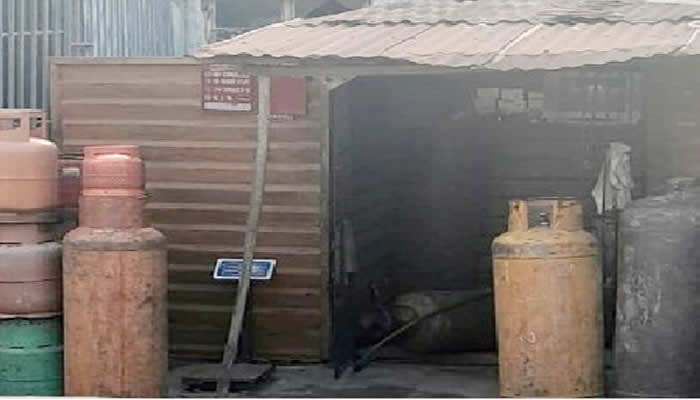
The Nigerian Association of Liquefied Petroleum Gas Marketers has raised the alarm over the erratic supply and rising cost of Liquefied Petroleum Gas, otherwise known as cooking gas, warning that the situation could trigger scarcity and worsen hardship for millions of Nigerians.
The association said cooking gas is now selling for over N1,500 per kilogramme, while marketers currently pay between N25.2m and N26.2m for 20 metric tonnes of the product, depending on location. The product is sold at between N1,600 and N2,000 by many other dealers.
Checks by our correspondent on Sunday confirmed that the essential commodity jumped from less than N1,000/kg recently to around N1,500 or more, depending on the location.
In a statement jointly signed by the National President of NALPGAM, Edu Inyang, and the Executive Secretary, Mr Bassey Essien, the association described the development as “sad and rather very pathetic”.
So This Happened (EP 396) reviews: Ex-minister gets 75-year sentence
“The citizens of Nigeria have woken up to buy cooking gas, which should be a social item, at a prohibitive cost of over N1,500 per kg, while the marketers are made to pay as much as N25,200,000 or, depending on the location, N26,200,000 for 20 metric tonnes of cooking gas.
“We feel that if the situation is not immediately checked, the citizens may rise against the owners of gas filling stations,” the marketers expressed fears.
They said the development had brought untold hardship to millions of Nigerian households, small businesses, food vendors, and low-income families who rely on LPG for daily cooking and livelihood.
According to the association, the situation is “seriously eroding the substantial progress made by the government” on the usage of clean energy in the country. The group maintained that its members across the country were facing difficulties sourcing LPG due to “persistent supply shortages, high depot prices, logistics bottlenecks and uncontrollable rising operational costs”.
“We observe that where product is available, it is sold at rates far beyond the reach of average Nigerians,” the association stated.
Related News
Nigeria’s economy grows 3.89% in Q1 amid lower oil output – NBS
Experts push Lagos redevelopment as population rises
Beyond public debate: What Union Bank case is really about
NALPGAM warned that the crisis was undermining years of progress achieved through Federal Government policies and investments aimed at deepening LPG penetration and promoting clean cooking energy.
“While millions of Nigerians have embraced cooking gas as a result of the national clean energy transition agenda, it is sad to state that those gains are at risk as households are struggling to refill cylinders, small businesses are folding under rising energy costs, while many families are reverting to firewood and charcoal despite the serious implications for public health, environmental degradation, and deforestation,” it said.
The association further warned that failure to urgently address the crisis could lead to “accelerated food inflation, the collapse of small-scale LPG retail businesses, job losses, reduced investor confidence, and a significant setback to Nigeria’s clean energy and climate commitments”.
NALPGAM called on the Federal Government, the Ministry of Petroleum Resources, the Nigerian Midstream and Downstream Petroleum Regulatory Authority, the Nigerian National Petroleum Company Limited, domestic producers, terminal operators, international suppliers, and other stakeholders to take urgent and coordinated steps to stabilise the market before it degenerates further.
The association recommended immediate measures to improve the availability and accessibility of LPG nationwide. It also called for increased domestic LPG allocation to the Nigerian market, transparent distribution of available supply, reduction of bottlenecks in importation and distribution, and interventions to stabilise retail prices.
It requested investment in storage and distribution infrastructure as well as policies that support affordability and sustainability in the sector. “We cannot stand by and watch millions of Nigerian families suffer in silence while access to clean cooking energy becomes increasingly difficult and unaffordable.
“For years, the government and industry operators have worked to move Nigerians away from unsafe fuels. Those gains are now under serious threat. “Households cannot refill cylinders, small businesses are struggling to survive, and vulnerable households are returning to firewood and charcoal with dire health and environmental consequences.
“We therefore make a passionate and patriotic appeal to the Federal Government for urgent intervention to stabilise supply and pricing. NALPGAM is ready to collaborate to have lasting solutions, but decisive action is needed now,” the statement said.
-

 Breaking News6 months ago
Terrorists Want ₦2m ‘levy’ in Katsina Community Despite Peaceful Agreement
-

 Breaking News6 months ago
Ex-EFCC Exhibit Keeper Kaduna Zonal Directorate, Allegedly Steals ₦22m
-

 Breaking News7 months ago
Niger Delta Group hails Tinubu, NUPRC for ₦373bn host community fund and 536 life-changing projects
-

 Breaking News5 months ago
Breaking News: Nigerian Air Force Reportedly Kills 750 Terrorists in Borno State
-

 Business7 months ago
House of Representatives probes $35m modular refinery project
-

 Breaking News6 months ago
Breaking: Robbery Suspects Caught After Leaving Phone At The Scene
-

 Breaking News7 months ago
UCL: Osimhen Statement after Galatasaray’s 3-1 Win over Bodo/Glimt
-

 Breaking News5 months ago
Nasarawa Insecurity: Suspects Apprehended, Man Hunt Ongoing – Gov Sule