
Business
Nigeria’s economy on steady rebound with 6% trade surplus – Cardoso

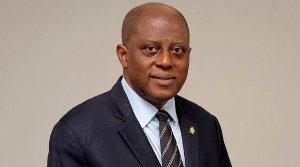
The Governor of the Central Bank of Nigeria, Olayemi Cardoso, on Wednesday disclosed that Nigeria’s trade surplus has risen to six per cent of the nation’s Gross Domestic Product, attributing the improvement to ongoing macroeconomic reforms by the Bola Tinubu administration.
Cardoso, who spoke at the G24 press briefing on the sidelines of the IMF/World Bank Annual Meetings in Washington D.C., said the surplus is expected to remain stable in the near term as policy reforms continue to gain traction.
According to a statement signed by the Director of Information and Public Relations at the Federal Ministry of Finance, Mohammed Manga, Cardoso, who represented the Minister of Finance and Coordinating Minister of the Economy, Wale Edun, at the session, said Nigeria’s economic outlook is brightening despite global headwinds.
“Nigeria’s trade surplus has risen to 6 per cent of the nation’s Gross Domestic Product and is expected to remain at that level in the near term.
He attributed the improved balance of trade to sound macroeconomic policies that are beginning to yield positive results,” Cardoso said.
The apex bank governor noted that the CBN was working on a framework to strengthen currency swaps with other countries, ensuring that such arrangements benefit both sides while supporting Nigeria’s external reserves and trade settlements.
He also underscored the importance of maintaining “sound macroeconomic policies”, linking them to disinflation, sustainable growth, and investor confidence.
“The CBN Governor also highlighted the importance of maintaining sound macroeconomic policies, noting a strong correlation between disciplined economic management, growth, and disinflation. He further disclosed that the apex bank is working on a framework to make currency swaps with other countries a win-win affair,” the statement added.
Manga further noted that the Minister of State for Finance, Doris Uzoka-Anite, joined Cardoso as part of the Nigerian delegation to the G24 meetings, where discussions focused on key themes including domestic resource mobilisation, inflation management, and macroeconomic stability.
Uzoka-Anite’s participation, the ministry said, underscores Nigeria’s renewed engagement with global financial institutions and its determination to build investor confidence and attract sustainable development financing.
“The meetings mark a significant step forward for Nigeria’s economic growth and development as the country continues to engage with international financial institutions to improve the lives of its citizens,” the ministry stated.
The G24 meeting is an influential platform for developing economies to coordinate positions on international monetary and financial issues. Nigeria’s active participation comes as the country implements a raft of fiscal and monetary reforms aimed at restoring stability, curbing inflation, and boosting investor sentiment.
The National Bureau of Statistics recently reported that Nigeria’s trade surplus rose by 44 per cent in the second quarter of 2025, with total merchandise trade standing at N38.04tn, up from N31.68tn in the same period of 2024.
Exports accounted for 59.81 per cent of total trade, valued at N22.75tn, while imports stood at N15.29tn. Crude oil remained the top export at N11.97tn (52.6 per cent), while non-oil exports reached N10.78tn, reflecting growing diversification in Nigeria’s external trade profile.
Meanwhile, Nigeria has assumed the chairmanship of the Intergovernmental Group of Twenty-Four (G-24), taking over from Argentina.
The country is expected to formally assume office on November 1, 2025, and will unveil its Work Programme after due consultations with member nations and relevant stakeholders.
As Nigeria assumes the chairmanship of G-24, CBN Governor Olayemi Cardoso, on behalf of the Minister of Finance and Coordinating Minister of the Economy Wale Edun, has reiterated Nigeria’s commitment to strengthening the voice of the G-24 as a catalyst for inclusive dialogue and reform.
“Our focus will be on sustaining momentum in areas that matter most to our members. We look forward to working with members to advance our shared mission of inclusive growth, equity, and global stability.”
“We are determined to ensure that the G-24 continues to be a formidable platform for representing the common interests of emerging and developing economies,” Cardoso said.
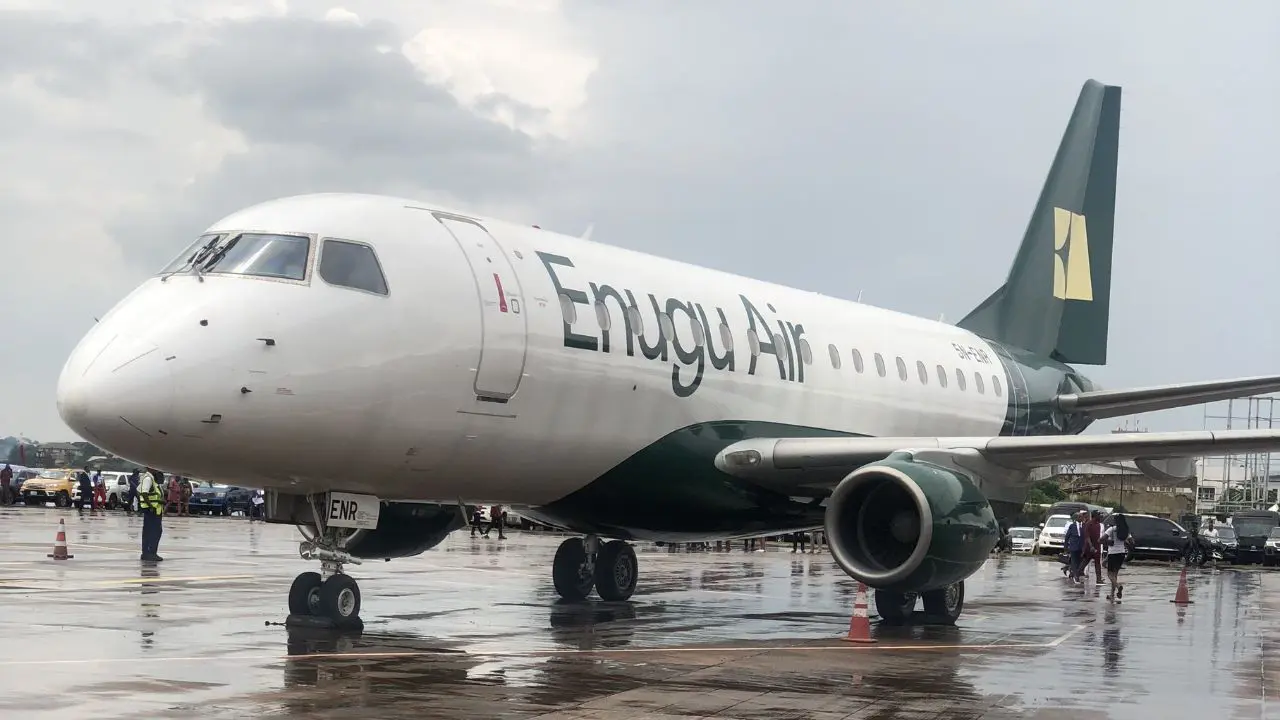
An aircraft belonging to Enugu Air has crashed at Benin City airport in Edo State.
The incident reportedly occurred on Thursday afternoon.
A video of the incident was shared on social media by an X user identified as @Oyindamola
“Enugu Air aircraft crash lands in Benin Airport this afternoon,” the X user wrote.
DAILY POST reports that the Enugu Air is owned and operated by the Enugu State government.
There’s was no official statement on the matter by the aviation authorities at the time of filing in this report.
Watch video.…For more, Complete your reading.
The Nigerian National Petroleum Company Limited, NNPCL, has increased the pump price of Premium Motor Spirit, PMS at its retail outlets for the second time in less than two days.
A market survey by DAILY POST showed that NNPCL raised its petrol price to N1,335 per litre on Wednesday from N1,270 per litre on Tuesday.
This means that the state-owned filling station increased its fuel price by N65 per litre.
The new price has been implemented at NNPCL filling stations in Wuse Zone 6 (Berger), Zone 4, and other outlets in Abuja and its environs.
Recall that on Tuesday, NNPCL increased its petrol pump price by N115 per litre to N1,270 per litre.
The latest increase comes amid continued petrol price volatility in the country’s downstream oil sector following Dangote Refinery’s resumption of the sale of refined petroleum products in U.S. dollars.
DAILY POST reports that crude oil prices rose by nearly 4 percent on Wednesday as airstrikes intensified in the Middle East.…For more, Complete your reading.
-

 Breaking News8 months ago
Terrorists Want ₦2m ‘levy’ in Katsina Community Despite Peaceful Agreement
-

 Breaking News8 months ago
Ex-EFCC Exhibit Keeper Kaduna Zonal Directorate, Allegedly Steals ₦22m
-

 Breaking News9 months ago
Niger Delta Group hails Tinubu, NUPRC for ₦373bn host community fund and 536 life-changing projects
-

 Breaking News7 months ago
Breaking News: Nigerian Air Force Reportedly Kills 750 Terrorists in Borno State
-

 Business9 months ago
House of Representatives probes $35m modular refinery project
-

 Business3 months ago
BREAKING NEWS: Zenith Bank Rewards Investors with ₦410.69bn Dividend at AGM
-

 Breaking News9 months ago
UCL: Osimhen Statement after Galatasaray’s 3-1 Win over Bodo/Glimt
-

 Breaking News7 months ago
Nasarawa Insecurity: Suspects Apprehended, Man Hunt Ongoing – Gov Sule