
Business
Dangote Petroleum Refinery: 22 incidents of sabotage recorded.

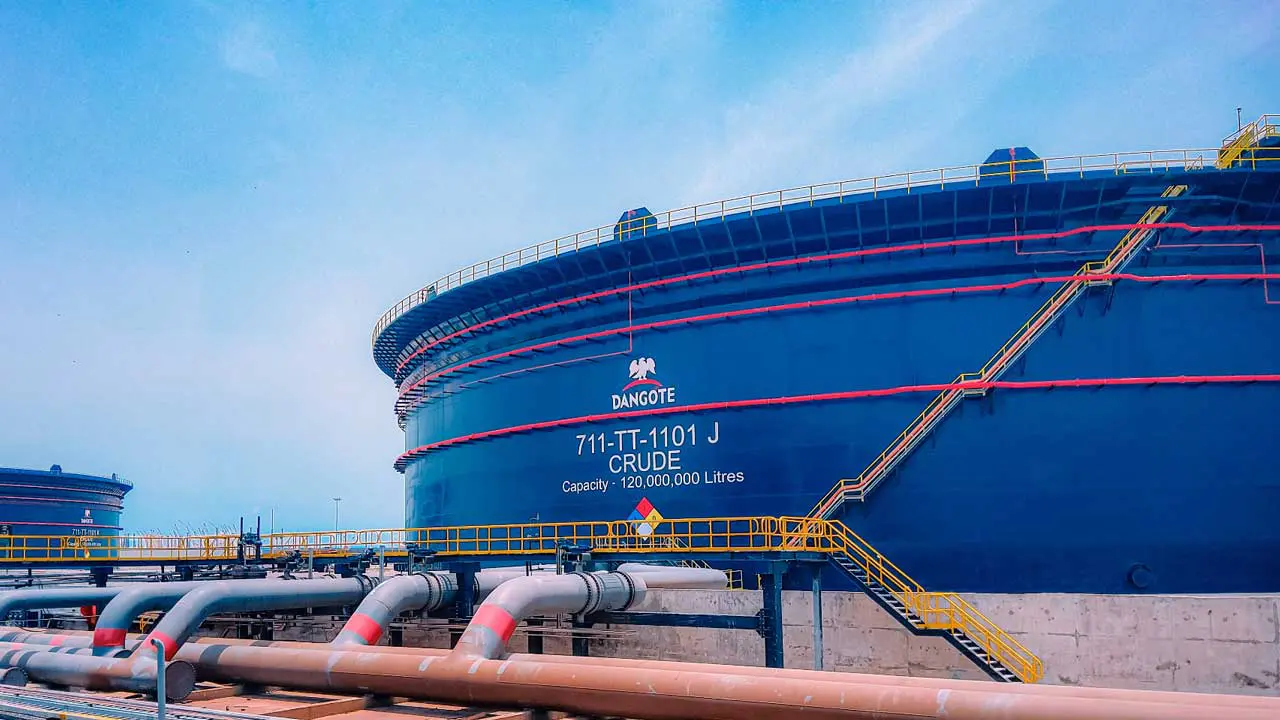
Dangote Group’s Vice President, Devakumar Edwin, has said that the Dangote Petroleum Refinery has faced 22 incidents of sabotage since its inception.
Edwin revealed the incidents while clarifying that the recent reorganisation of the company, which led to the dismissal of some workers, had nothing to do with the Petroleum and Natural Gas Senior Staff Association of Nigeria, PENGASSAN.
He spoke during a tour of the refinery by Bubaraye Dakolo, the King of Ekpetiama Kingdom and Chairman of the Bayelsa Traditional Rulers Council.
On September 26, Dangote Refinery confirmed the dismissal of only a “small number of workers”. However, PENGASSAN claimed that over 800 employees were sacked due to a union dispute with the refinery.
Dangote Refinery explained that the workers were dismissed to safeguard the facility from repeated acts of sabotage that “have raised safety concerns and affected operational efficiency”.
PENGASSAN instructed its members to embark on a nationwide strike on September 28 over the dismissals; however, the industrial action was suspended on October 1 following the intervention of the federal government.
Dangote Group subsequently agreed to redeploy the dismissed workers to its other subsidiaries.
Addressing PENGASSAN’s claims, Edwin said the reorganisation was necessary because the refinery had faced multiple sabotage attempts.
According to him: “We have been under repeated attacks like some people have pointed out earlier. Originally, the refinery, they said it will not even come up. Then they said it will not be commissioned and start production,” he said.
“We went through all those phases. Then they said, okay, we have an issue with PENGASSAN, which is totally false news. Because when we went and had a meeting in Abuja with the ministers and the security agencies, I repeatedly emphasised that we have no issue with PENGASSAN.
“The reorganisation we did, had nothing to do with PENGASSAN. We started facing incidences of sabotage. We have 22 incidences of sabotage.
“You are all aware. You have seen fires in the past, even in Kaduna refinery and some of the other refineries. There were attempted fire incidences.
“I have the dates, the unit where it was done, and when it was done. All are documented data. Because you went to the master control room, you know that all the data are completely captured.”
Edwin said the ultra-modern systems at the Dangote Refinery prevented the sabotage attempts from damaging its equipment.
He said: “And same way, equipment trying to be brought down. Somebody will open a valve to try to see if it will break down. Fortunately for us, by the grace of God, it’s a very ultra-modern refinery.
“So when somebody starts a fire somewhere, the fire protection system is so well, it is immediately controlled. Same way, when they try to break down an instrument by opening a valve or adjusting some instruments, some other instrument overrules it and stops. But it is documented.
“So we started looking at it, and then we were a bit concerned. Somebody can just bring a major shit down. And a lot of the investment has gone inside.
“That is why we did this massive reorganisation. It has nothing to do with PENGASSAN and I repeatedly emphasise, even the dates or planning, everything is different.”
Edwin added that the sabotage targeting the refinery’s investment was a major concern, noting that someone could potentially cause significant damage, which was what prompted the “massive reorganisation”.
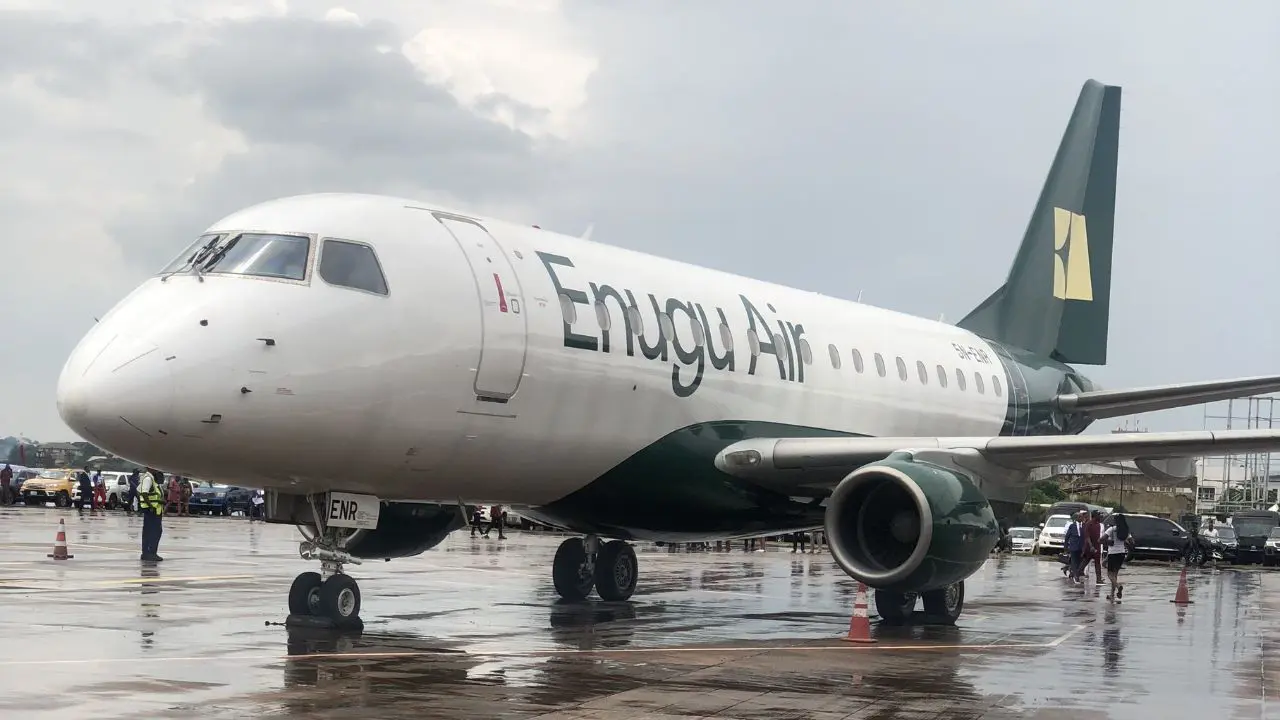
An aircraft belonging to Enugu Air has crashed at Benin City airport in Edo State.
The incident reportedly occurred on Thursday afternoon.
A video of the incident was shared on social media by an X user identified as @Oyindamola
“Enugu Air aircraft crash lands in Benin Airport this afternoon,” the X user wrote.
DAILY POST reports that the Enugu Air is owned and operated by the Enugu State government.
There’s was no official statement on the matter by the aviation authorities at the time of filing in this report.
Watch video.…For more, Complete your reading.
The Nigerian National Petroleum Company Limited, NNPCL, has increased the pump price of Premium Motor Spirit, PMS at its retail outlets for the second time in less than two days.
A market survey by DAILY POST showed that NNPCL raised its petrol price to N1,335 per litre on Wednesday from N1,270 per litre on Tuesday.
This means that the state-owned filling station increased its fuel price by N65 per litre.
The new price has been implemented at NNPCL filling stations in Wuse Zone 6 (Berger), Zone 4, and other outlets in Abuja and its environs.
Recall that on Tuesday, NNPCL increased its petrol pump price by N115 per litre to N1,270 per litre.
The latest increase comes amid continued petrol price volatility in the country’s downstream oil sector following Dangote Refinery’s resumption of the sale of refined petroleum products in U.S. dollars.
DAILY POST reports that crude oil prices rose by nearly 4 percent on Wednesday as airstrikes intensified in the Middle East.…For more, Complete your reading.
-

 Breaking News8 months ago
Terrorists Want ₦2m ‘levy’ in Katsina Community Despite Peaceful Agreement
-

 Breaking News8 months ago
Ex-EFCC Exhibit Keeper Kaduna Zonal Directorate, Allegedly Steals ₦22m
-

 Breaking News9 months ago
Niger Delta Group hails Tinubu, NUPRC for ₦373bn host community fund and 536 life-changing projects
-

 Breaking News7 months ago
Breaking News: Nigerian Air Force Reportedly Kills 750 Terrorists in Borno State
-

 Business9 months ago
House of Representatives probes $35m modular refinery project
-

 Business3 months ago
BREAKING NEWS: Zenith Bank Rewards Investors with ₦410.69bn Dividend at AGM
-

 Breaking News9 months ago
UCL: Osimhen Statement after Galatasaray’s 3-1 Win over Bodo/Glimt
-

 Breaking News7 months ago
Nasarawa Insecurity: Suspects Apprehended, Man Hunt Ongoing – Gov Sule