
Business
UK announces new requirement to secure work visa from 2026, Nigerians affected


Nigerians looking to relocate to the United Kingdom will now have to demonstrate a higher level of English proficiency before being allowed to live and work in the country.
In the revised policy, which will take effect from January 8, 2026, the UK government said migrants must now attain at least a B2 standard in English, equivalent to A-level proficiency.
This is an upgrade from the current B1 level, which aligns with the GCSE standard.
UK new rules
Home Secretary Shabana Mahmood said the government’s decision is part of the plan to cut migration levels and strengthen social integration.
She stated:
“This country has always welcomed those who come here and contribute. But it is unacceptable for migrants to arrive without learning our language or being able to engage in our national life.”
Also, applicants will be tested in person across four areas: speaking, listening, reading, and writing at Home Office-approved centres, with results verified before a visa is issued.
The new policy will primarily affect Nigerians and other migrants seeking Skilled Worker, Scale-up, and HPI visas, including graduates from top global universities.
Skilled Worker visa holders must also meet salary requirements, earning at least £41,700 a year or the going rate for their role.
More strict rules for UK visa
The British Council states that migrants who achieve B2-level English can understand complex material on various subjects, communicate smoothly and naturally, and produce clear, structured writing across multiple topics.
The Home Office also indicated that additional English language requirements for other visa categories and family members are expected to be introduced soon.
The new language standards is part of the immigration white paper published in May, which aims to make the UK’s migration system “controlled, selective, and fair.
Government estimates suggest these reforms could lower annual migration by as many as 100,000 people, following a net migration figure of 431,000 in 2024.
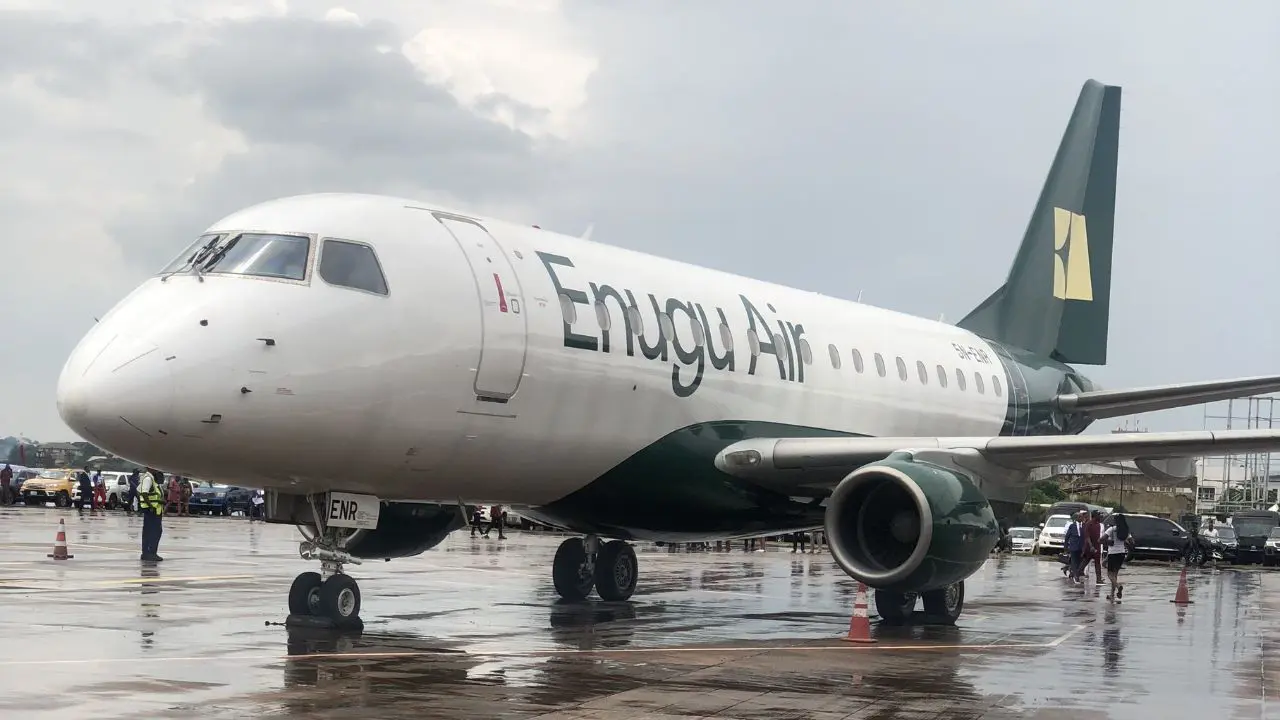
An aircraft belonging to Enugu Air has crashed at Benin City airport in Edo State.
The incident reportedly occurred on Thursday afternoon.
A video of the incident was shared on social media by an X user identified as @Oyindamola
“Enugu Air aircraft crash lands in Benin Airport this afternoon,” the X user wrote.
DAILY POST reports that the Enugu Air is owned and operated by the Enugu State government.
There’s was no official statement on the matter by the aviation authorities at the time of filing in this report.
Watch video.…For more, Complete your reading.
The Nigerian National Petroleum Company Limited, NNPCL, has increased the pump price of Premium Motor Spirit, PMS at its retail outlets for the second time in less than two days.
A market survey by DAILY POST showed that NNPCL raised its petrol price to N1,335 per litre on Wednesday from N1,270 per litre on Tuesday.
This means that the state-owned filling station increased its fuel price by N65 per litre.
The new price has been implemented at NNPCL filling stations in Wuse Zone 6 (Berger), Zone 4, and other outlets in Abuja and its environs.
Recall that on Tuesday, NNPCL increased its petrol pump price by N115 per litre to N1,270 per litre.
The latest increase comes amid continued petrol price volatility in the country’s downstream oil sector following Dangote Refinery’s resumption of the sale of refined petroleum products in U.S. dollars.
DAILY POST reports that crude oil prices rose by nearly 4 percent on Wednesday as airstrikes intensified in the Middle East.…For more, Complete your reading.
-

 Breaking News8 months ago
Terrorists Want ₦2m ‘levy’ in Katsina Community Despite Peaceful Agreement
-

 Breaking News8 months ago
Ex-EFCC Exhibit Keeper Kaduna Zonal Directorate, Allegedly Steals ₦22m
-

 Breaking News9 months ago
Niger Delta Group hails Tinubu, NUPRC for ₦373bn host community fund and 536 life-changing projects
-

 Breaking News7 months ago
Breaking News: Nigerian Air Force Reportedly Kills 750 Terrorists in Borno State
-

 Business9 months ago
House of Representatives probes $35m modular refinery project
-

 Business3 months ago
BREAKING NEWS: Zenith Bank Rewards Investors with ₦410.69bn Dividend at AGM
-

 Breaking News9 months ago
UCL: Osimhen Statement after Galatasaray’s 3-1 Win over Bodo/Glimt
-

 Breaking News7 months ago
Nasarawa Insecurity: Suspects Apprehended, Man Hunt Ongoing – Gov Sule