
Business
Securities and Exchange Commission, SEC adopts faster settlement cycle for market efficiency


The Securities and Exchange Commission has announced plans to transition Nigeria’s capital market from a T+3 to a T+2 settlement cycle to enhance market efficiency, reduce risks, and strengthen investor confidence.
The Director-General of the Commission, Emomotimi Agama, disclosed this at a Trade Associations Roundtable on ‘Ensuring Stakeholder Readiness for T+2 Settlement’ held in Abuja on Wednesday.
Agama said the transition represents a major milestone in aligning Nigeria’s capital market operations with international best practices, noting that it would make the market more competitive and resilient.
“A shorter settlement cycle is a hallmark of a mature, dynamic, and competitive market. It directly addresses several key objectives: it significantly reduces counterparty risk and market exposure. The less time between trade execution and final settlement, the lower the potential for a default to ripple through the system,” he stated.
The SEC boss added that the new system would also boost market liquidity by returning capital to investors more quickly, allowing for its redeployment and fostering greater market activity.
“It aligns our market with international best practices, enhances our attractiveness to foreign investors, and reinforces Nigeria’s position as a key player in the global financial arena. Ultimately, a more efficient and safer settlement system strengthens the bedrock of our market, investor confidence,” Agama said.
He explained that by shortening the time between trade execution and final settlement, the T+2 system would lower market exposure and minimise potential defaults, adding that faster settlement would improve liquidity by returning funds to investors sooner, thereby enabling reinvestment and greater trading activity.
Agama noted that several advanced economies have already moved toward T+1 settlements, stressing that Nigeria must continue to evolve to remain globally relevant.
“The global financial landscape is constantly changing, driven by technology and investor demand for efficiency. The transition to T+2 is, therefore, a strategic imperative to keep our market competitive and future-ready,” he said.
He emphasised that the success of the T+2 transition would depend on the collective readiness of all market participants, from brokers and custodians to clearing houses and investors.
“Your readiness and that of your members is the single most important determinant of our success. This means recalibrating back-office operations, upgrading technology systems, streamlining settlement processes, and ensuring that all market participants are informed and prepared,” he added.
Agama assured stakeholders that the Commission would work closely with trade associations, market operators, and Financial Market Infrastructures such as the Nigerian Exchange Limited and the Central Securities Clearing System to ensure a smooth and coordinated transition.
He also said the SEC would intensify investor education and awareness campaigns to ensure that all market participants understand the implications and benefits of the change.
“The move to T+2 is a necessary leap forward for the Nigerian capital market. It is a testament to our collective ambition to build a market that is efficient, resilient, and globally competitive,” he said.
Agama urged stakeholders to engage constructively and collaboratively to identify potential bottlenecks, share best practices, and agree on a clear roadmap for implementation, reaffirming the Commission’s commitment to providing the necessary regulatory support and guidance.
He described the move to T+2 as a “resounding step toward efficiency and global competitiveness”, positioning Nigeria’s capital market for sustained growth and improved investor confidence.
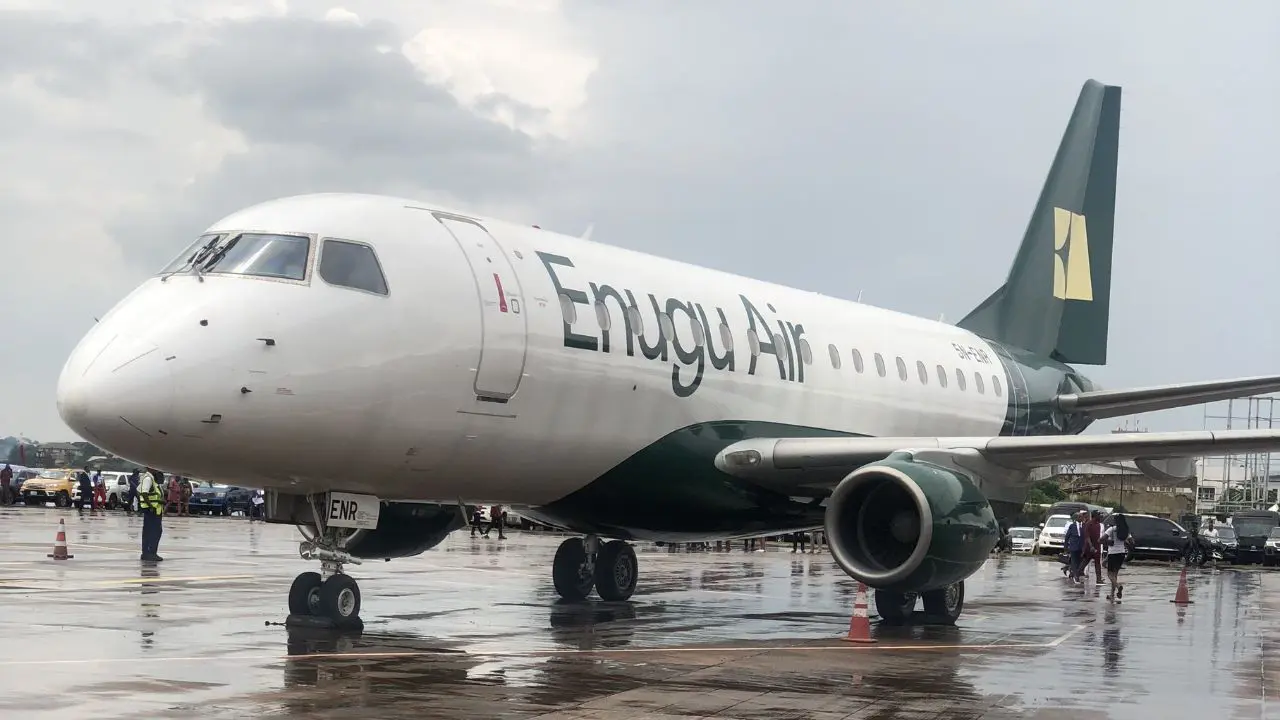
An aircraft belonging to Enugu Air has crashed at Benin City airport in Edo State.
The incident reportedly occurred on Thursday afternoon.
A video of the incident was shared on social media by an X user identified as @Oyindamola
“Enugu Air aircraft crash lands in Benin Airport this afternoon,” the X user wrote.
DAILY POST reports that the Enugu Air is owned and operated by the Enugu State government.
There’s was no official statement on the matter by the aviation authorities at the time of filing in this report.
Watch video.…For more, Complete your reading.
The Nigerian National Petroleum Company Limited, NNPCL, has increased the pump price of Premium Motor Spirit, PMS at its retail outlets for the second time in less than two days.
A market survey by DAILY POST showed that NNPCL raised its petrol price to N1,335 per litre on Wednesday from N1,270 per litre on Tuesday.
This means that the state-owned filling station increased its fuel price by N65 per litre.
The new price has been implemented at NNPCL filling stations in Wuse Zone 6 (Berger), Zone 4, and other outlets in Abuja and its environs.
Recall that on Tuesday, NNPCL increased its petrol pump price by N115 per litre to N1,270 per litre.
The latest increase comes amid continued petrol price volatility in the country’s downstream oil sector following Dangote Refinery’s resumption of the sale of refined petroleum products in U.S. dollars.
DAILY POST reports that crude oil prices rose by nearly 4 percent on Wednesday as airstrikes intensified in the Middle East.…For more, Complete your reading.
-

 Breaking News8 months ago
Terrorists Want ₦2m ‘levy’ in Katsina Community Despite Peaceful Agreement
-

 Breaking News8 months ago
Ex-EFCC Exhibit Keeper Kaduna Zonal Directorate, Allegedly Steals ₦22m
-

 Breaking News9 months ago
Niger Delta Group hails Tinubu, NUPRC for ₦373bn host community fund and 536 life-changing projects
-

 Breaking News7 months ago
Breaking News: Nigerian Air Force Reportedly Kills 750 Terrorists in Borno State
-

 Business9 months ago
House of Representatives probes $35m modular refinery project
-

 Business3 months ago
BREAKING NEWS: Zenith Bank Rewards Investors with ₦410.69bn Dividend at AGM
-

 Breaking News9 months ago
UCL: Osimhen Statement after Galatasaray’s 3-1 Win over Bodo/Glimt
-

 Breaking News7 months ago
Nasarawa Insecurity: Suspects Apprehended, Man Hunt Ongoing – Gov Sule