
Business
Securities and Exchange Commission, SEC adopts faster settlement cycle for market efficiency


The Securities and Exchange Commission has announced plans to transition Nigeria’s capital market from a T+3 to a T+2 settlement cycle to enhance market efficiency, reduce risks, and strengthen investor confidence.
The Director-General of the Commission, Emomotimi Agama, disclosed this at a Trade Associations Roundtable on ‘Ensuring Stakeholder Readiness for T+2 Settlement’ held in Abuja on Wednesday.
Agama said the transition represents a major milestone in aligning Nigeria’s capital market operations with international best practices, noting that it would make the market more competitive and resilient.
“A shorter settlement cycle is a hallmark of a mature, dynamic, and competitive market. It directly addresses several key objectives: it significantly reduces counterparty risk and market exposure. The less time between trade execution and final settlement, the lower the potential for a default to ripple through the system,” he stated.
The SEC boss added that the new system would also boost market liquidity by returning capital to investors more quickly, allowing for its redeployment and fostering greater market activity.
“It aligns our market with international best practices, enhances our attractiveness to foreign investors, and reinforces Nigeria’s position as a key player in the global financial arena. Ultimately, a more efficient and safer settlement system strengthens the bedrock of our market, investor confidence,” Agama said.
He explained that by shortening the time between trade execution and final settlement, the T+2 system would lower market exposure and minimise potential defaults, adding that faster settlement would improve liquidity by returning funds to investors sooner, thereby enabling reinvestment and greater trading activity.
Agama noted that several advanced economies have already moved toward T+1 settlements, stressing that Nigeria must continue to evolve to remain globally relevant.
“The global financial landscape is constantly changing, driven by technology and investor demand for efficiency. The transition to T+2 is, therefore, a strategic imperative to keep our market competitive and future-ready,” he said.
He emphasised that the success of the T+2 transition would depend on the collective readiness of all market participants, from brokers and custodians to clearing houses and investors.
“Your readiness and that of your members is the single most important determinant of our success. This means recalibrating back-office operations, upgrading technology systems, streamlining settlement processes, and ensuring that all market participants are informed and prepared,” he added.
Agama assured stakeholders that the Commission would work closely with trade associations, market operators, and Financial Market Infrastructures such as the Nigerian Exchange Limited and the Central Securities Clearing System to ensure a smooth and coordinated transition.
He also said the SEC would intensify investor education and awareness campaigns to ensure that all market participants understand the implications and benefits of the change.
“The move to T+2 is a necessary leap forward for the Nigerian capital market. It is a testament to our collective ambition to build a market that is efficient, resilient, and globally competitive,” he said.
Agama urged stakeholders to engage constructively and collaboratively to identify potential bottlenecks, share best practices, and agree on a clear roadmap for implementation, reaffirming the Commission’s commitment to providing the necessary regulatory support and guidance.
He described the move to T+2 as a “resounding step toward efficiency and global competitiveness”, positioning Nigeria’s capital market for sustained growth and improved investor confidence.
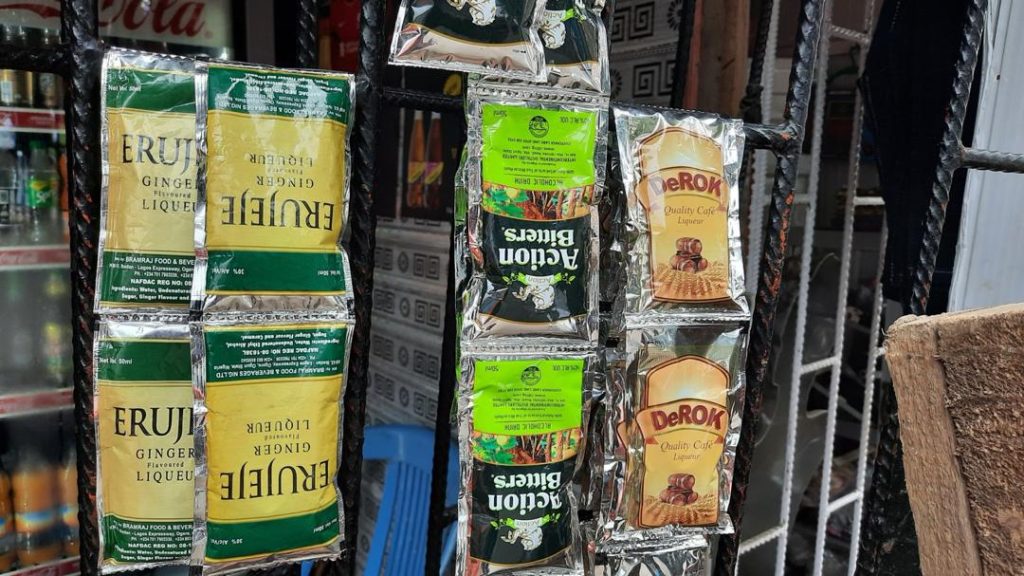
The Federal Government has ordered the National Agency for Food and Drug Administration and Control, NAFDAC, to immediately halt all enforcement actions regarding the ban on sachet alcohol and 200ml PET bottle products.
The offices of the Secretary to the Government of the Federation, OSGF, and National Security Adviser, ONSA, in a joint intervention, cited grave concerns over economic stability and potential security threats as reasons for the directive.
The statement warned that continued enforcement, in the absence of a fully implemented National Alcohol Policy, could “destabilize communities, worsen unemployment, and trigger avoidable security challenges”.
According to the statement signed by Terrence Kuanum, Special Adviser on Public Affairs to the SGF, the government clarified that while the National Alcohol Policy has been signed by the Federal Ministry of Health under the direction of President Bola Tinubu, NAFDAC must refrain from sealing factories or warehouses until the policy is fully operationalized.
The statement emphasized that the current “de facto banning” of the products without a harmonized framework is creating significant disruptions.
“The continued sealing of warehouses and de facto banning of sachet alcohol products is already creating economic disruptions and poses a growing security threat, particularly given the impact on employment, supply chains, and informal distribution networks across the country,” the statement warned.
The statement further revealed that the decision was influenced by a correspondence from the House of Representatives Committee on Food and Drugs Administration and Control, dated November 13, 2025.
The letter, signed by Deputy Chairman Uchenna Harris Okonkwo, highlighted existing National Assembly resolutions that cautioned against the proposed ban.
Reaffirming a previous suspension issued in December 2025, the statement stated the need to review legislative, public health and economic factors before a final decision is reached.
“Accordingly, all actions, decisions, or enforcement measures relating to the ongoing ban on sachet alcohol are to be suspended pending the final consultations and implementation of the National Alcohol Policy and the issuance of a final directive,” the statement emphasized.

The naira continued appreciation against the United States dollar at the official foreign exchange on Tuesday.
Central Bank of Nigeria data showed that the Naira further firmed up to N 1,351.02 against the dollar on Tuesday, up from N 1,354.26 traded the previous day.
This means that on a day-to-day basis the Naira gained N3.24 against the dollar.
Similarly, at the black market, the Naira appreciated by N5 to N1450 per dollar, up from N1455.
The development comes as the apex in a notice signed by its director of the trade and exchange department, directing banks to sell a maximum of $150,000 per week to licensed Bureau De Change operators.
DAILY POST reports that the country’s external reserves remained high at $47.03 billion as of 6th February 2026.
-

 Breaking News2 months ago
Breaking News: Nigerian Air Force Reportedly Kills 750 Terrorists in Borno State
-

 Breaking News3 months ago
Terrorists Want ₦2m ‘levy’ in Katsina Community Despite Peaceful Agreement
-

 Breaking News4 months ago
Ex-EFCC Exhibit Keeper Kaduna Zonal Directorate, Allegedly Steals ₦22m
-

 Breaking News5 months ago
Niger Delta Group hails Tinubu, NUPRC for ₦373bn host community fund and 536 life-changing projects
-

 News In Diaspora1 month ago
Nigerian JTF Arrests Woman Supplying Drugs to Boko Haram
-

 Breaking News3 weeks ago
New Young Players are Coming in Super Eagles – Ibrahim Gusau to Fans
-

 Business3 weeks ago
BREAKING: No Fewer Than 28 Ships to deliver Petrol, other Commodities at Lagos Ports
-

 Breaking News3 weeks ago
Emergency: Arik Air Flight Landed at Benin Airport