
Business
CPPE explains reasons behind Nigeria’s inflation decline in September


The Centre for the Promotion of Private Enterprise, CPPE, has explained that Nigeria’s inflation dropped for the sixth consecutive time in September 2025 to 18.02 per cent, down from 20.12 per cent in August, due to a combination of structural and macroeconomic factors.
CPPE Chief Executive Officer, Muda Yusuf, made this known in a statement reacting to Nigeria’s latest inflation figures.
According to the economic think tank, the country is experiencing disinflation because of increased food supply resulting from the harvest season, the base effect of inflation, improved exchange rate stability, and better coordination between fiscal and monetary authorities.
The centre stated that the decline in inflation suggests that inflationary pressures are gradually subsiding and that recent policy measures are beginning to yield results.
According to the CPPE statement: “Increased food supply during the harvest season has moderated food prices. Also, the base effect of inflation rates in 2024 averaged above 30 per cent, creating a high statistical base that supports a relative decline in current inflation readings; the naira has experienced relative stability — and mild appreciation in some months — helping to moderate imported inflation; macroeconomic policy improvements through tighter monetary policy, reduced fiscal leakages, and better coordination between fiscal and monetary authorities have contributed to easing inflationary pressures.
“These factors collectively explain the progress made on price moderation, though the underlying structural issues that drive cost-push inflation remain significant.”
CPPE, however, clarified that the counterinflation levels remain high and continue to erode household purchasing power, undermine consumer confidence, and weaken real incomes.
It stated: “The sustained disinflation trend is a welcome development and a sign of improving macroeconomic fundamentals.
“However, the cost-of-living crisis remains acute, particularly for low- and middle-income households. The next phase of reform must therefore prioritise welfare-focused and cost-reduction measures that deliver tangible relief to citizens.
“Business confidence is rising, but consumer confidence remains fragile. Policies that enhance productivity, stabilise prices, and reduce the structural cost of doing business will not only strengthen the disinflation trajectory but also foster inclusive and sustainable economic recovery.
“With consistency, coordination, and structural reforms, Nigeria can achieve a stable single-digit inflation rate over the medium term — anchoring growth, improving welfare, and restoring confidence in the economy.”
CPPE stressed that “the gains achieved so far must therefore be consolidated through decisive and well-targeted policy actions.”
DAILY POST reports that Nigeria’s inflation dropped for the sixth consecutive time in September 2025.
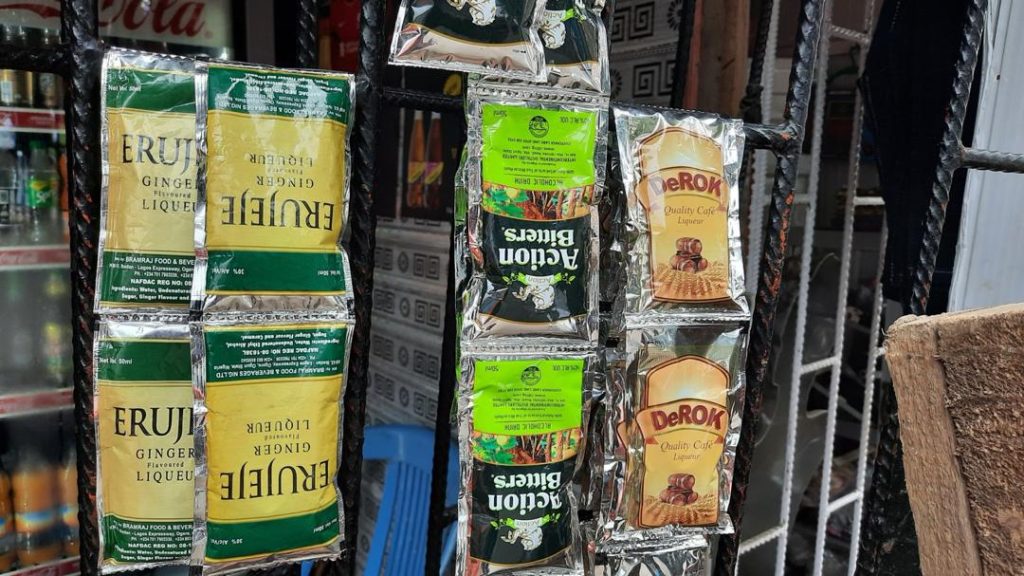
The Federal Government has ordered the National Agency for Food and Drug Administration and Control, NAFDAC, to immediately halt all enforcement actions regarding the ban on sachet alcohol and 200ml PET bottle products.
The offices of the Secretary to the Government of the Federation, OSGF, and National Security Adviser, ONSA, in a joint intervention, cited grave concerns over economic stability and potential security threats as reasons for the directive.
The statement warned that continued enforcement, in the absence of a fully implemented National Alcohol Policy, could “destabilize communities, worsen unemployment, and trigger avoidable security challenges”.
According to the statement signed by Terrence Kuanum, Special Adviser on Public Affairs to the SGF, the government clarified that while the National Alcohol Policy has been signed by the Federal Ministry of Health under the direction of President Bola Tinubu, NAFDAC must refrain from sealing factories or warehouses until the policy is fully operationalized.
The statement emphasized that the current “de facto banning” of the products without a harmonized framework is creating significant disruptions.
“The continued sealing of warehouses and de facto banning of sachet alcohol products is already creating economic disruptions and poses a growing security threat, particularly given the impact on employment, supply chains, and informal distribution networks across the country,” the statement warned.
The statement further revealed that the decision was influenced by a correspondence from the House of Representatives Committee on Food and Drugs Administration and Control, dated November 13, 2025.
The letter, signed by Deputy Chairman Uchenna Harris Okonkwo, highlighted existing National Assembly resolutions that cautioned against the proposed ban.
Reaffirming a previous suspension issued in December 2025, the statement stated the need to review legislative, public health and economic factors before a final decision is reached.
“Accordingly, all actions, decisions, or enforcement measures relating to the ongoing ban on sachet alcohol are to be suspended pending the final consultations and implementation of the National Alcohol Policy and the issuance of a final directive,” the statement emphasized.

The naira continued appreciation against the United States dollar at the official foreign exchange on Tuesday.
Central Bank of Nigeria data showed that the Naira further firmed up to N 1,351.02 against the dollar on Tuesday, up from N 1,354.26 traded the previous day.
This means that on a day-to-day basis the Naira gained N3.24 against the dollar.
Similarly, at the black market, the Naira appreciated by N5 to N1450 per dollar, up from N1455.
The development comes as the apex in a notice signed by its director of the trade and exchange department, directing banks to sell a maximum of $150,000 per week to licensed Bureau De Change operators.
DAILY POST reports that the country’s external reserves remained high at $47.03 billion as of 6th February 2026.
-

 Breaking News2 months ago
Breaking News: Nigerian Air Force Reportedly Kills 750 Terrorists in Borno State
-

 Breaking News3 months ago
Terrorists Want ₦2m ‘levy’ in Katsina Community Despite Peaceful Agreement
-

 Breaking News4 months ago
Ex-EFCC Exhibit Keeper Kaduna Zonal Directorate, Allegedly Steals ₦22m
-

 Breaking News5 months ago
Niger Delta Group hails Tinubu, NUPRC for ₦373bn host community fund and 536 life-changing projects
-

 News In Diaspora1 month ago
Nigerian JTF Arrests Woman Supplying Drugs to Boko Haram
-

 Breaking News3 weeks ago
New Young Players are Coming in Super Eagles – Ibrahim Gusau to Fans
-

 Business3 weeks ago
BREAKING: No Fewer Than 28 Ships to deliver Petrol, other Commodities at Lagos Ports
-

 Breaking News3 weeks ago
Emergency: Arik Air Flight Landed at Benin Airport