
Politics
Court Rulings Afffects 2027 Elections – INEC Chairman Raises Alarm

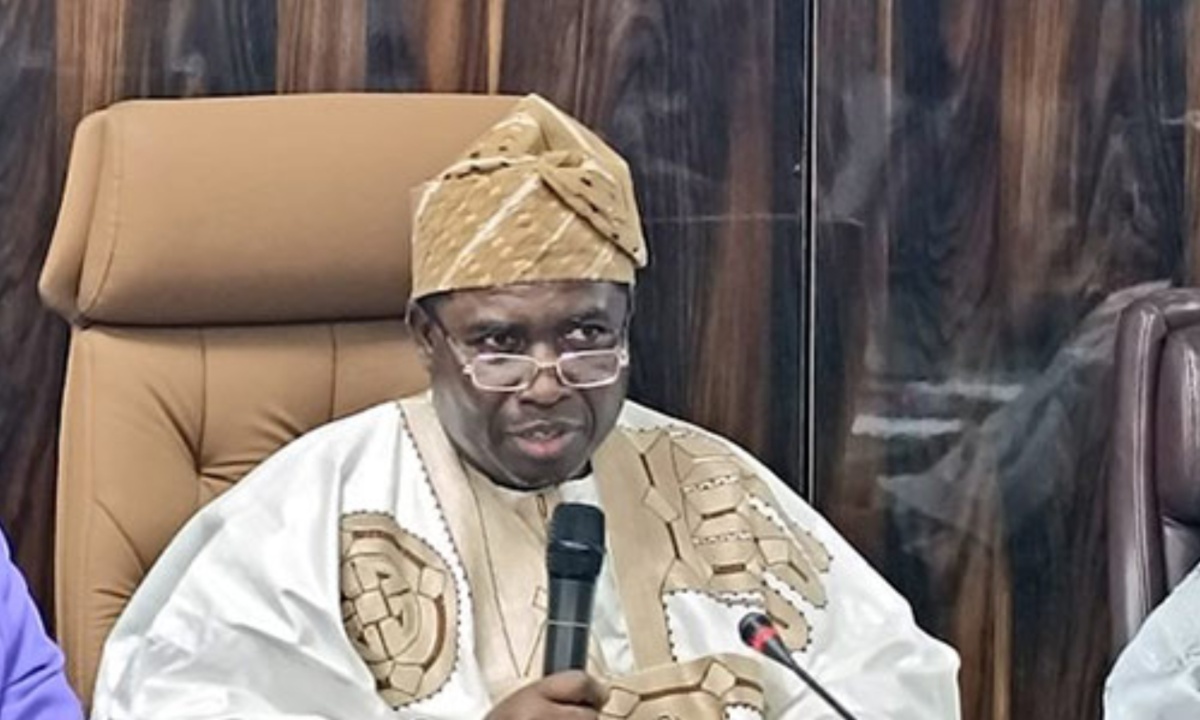
The Independent National Electoral Commission, INEC, has warned that recent court rulings affecting aspects of its timetable and schedule of activities for the 2027 general election could disrupt preparations for the polls if not urgently clarified by appellate courts.
INEC Chairman, Prof. Joash Amupitan, raised the concerns on Tuesday during the Commission’s second quarterly consultative meeting with leaders of political parties in Abuja.
Amupitan disclosed that the Commission had already filed appeals against two judgments of the Federal High Court which questioned certain timelines contained in INEC’s timetable for the 2027 elections.
According to him, while the Commission respects the decisions of the courts, the judgments raise significant legal questions regarding the extent of INEC’s constitutional and statutory powers to coordinate and regulate electoral activities.
The Federal High Court in Abuja had delivered two major rulings invalidating key compressed timelines in the 2027 general election timetable released by INEC.
The courts ruled that while INEC has the constitutional authority to issue and adjust election schedules, it cannot use administrative guidelines to shorten or override statutory windows guaranteed to political parties by the Electoral Act 2026
But Amupitan explained that in Suit No. FHC/ABJ/CS/517/2026, Youth Party v. INEC, delivered on May 20, 2026, the court questioned some timelines contained in the Commission’s timetable and schedule of activities for the 2027 General Election.
He added that in a subsequent judgment delivered on May 26, 2026, in Suit No. FHC/ABJ/CS/720/2026, Social Democratic Party (SDP) v. INEC, the court affirmed the Commission’s authority to issue an electoral timetable but nullified certain timelines relating to the nomination and substitution of candidates.
“In view of the differing conclusions reached in the judgments and in order to ensure certainty and stability in preparations for the 2027 General Election, the Commission has filed appeals against the decisions and has taken the necessary legal steps to obtain authoritative pronouncements from the appellate courts,” Amupitan said.
The INEC chairman maintained that the activities contained in the Commission’s timetable are interrelated operational processes designed to guarantee the orderly, transparent and successful conduct of elections.
He noted that while the Electoral Act prescribes timelines for certain electoral activities, several other critical processes are not expressly provided for in the law but must be accommodated within the overall electoral calendar.
According to him, these include the submission and verification of party membership registers, monitoring of party primaries across the federation, uploading the names of winners of monitored primaries on the Commission’s designated portal, candidate nominations, printing of ballot papers and result sheets, training of election personnel, voter education programmes and the deployment of election materials.
“The absence of coordinated timelines for such activities would create uncertainty, disrupt election planning and undermine the Commission’s constitutional responsibility to organise, undertake and supervise elections in an efficient and credible manner,” he said.
Amupitan argued that environmental and logistical factors, including weather conditions, terrain, procurement of sensitive materials and configuration of the Bimodal Voter Accreditation System, BVAS, require careful scheduling and coordination.
“The Commission therefore considers it imperative that all electoral activities be harmonised within a coherent and workable framework that promotes certainty, transparency, administrative efficiency and equal treatment of all political parties,” he added.
Despite the legal challenge, the INEC chairman assured political parties and the Nigerian public that the Commission remained committed to conducting the 2027 General Election in strict compliance with the Constitution, the Electoral Act and all lawful judicial pronouncements.
Speaking, National Chairman of the Inter-Party Advisory Council, IPAC, Dr. Yusuf Mamman Dantalle, said the exclusion of indirect primaries from Nigeria’s electoral framework contributed significantly to disputes, tensions and administrative challenges experienced by political parties during their just-concluded primaries for the 2027 general election.
Dantalle said the implementation of Section 84(2) of the Electoral Act 2026, which limited political parties to consensus or direct primaries, created operational difficulties for parties and triggered avoidable internal conflicts.
According to him, the absence of indirect primaries removed a flexible option that previously allowed parties to manage internal competition and reduce tensions among aspirants.
“The experience of the just-concluded nomination exercise demonstrates that the removal of indirect primaries created considerable constraints for political parties,” he said.
He explained that many political parties were forced to adopt consensus arrangements despite having multiple aspirants who had already obtained nomination forms and expressed interest in contesting elections.
Dantalle noted that in several cases, aspirants were persuaded or in some instances pressured to step down after party leaders had already aligned behind preferred candidates, leading to dissatisfaction and subsequent legal disputes.
He said while some aspirants accepted the outcomes in the interest of party unity, others challenged their exclusion, arguing that genuine consensus must be voluntary and inclusive.
According to him, in some cases, parties limited access to nomination forms or failed to adequately publicise primary election schedules, steps he said were taken to avoid the complications associated with direct primaries.
Dantalle said these developments reflected unintended consequences of the current legal framework governing party nominations.
He urged the National Assembly to urgently review the Electoral Act 2026 to restore flexibility in the conduct of party primaries and strengthen internal democracy within political parties.
The IPAC chairman further expressed concern over the tight timeline given to parties to submit updated membership registers, including National Identification Number, NIN, saying some genuine members were excluded due to logistical challenges.
He said IPAC had earlier warned about the implications of certain provisions of the Electoral Act during its February 2026 General Assembly in Abuja, where it urged lawmakers to reconsider the ban on indirect primaries.
Dantalle said recent developments had validated those earlier concerns and called for urgent reforms to the electoral legal framework.
He claimed that in certain instances, parties restricted access to nomination forms or did not sufficiently publicize primary election schedules, actions he asserted were taken to circumvent the complications linked to direct primaries.
Dantalle indicated that these occurrences represented unintended outcomes of the existing legal structure governing party nominations.
He called upon the National Assembly to promptly reassess the Electoral Act 2026 to reinstate flexibility in the execution of party primaries and enhance internal democracy within political parties.
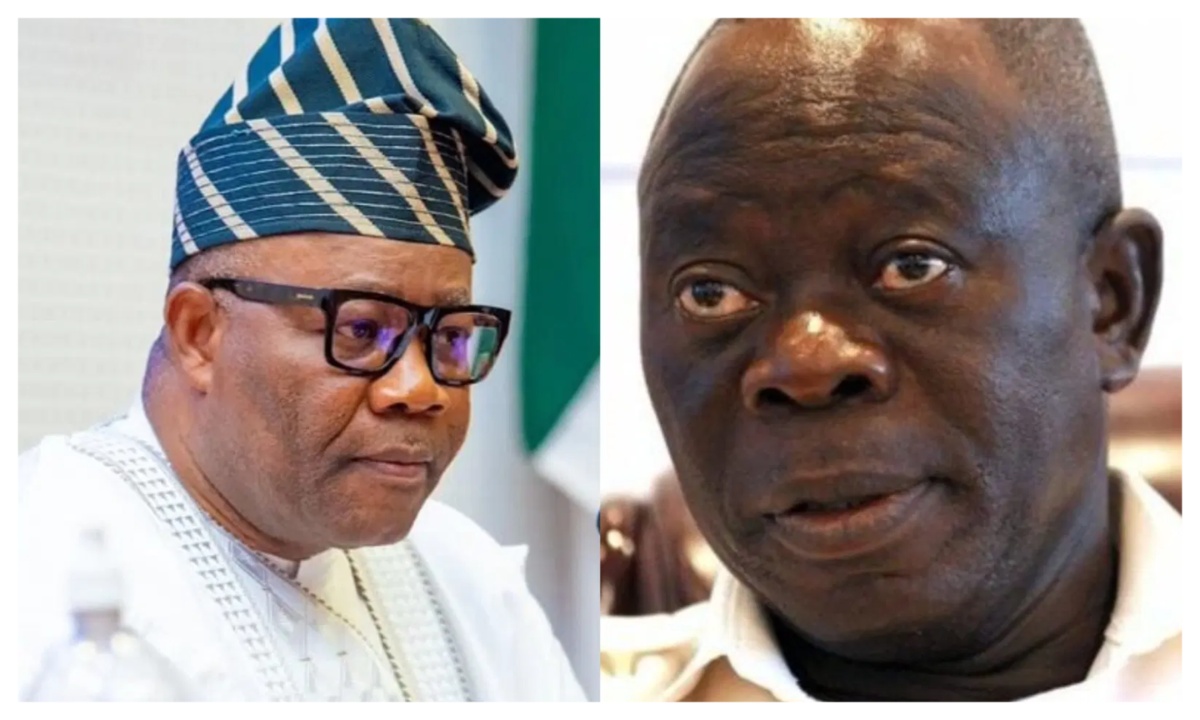
Edo North senator, Adams Oshiomhole, has playfully called out Senate President Godswill Akpabio for breaching truce over ‘massaging women’s legs’ comment.
At plenary on Thursday, Oshiomhole said he signed a truce of no more hostilities, stating that Akpabio breached the agreement by reverting to previous matters.
DAILY POST reports that Akpabio had mocked Oshiomhole over the viral video allegedly showing him massaging a woman’s leg aboard a private jet.
The Senate President stated that the Senate initially ignored the footage because it was suspected to have been generated using artificial intelligence, AI.
Recall that a video which surfaced on X on February 3, 2026, sparked widespread reactions after it allegedly showed the former Edo State governor massaging a woman’s leg inside a private jet, days later the lawmaker debunked the video stating that it was AI.
Joking over it at the plenary, Oshiomhole said, “I want to report to this house that the senate president and I we signed a truce of no more hostilities and senate president breach the truce by reverting to previous matter, the truce stands, you should not violate, I will not violate.”
Responding, Akpabio said, “Let me first of all apologize to Oshiomhole if whatever I said could in any way injure him or feel offended.”
Watch video.…For more, Complete your reading.

Members of Peoples Democratic Party, PDP, loyal to the Minister of Federal Capital Territory, FCT, Nyesom Wike, have taken over the secretariat of the party in Oyo State.
The secretariat, located in the Molete area of Ibadan, was in the custody of the faction loyal to Governor Seyi Makinde of the state until Thursday when the members loyal to Wike took over the premises.
DAILY POST gathered that the PDP members stormed the secretariat on Thursday and occupied the premises with hundreds of members of the party in attendance.
PDP chairman in the state, Professor Abdulrahman Akinoso, confirmed the development to DAILY POST.
Akinoso in a telephone conversation with DAILY POST on Thursday, insisted that the real owners have taken over the premises.
He said, “It is true. It is not faction. It is PDP. We have taken over the premises. It was in the morning. We were there in the morning. We just left the premises. We are now in control. We have taken over the premises.” .…For more, Complete your reading.
-

 Breaking News8 months ago
Terrorists Want ₦2m ‘levy’ in Katsina Community Despite Peaceful Agreement
-

 Breaking News8 months ago
Ex-EFCC Exhibit Keeper Kaduna Zonal Directorate, Allegedly Steals ₦22m
-

 Breaking News9 months ago
Niger Delta Group hails Tinubu, NUPRC for ₦373bn host community fund and 536 life-changing projects
-

 Business9 months ago
House of Representatives probes $35m modular refinery project
-

 Breaking News7 months ago
Breaking News: Nigerian Air Force Reportedly Kills 750 Terrorists in Borno State
-

 Business3 months ago
BREAKING NEWS: Zenith Bank Rewards Investors with ₦410.69bn Dividend at AGM
-

 Breaking News9 months ago
UCL: Osimhen Statement after Galatasaray’s 3-1 Win over Bodo/Glimt
-

 Breaking News7 months ago
Nasarawa Insecurity: Suspects Apprehended, Man Hunt Ongoing – Gov Sule