
Business
Breaking News: National Grid Collapses Again, Wreaks Havoc on Nigerians, businesses

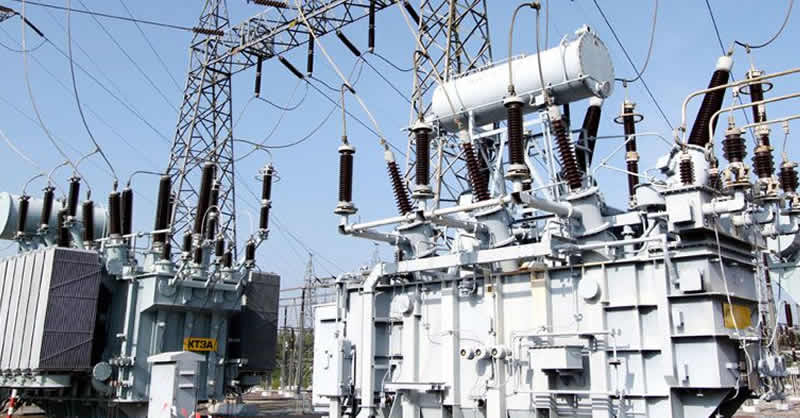
Nigerians experienced four national grid collapses on Monday, December 29, 2025, plunging the populous African country into blackout.
The grid collapse led to the loss of billions of Naira for businesses, firms, companies, and Nigerians who rely on the national grid as their primary source of electricity supply.
The grip collapsed around 2:02 pm on Monday, according to the Abuja Electricity Distribution Company, which led to an outage across its franchise in Abuja, Nasarawa, and Kogi states.
However, in an update on X on Monday by Nigeria National Grid, electricity allocation to electricity distribution rose from 50 megawatts in the afternoon of Monday when the grid collapsed to 2,958 MW as of 10:17 pm.
Accordingly, with the National grid restoration takeoff on Monday night, Abuja DisCo received 453 MW, Ikeja DisCo 447 MW, Eko DisCo 380 MW, Ibadan DisCo 354 MW, Benin DisCo 241 MW, Enugu DisCo 230 MW, Port Harcourt DisCo 210 MW, Kano DisCo 199 MW, Kaduna DisCo 191 MW, Jos DisCo 167 MW, and Yola DisCo 86 MW.
However, DAILY POST reports that electricity supply is yet to be restored to the majority of Nigerians as of Monday night, as major Discos confirmed blackouts.
DAILY POST reports that while the country experienced four national grid collapses in 2025, which were on February 12, March 7, Wednesday, September 10, and December 29, it collapsed more than 12 times the previous year. The incident re-echoes Nigeria’s over one-decade-old power sector challenges.
Speaking on the latest grid collapse, the Chief Executive Officer of the Centre for the Promotion of Private Enterprise, Dr. Muda Muda Yusuf, lamented that at this day and time the country is still battling with grid collapses.
According to him, businesses may experience huge losses following the grid collapse if it is not fixed within 24 hours.
“We thought that we had gone past this. Because this year has been relatively stable.
“But now we have this collapse. It’s not a good way to end the year. But we can only hope that it’s something that we fix very quickly,” he stated.
Similarly, former spokesperson for Abuja Electricity Distribution Company, Oyebode Fadipe, expressed concern over the recent collapse of Nigeria’s national power grid, describing the incident as troubling given the period of low electricity demand.
Fadipe noted that grid failures during festive periods are particularly worrisome because electricity load is usually reduced at that time of the year.
He explained that many businesses and industrial users typically shut down operations during the holidays, leading to lower pressure on the grid.
According to him, while reduced demand generally eases stress on the system, it does not completely eliminate the risk of a grid outage.
He pointed out that major technical faults or external disruptions could still trigger a collapse.
Fadipe stressed that the exact cause of the latest outage remains unclear, making it difficult to draw firm conclusions.
However, he raised the possibility of renewed vandalism of gas pipelines, recalling that similar incidents had recently affected power supply and were reportedly handled by the Nigerian Independent System Operator (NISO) for several days.
He lamented that persistent grid collapses at this stage of the power sector’s development reflect deeper structural challenges within the Nigerian Electricity Supply Industry (NESI).
Looking ahead, Fadipe said there is little indication that 2026 will be significantly different from previous years in terms of grid stability, unless deliberate steps are taken to address underlying issues.
He expressed hope that appropriate policies and reforms would be implemented to prevent further regression in the power sector and improve the reliability of electricity supply nationwide.
“The collapse of the grid at a time of low load demand frightens me.
“The pressure on the grid during festive periods is usually & generally low because a number of end users, especially companies, would have closed for the year.
“However, the drop in load is not enough reason to prevent grid outage, as other factors like a major fault could also trigger it.
“All said, the fact that we are still grappling with a grid system outage at this time in the life of the sector leaves much to be desired.
“Of what 2026 has, there is nothing to show that it will be different from what we saw in previous years.
“We only hope that the right policies will be put in place to ensure that the NESI does not go into regression,” he told DAILY POST.
DAILY POST reports that the recent grid comes at a time the Minister of Power, Adebayo Adelabu, failed to fulfill his promised 6,000 megawatts of electricity in 2025.
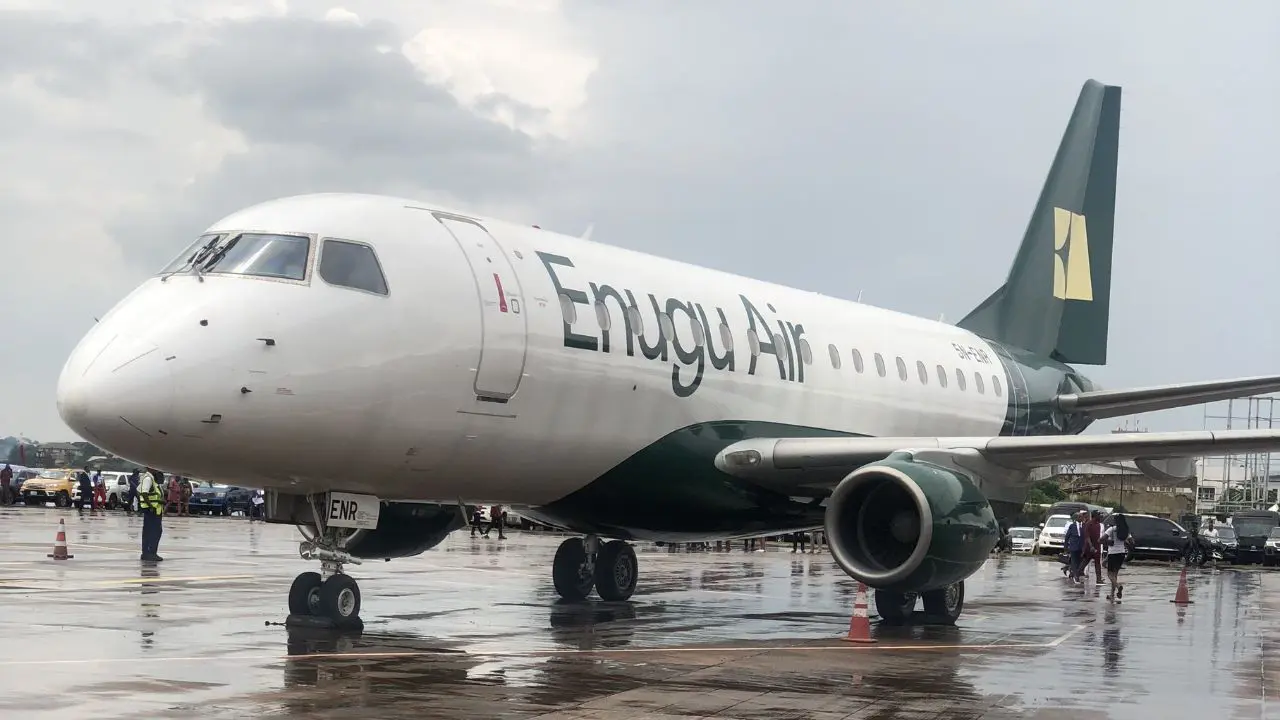
An aircraft belonging to Enugu Air has crashed at Benin City airport in Edo State.
The incident reportedly occurred on Thursday afternoon.
A video of the incident was shared on social media by an X user identified as @Oyindamola
“Enugu Air aircraft crash lands in Benin Airport this afternoon,” the X user wrote.
DAILY POST reports that the Enugu Air is owned and operated by the Enugu State government.
There’s was no official statement on the matter by the aviation authorities at the time of filing in this report.
Watch video.…For more, Complete your reading.
The Nigerian National Petroleum Company Limited, NNPCL, has increased the pump price of Premium Motor Spirit, PMS at its retail outlets for the second time in less than two days.
A market survey by DAILY POST showed that NNPCL raised its petrol price to N1,335 per litre on Wednesday from N1,270 per litre on Tuesday.
This means that the state-owned filling station increased its fuel price by N65 per litre.
The new price has been implemented at NNPCL filling stations in Wuse Zone 6 (Berger), Zone 4, and other outlets in Abuja and its environs.
Recall that on Tuesday, NNPCL increased its petrol pump price by N115 per litre to N1,270 per litre.
The latest increase comes amid continued petrol price volatility in the country’s downstream oil sector following Dangote Refinery’s resumption of the sale of refined petroleum products in U.S. dollars.
DAILY POST reports that crude oil prices rose by nearly 4 percent on Wednesday as airstrikes intensified in the Middle East.…For more, Complete your reading.
-

 Breaking News8 months ago
Terrorists Want ₦2m ‘levy’ in Katsina Community Despite Peaceful Agreement
-

 Breaking News8 months ago
Ex-EFCC Exhibit Keeper Kaduna Zonal Directorate, Allegedly Steals ₦22m
-

 Breaking News9 months ago
Niger Delta Group hails Tinubu, NUPRC for ₦373bn host community fund and 536 life-changing projects
-

 Breaking News7 months ago
Breaking News: Nigerian Air Force Reportedly Kills 750 Terrorists in Borno State
-

 Business9 months ago
House of Representatives probes $35m modular refinery project
-

 Business3 months ago
BREAKING NEWS: Zenith Bank Rewards Investors with ₦410.69bn Dividend at AGM
-

 Breaking News9 months ago
UCL: Osimhen Statement after Galatasaray’s 3-1 Win over Bodo/Glimt
-

 Breaking News7 months ago
Nasarawa Insecurity: Suspects Apprehended, Man Hunt Ongoing – Gov Sule