
News In Diaspora
A Militia Attack Kills No Fewer Than 69 in DR Congo

A militia attack killed at least 69 people in Ituri province in the conflict-torn northeast of the Democratic Republic of Congo, local and security sources told AFP Saturday.
For more than 30 years, the mineral-rich eastern DRC has been a battleground between various armed groups, vying for control of its many mines.
Two ethnic groups, the Hema and the Lendu, have been locked in a long-running violent conflict in Ituri, a gold-rich province that borders Uganda and South Sudan.
Armed men affiliated with the Codeco militia (Cooperative for the Development of Congo), which claims to protect the Lendu, carried out attacks in several villages on April 28, local and security sources told AFP, killing at least 69 people.
These attacks followed an earlier assault by another armed group, the Convention for the Popular Revolution, which says it fights for the Hema community on positions held by the Congolese army near the locality of Pimbo, they said.
More than 70 people were killed when Codeco fighters launched the retaliatory attacks in late April, civil society leader Dieudonne Losa told AFP.
On condition of anonymity, two other security sources confirmed the attacks, with one stating a death toll of at least 69, including 19 militia members and soldiers.
The presence of Codeco fighters delayed the recovery of the bodies for several days, they said.
“Only 25 bodies have been buried,” Losa said Saturday, adding several sets of remains had yet to be recovered.
A humanitarian source described bodies “strewn on the ground” near the village of Bassa, one of the areas targeted.
Avoiding retaliation
Related News
Dozens killed in central Mali fresh attacks — Official
Over two million people displaced by North East insecurity — ICRC
Nigerian refugee returnees rise by 1,800
The United Nations’ mission in the DRC said on April 30 it had rescued “nearly 200 people caught under fire” from the CRP assault on the FARDC.
On Saturday, it said it “strongly condemns the recent wave of deadly attacks targeting civilians” in the restive east.
The Ente association, a non-profit representing the Hema community, described the killings as a “massacre”, urging its members to avoid retaliation.
Famous for its mineral wealth, ranging from cobalt and copper to uranium and diamonds, the former Belgian colony has long been beset by corruption and bloodshed.
Since early 2025, Ituri has seen a resurgence of the CRP, a group founded by convicted Congolese warlord Thomas Lubanga.
He was found guilty in 2012 by the International Criminal Court for recruiting children into his rebel army and released in 2020 on completion of his prison sentence.
Fighting between the CRP, the Congolese army, and the Codeco militia has been marked by widespread abuses and killings of civilians.
The region also faces ongoing attacks by the Allied Democratic Forces, a group formed by former Ugandan rebels that has pledged allegiance to the Islamic State.
The province has been plunged into a humanitarian crisis, with nearly one million internally displaced people, according to the United Nations Office for the Coordination of Humanitarian Affairs.
AFP

Renowned Nigerian singer and songwriter Tiwa Savage has arrived in Malawi and is already engaging with women creatives as part of her visit to the country.
The award-winning artist visited Music Crossroads Malawi in Lilongwe, where she interacted with young creatives and encouraged them to pursue their talents with confidence.
During the session, Tiwa also spoke about the challenges women, especially young female artists, face in the creative industry, including gender-based violence and other forms of abuse, urging them to remain resilient.
The “Eminado” hitmaker arrived in Malawi on Tuesday.
On her first night in the country, Tiwa was spotted enjoying an evening with several prominent Malawian women, including Temwa Chawinga, Kim of Diamonds, Maggie Kadrum, Tay Grin, and other creatives.
Her visit is expected to include more engagements with women in the creative industry as she continues her activities in Malawi.
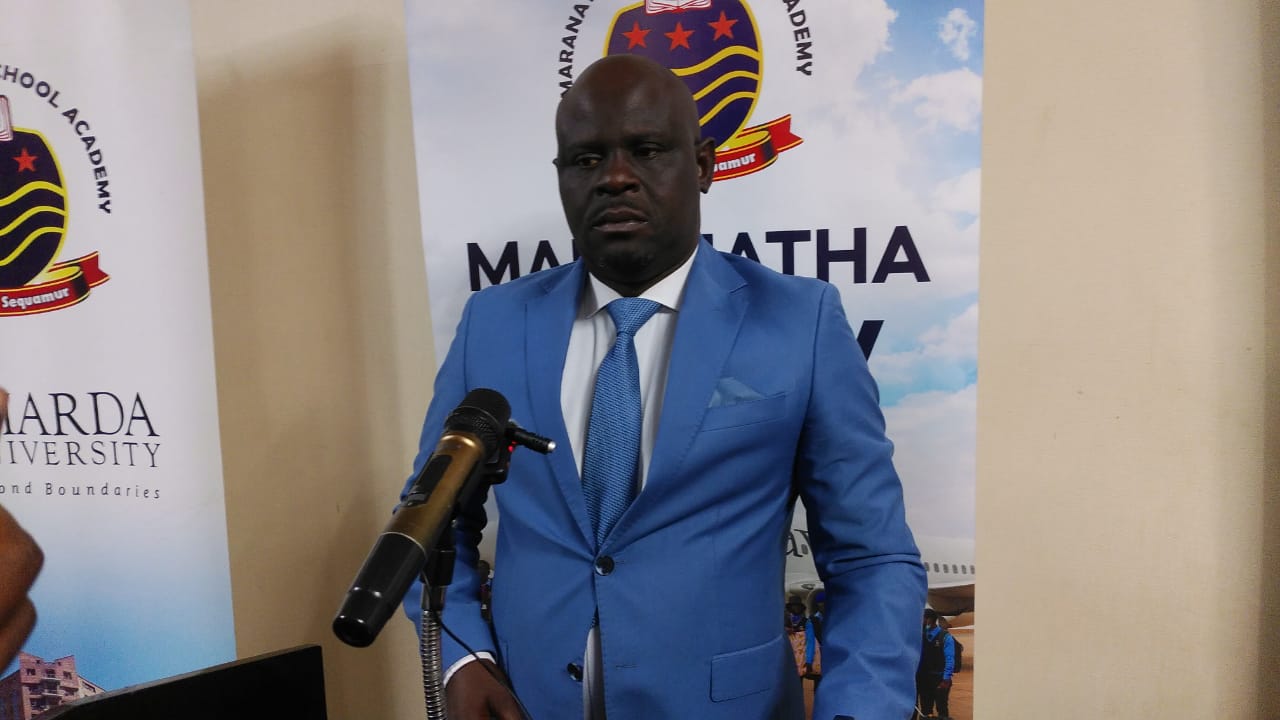
Maranatha Private Academy Managing Director Dr. Ernest Kaonga has come out of his cocoon and commented on the recently released list of 2026 scholarship programe which has seen 485 learners qualifying.
Speaking during the media briefing in Blantyre Kaonga said currently management is on the process of verifying names of the selected students.
“Honestly the administration of the exams across the country were successful but management noticed some discrepancies.
“It looks like some have failed miserably during MANEB but have done very well during the Maranatha examination, which is suspicious,” he said.
He added that the selected students will undergo another assessment at the school and those who fail the subsequent test risk losing their scholarships.
Kaonga further stated that top-performing students may get an opportunity to pursue studies at Sharda University on scholarship.
Meanwhile, Kaonga has hinted that some staff members have been dismissed for accepting a MK2 bribe from parents and guardians.
The scholarship is worth Mk24 million per student.
Faceofmalawi will keep you updated on the matter.
-

 Breaking News11 months ago
Niger Delta Group hails Tinubu, NUPRC for ₦373bn host community fund and 536 life-changing projects
-

 Breaking News10 months ago
Ex-EFCC Exhibit Keeper Kaduna Zonal Directorate, Allegedly Steals ₦22m
-

 Breaking News9 months ago
Terrorists Want ₦2m ‘levy’ in Katsina Community Despite Peaceful Agreement
-

 Breaking News8 months ago
Breaking News: Nigerian Air Force Reportedly Kills 750 Terrorists in Borno State
-

 Business11 months ago
House of Representatives probes $35m modular refinery project
-

 Business4 months ago
BREAKING NEWS: Zenith Bank Rewards Investors with ₦410.69bn Dividend at AGM
-

 Breaking News4 months ago
Plaintiff To Pay ₦1m Fines For Delay In Jonathan Eligibility Suit
-

 Breaking News4 months ago
DEFAMATION OF CHARACTER: SERAP On Appeal Against The ₦100m Judgment In Favour of DSS Officials