Connect with us

Breaking News

Xenophoba: Not Only South Africa But Also Many Other Countries Treat Nigerians Harsely

Published

on

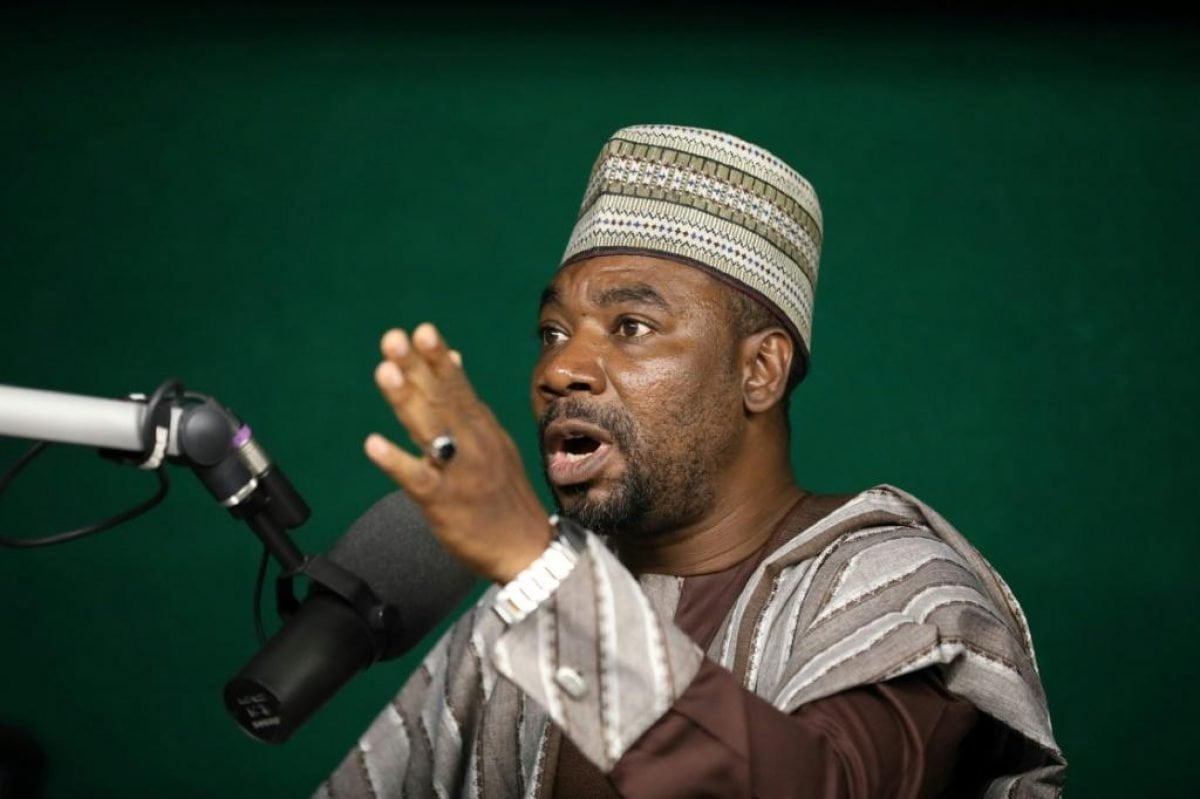
The host of Brekete Family, a Human Rights Radio and Television programme, Ahmed Isah, popularly known as “Ordinary President,” has revealed how the world treats Nigerians differently amid the ongoing Xenophobic attacks in South Africa.

Speaking on the Brekete Family programme on Tuesday, Ordinary President also pointed out how Nigeria gave asylum to South African freedom fighters.

Recall that South Africans have killed a handful of Nigerian, Ghanaian, and other African nationals in the recent xenophobic attacks.

Reacting to the development, Ordinary President said, “See what they are doing to Nigerians in South Africa.

“Other nationals from other countries like Zimbabwe, Rwanda, Tanzania, even countries that share common boundaries with them [South Africa]. They are humiliating them.

“Let it not be like they are singling out only Nigerians; that is why they are doing it to other African countries.

“See the approach to other nationals and the approach to Nigerians; you can see the anger and bitterness. The same South Africa that we contributed money to, so that they could regain their freedom.

“South Africans were coming to Nigeria to school on scholarship, their freedom fighters who narrowly escaped will come to Nigeria, and we will give them asylum.

“But Nigerians, let me let you people know, it’s not only South Africa, but almost every country around the world is doing something to Nigerians that they can’t do to other nationals.

“If you go to Canada, go to their prison and check which nationals are more. If you go to India, go to their prison and check, and go to other countries. Nobody seems to be bothered because of the ineffective leadership we have in this country [Nigeria],” he said.

Read The Full Story / Watch The Full Video

Continue Reading
Click to comment

Leave a Reply

Your email address will not be published. Required fields are marked *

Breaking News

Federal Government Has Pledged To Timely Release Police Operational Funds

Published

on

The Federal Government has pledged to prioritise funding for the Nigeria Police Force amid growing security concerns across the country and has assured that approved funds for police operations will be released promptly to strengthen security and electoral processes.

This was contained in a press statement issued on Monday by the Director of Press and Public Relations at the Office of the Accountant-General of the Federation, Bawa Mokwa, following a meeting between the Accountant-General of the Federation, Dr Shamseldeen Ogunjimi, and the Inspector-General of Police, Olatunji Disu, in Abuja.

According to the statement, Ogunjimi assured the police hierarchy of the Federal Government’s commitment to ensuring timely funding for security operations, stressing that the role of the Nigeria Police Force in tackling insecurity remained critical.

“The Accountant-General of the Federation, Dr Shamseldeen Ogunjimi, has expressed the Federal Government’s readiness and commitment to ensure prompt release of approved funds to the Nigeria Police Force in order to strengthen its operations and tackle insecurity across the country,” the statement read.

The Accountant-General of the Federation said the security challenges confronting the country required stronger institutional support for the police to enable the force to discharge its statutory responsibilities effectively and professionally.

“The role of the Nigeria Police Force in addressing the nation’s security challenges is enormous and requires adequate support to enable the Force discharge its responsibilities effectively and professionally,” the statement added.

Ogunjimi also linked the need for sustained funding to preparations for the forthcoming off-season governorship elections scheduled for June and August 2026, noting that security agencies would require significant financial backing to ensure peaceful electoral exercises.

“Dr Ogunjimi also assured the IGP that the forthcoming off-season elections scheduled for June and August 2026 would require substantial support from the Federal Government to ensure seamless police operations during the electoral process,” the statement added.
Related News

The Accountant-General of the Federation further urged the police leadership to sustain engagement with the Minister of Finance and Coordinating Minister of the Economy to facilitate the release of outstanding funds owed to the force.

He warned that inadequate funding could undermine critical police operations and efforts to combat insecurity nationwide.

“He urged the Inspector-General of Police to also continue his engagement with the Minister of Finance and Coordinating Minister of the Economy to facilitate the release of outstanding funds owed to the Police, noting that inadequate funding could hinder critical security operations,” the statement noted.

Earlier, the Inspector-General of Police, Olatunji Disu, appealed for the immediate release of pending funds to support policing activities across the country.

According to the statement, Disu stressed that adequate funding remained essential for the police to effectively discharge their constitutional responsibilities, particularly as preparations intensify for the off-season elections.

“He also highlighted the importance of adequate funding for the forthcoming off-season elections in June and August 2026, stressing that the Nigeria Police Force would play a critical role in ensuring peaceful and credible elections,” the statement stated.

Nigeria has continued to grapple with widespread security challenges, including banditry, kidnapping, insurgency, communal clashes, and attacks on critical infrastructure.

The PUNCH earlier reported that military and paramilitary agencies received a total of N2.3tn in special intervention funding between October 2023 and September 2025, according to documents from the Federation Account Allocation Committee.

Read The Full Story / Watch The Full Video

Continue Reading

Breaking News

Central Bank of Nigeria CBN Has Cautioned Non-interest Banks

Published

on

The Central Bank of Nigeria has warned non-interest financial institutions against governance and compliance risks capable of undermining public confidence and financial stability in the country’s growing Islamic finance sector.

The warning was contained in a press statement issued by the apex bank on Monday following the 2nd Annual Interactive Session between the CBN Financial Regulation Advisory Council of Experts and the Advisory Committees of Experts of Non-Interest Financial Institutions held at the CBN Auditorium in Abuja.

Speaking through the Director of the Financial Policy and Regulation Department, Dr Rita Sike, the Deputy Governor, Financial System Stability, Philip Ikeazor, said the rapid expansion of the industry had increased exposure to operational and regulatory vulnerabilities.

The statement read, “The Deputy Governor, however, observed that as the industry grows in size, sophistication, and interconnectedness, it faces unique risks, particularly non-compliance risk, governance challenges, operational vulnerabilities, and emerging technological risks.

“He warned that such risks, if not properly managed, could undermine public confidence, financial stability, and the overall credibility of the non-interest finance ecosystem.”

According to the CBN, the engagement was part of ongoing efforts to strengthen Shariah governance, improve regulatory clarity, and reinforce risk management standards within the non-interest financial services industry.

The apex bank noted that non-interest financial institutions continued to play an increasingly important role in Nigeria’s financial system by providing ethical and Shariah-compliant alternatives to conventional banking.

It stated that the institutions were also contributing to financial inclusion, real sector financing, micro, small, and medium enterprises development, and shared prosperity.

The CBN further explained that the establishment of FRACE and the mandatory constitution of ACEs across all non-interest financial institutions were designed to institutionalise a harmonised governance framework for the sector.

According to the statement, sustained interaction between FRACE and ACEs remained critical to ensuring that regulatory expectations were properly understood and consistently implemented across the industry.
Related News

“The objectives of today’s session include fostering the institutionalisation and effective operation of a robust Shariah governance system within Non-Interest Financial Institutions, and providing a structured platform for dialogue, knowledge-sharing, and collaboration,” Ikeazor was quoted in the statement.

In his remarks, the Deputy Chairman of FRACE, Prof Bashir Umar, said the interactive session was aimed at strengthening governance within the non-interest finance sub-sector and promoting constructive engagement between regulators and industry advisory committees.

He also commended the management of the CBN for reviving the session, which was first introduced in 2014.

Earlier in her welcome remarks, Sike reaffirmed the apex bank’s commitment to building a strong and well-governed non-interest financial services industry.

She noted that the growing diversity of products and delivery channels, particularly the emergence of Islamic fintech, had increased the need for stronger regulatory oversight and continuous engagement among industry stakeholders.

“The growing diversity of products, institutions, and delivery channels, particularly with the emergence of Islamic fintech, underscores the need for continuous dialogue, sound regulatory oversight, and robust advisory input from scholars and practitioners,” she said.

The session featured technical presentations on Shariah non-compliance risks in non-interest banks and the role of Islamic fintech in driving financial inclusion.

Participants at the event included members of FRACE, chairmen and members of various ACEs, managing directors of non-interest banks, senior CBN officials, and representatives of the Bank of Industry and the Securities and Exchange Commission.

The PUNCH earlier reported that experts in Nigeria’s non-interest finance space called for larger and more frequent Sukuk issuances to deepen the market, unlock long-term capital for infrastructure, and widen financial inclusion, as volatility in global markets pushes investors towards asset-backed and ethical instruments.

Read The Full Story / Watch The Full Video

Continue Reading

Trending