Breaking News
Former Vice President, Condemns Tinubu’s Security strategy As Ex-lawmaker Dies In Captivity
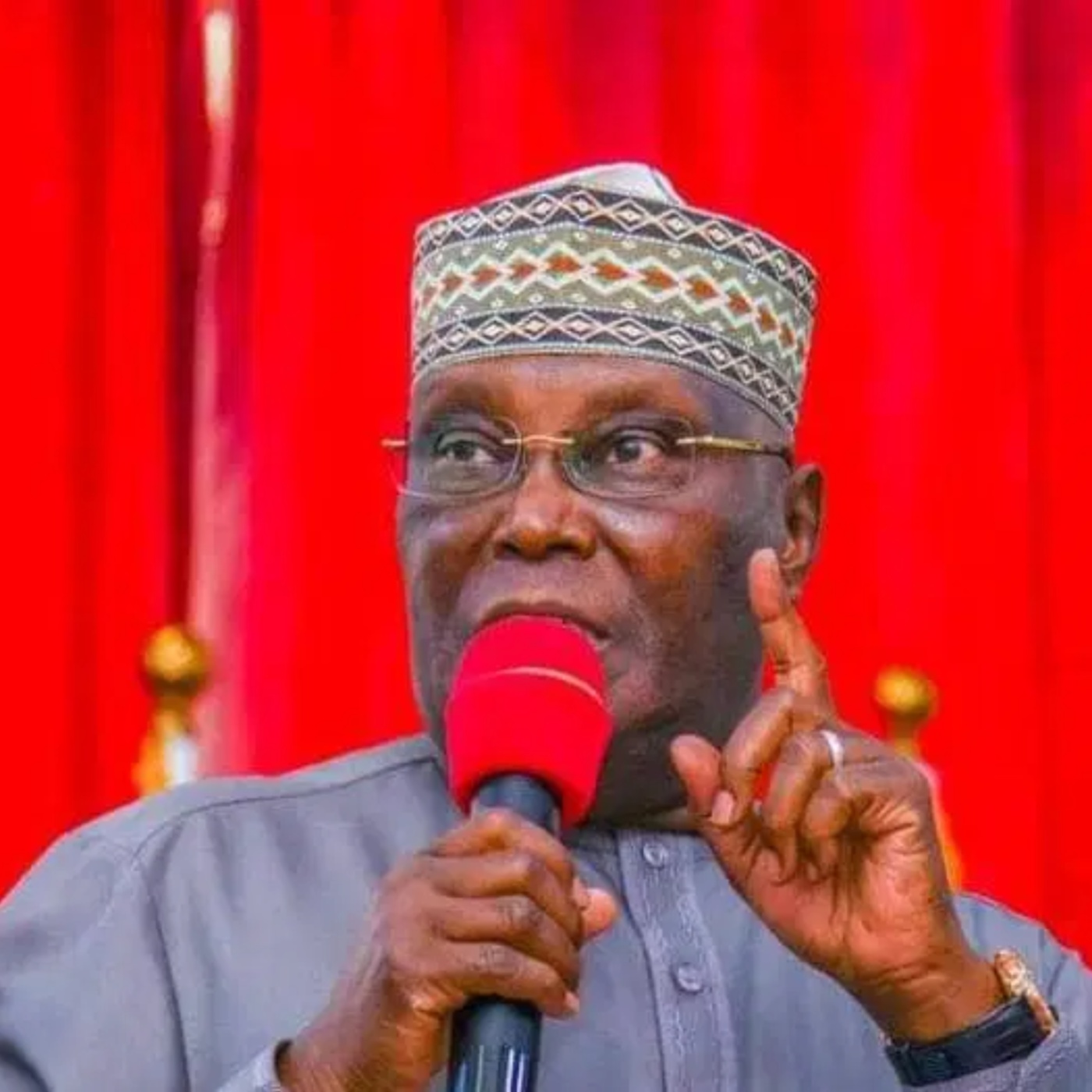
Former Vice President Atiku Abubakar on Tuesday faulted the security strategy of President Bola Tinubu following the death of former House of Representatives member, Abba Adamu, in kidnappers’ captivity.
Adamu was reportedly abducted by bandits along the Abuja-Kaduna highway on May 3 and died in captivity nine days later despite efforts by his family to secure his release.
Reacting in a statement issued in Abuja through his Senior Special Assistant on Public Communication, Phrank Shaibu, Atiku described the incident as a grim reflection of the worsening insecurity across the country.
The former VP said the death of the ex-lawmaker was not only a personal tragedy but also a damning indictment of a government that had allegedly failed in its constitutional responsibility to protect lives and property.
He said, “Adamu’s death is yet another grim reminder of the worsening collapse of security under the Tinubu administration. Let us be brutally honest: Nigeria is under siege, and this administration appears either overwhelmed, indifferent, or dangerously incompetent in the face of this national emergency.
“When a former member of the National Assembly can be abducted on one of the country’s most strategic highways and die in captivity, what hope remains for the ordinary Nigerian who lacks visibility, influence, or protection?”
The chieftain of the African Democratic Congress lamented that insecurity had become widespread, with citizens allegedly being kidnapped from highways, farms, communities and homes while government responses remained inadequate.
“This is no longer about isolated incidents. It is now a horrifying pattern. Nigerians are being kidnapped from highways, farms, communities, even their homes, while the government continues to issue sterile statements and recycled assurances that bear no resemblance to the lived reality of our people,” he stated.
Atiku further alleged that insecurity under the current administration had evolved into what he called “a cruel national routine,” saying many Nigerians now travel in fear while businesses and farming activities continue to suffer disruptions.
Related News
The Waziri Adamawa also criticised the continued attacks along the Abuja-Kaduna corridor despite repeated assurances by security agencies and huge budgetary allocations to the sector.
“A government that cannot secure its highways cannot claim to govern. A government that watches citizens get hunted like prey has failed the most elementary test of leadership.
“It is particularly tragic that the Abuja-Kaduna corridor and surrounding routes have remained notorious theatres of terror despite repeated promises, security budgets running into trillions, and endless propaganda about progress,” he added.
He questioned the Federal Government’s security strategy and demanded accountability from the administration.
“Nigerians deserve answers. What exactly is the security strategy of this administration? Where is the urgency? Where is the accountability? How many more deaths must be recorded before this government realises that press releases do not defeat bandits?
“No amount of political spin can deodorise this failure. A nation where former lawmakers die in captivity while criminals operate with audacity is a nation in distress.
“At this point, what Nigerians need is not another hollow condolence message. They need decisive leadership, coherent action, and measurable results,” he stated.
Atiku also extended condolences to the family of the deceased, the people of Jigawa State and other Nigerians affected by insecurity, while urging the Federal Government to treat the nation’s worsening security crisis as an emergency.

Breaking News
Central Bank of Nigeria CBN Has Cautions Non-interest Banks
The Central Bank of Nigeria has warned non-interest financial institutions against governance and compliance risks capable of undermining public confidence and financial stability in the country’s growing Islamic finance sector.
The warning was contained in a press statement issued by the apex bank on Monday following the 2nd Annual Interactive Session between the CBN Financial Regulation Advisory Council of Experts and the Advisory Committees of Experts of Non-Interest Financial Institutions held at the CBN Auditorium in Abuja.
Speaking through the Director of the Financial Policy and Regulation Department, Dr Rita Sike, the Deputy Governor, Financial System Stability, Philip Ikeazor, said the rapid expansion of the industry had increased exposure to operational and regulatory vulnerabilities.
The statement read, “The Deputy Governor, however, observed that as the industry grows in size, sophistication, and interconnectedness, it faces unique risks, particularly non-compliance risk, governance challenges, operational vulnerabilities, and emerging technological risks.
“He warned that such risks, if not properly managed, could undermine public confidence, financial stability, and the overall credibility of the non-interest finance ecosystem.”
According to the CBN, the engagement was part of ongoing efforts to strengthen Shariah governance, improve regulatory clarity, and reinforce risk management standards within the non-interest financial services industry.
The apex bank noted that non-interest financial institutions continued to play an increasingly important role in Nigeria’s financial system by providing ethical and Shariah-compliant alternatives to conventional banking.
It stated that the institutions were also contributing to financial inclusion, real sector financing, micro, small, and medium enterprises development, and shared prosperity.
The CBN further explained that the establishment of FRACE and the mandatory constitution of ACEs across all non-interest financial institutions were designed to institutionalise a harmonised governance framework for the sector.
According to the statement, sustained interaction between FRACE and ACEs remained critical to ensuring that regulatory expectations were properly understood and consistently implemented across the industry.
Related News
“The objectives of today’s session include fostering the institutionalisation and effective operation of a robust Shariah governance system within Non-Interest Financial Institutions, and providing a structured platform for dialogue, knowledge-sharing, and collaboration,” Ikeazor was quoted in the statement.
In his remarks, the Deputy Chairman of FRACE, Prof Bashir Umar, said the interactive session was aimed at strengthening governance within the non-interest finance sub-sector and promoting constructive engagement between regulators and industry advisory committees.
He also commended the management of the CBN for reviving the session, which was first introduced in 2014.
Earlier in her welcome remarks, Sike reaffirmed the apex bank’s commitment to building a strong and well-governed non-interest financial services industry.
She noted that the growing diversity of products and delivery channels, particularly the emergence of Islamic fintech, had increased the need for stronger regulatory oversight and continuous engagement among industry stakeholders.
“The growing diversity of products, institutions, and delivery channels, particularly with the emergence of Islamic fintech, underscores the need for continuous dialogue, sound regulatory oversight, and robust advisory input from scholars and practitioners,” she said.
The session featured technical presentations on Shariah non-compliance risks in non-interest banks and the role of Islamic fintech in driving financial inclusion.
Participants at the event included members of FRACE, chairmen and members of various ACEs, managing directors of non-interest banks, senior CBN officials, and representatives of the Bank of Industry and the Securities and Exchange Commission.
The PUNCH earlier reported that experts in Nigeria’s non-interest finance space called for larger and more frequent Sukuk issuances to deepen the market, unlock long-term capital for infrastructure, and widen financial inclusion, as volatility in global markets pushes investors towards asset-backed and ethical instruments.
Business
Nigerian National Petroleum Company Limited And The Nigerian Upstream Petroleum Regulatory Commission Remitted Over N322bn And $116.9m Into The Federation Account After Tinubu Order
The Nigerian National Petroleum Company Limited and the Nigerian Upstream Petroleum Regulatory Commission remitted over N322bn and $116.9m into the Federation Account within two months following the implementation of Executive Order 9 signed in February 2026, documents presented at the Federation Account Allocation Committee meetings have shown.
The documents, obtained from presentations made by both agencies at the March and April FAAC meetings, indicated that the remittances followed the Federal Government’s directive mandating the full transfer of crude oil and gas revenues into the Federation Account.
The document for January 2026 remittance was not uploaded by the committee.
Executive Order 9, signed by President Bola Tinubu in February 2026, was introduced to strengthen transparency, improve revenue accountability, and boost inflows into the Federation Account at a time the government is grappling with fiscal pressures and rising expenditure demands.
According to the directive, the President invoked Section 5 of the Constitution of the Federal Republic of Nigeria (as amended), anchored on Section 44(3), which vests ownership and control of all minerals, mineral oils, and natural gas in the Government of the Federation.
Tinubu said excessive deductions, overlapping funds, and structural distortions in the oil and gas sector had weakened remittances to the Federation Account and warned that the practice must end to protect national revenue.
“For too long, excessive deductions, overlapping funds, and structural distortions in the oil and gas sector have weakened remittances to the Federation Account. When revenues meant for federal, state, and local governments are trapped in layers of charges and retention mechanisms, development suffers. That must end,” he said on his verified X handle.
Findings from the FAAC documents showed that the NNPC remitted a total of $29.28m and N42.64bn for March 2026 crude oil and gas receipts, which were shared in April 2026.
The national oil company stated in its presentation that “100 per cent of the total crude oil and gas receipts of $29,278,415.96 and N2,066,841,328.73 were remitted to the Federation in compliance with Executive Order 9 of February 2026.”
The document showed that the receipts came from multiple revenue streams, including Production Sharing Contract profits, crude oil exports, domestic crude sales to the Dangote Petroleum Refinery, gas receipts, and miscellaneous crude and gas earnings.
A breakdown of the March remittance indicated that crude oil export earnings accounted for $25.7m, while PSC profits contributed $3.52m. On the naira side, crude oil export proceeds stood at N37.67bn, while miscellaneous crude revenue amounted to N42.64bn. Gas revenue contributed N34.47m.
The document further showed that PSC profit inflows were split between the Federation Sub-Account and the Federation Account in line with the statutory sharing formula.
According to the presentation, the Federation Sub-Account received 60 per cent of PSC profits, amounting to $11.71m and N826.74m, while the Federation Account received 40 per cent valued at $17.57m and N1.24bn.
The total transfer for the month stood at $29.28m and N42.64bn.
Similarly, the NNPC disclosed that for February 2026 receipts shared in March 2026, it remitted 100 per cent of crude oil and gas earnings totalling $87.63m and N121.34bn to the Federation Account.
Related News
The document stated, “Federation Accounts: 100 per cent of the total crude oil and gas receipts of $87,629,089.84 and N1,957,563,915.65 were remitted to the Federation.” The February figures represent significantly higher inflows compared to March, reflecting stronger crude oil and gas revenue performance during the period.
The figures equal $87.63m, and N121.34bn remitted for February 2026 receipts shared in March, as well as $29.28m and N42.64bn remitted for March 2026 receipts shared in April.
The FAAC documents also showed that the NUPRC separately remitted N34.2bn in March 2026 as revenue collections from royalties, gas flare penalties, concession rentals, and miscellaneous oil revenue.
According to the commission’s presentation, the remittance was made in compliance with its statutory obligation to transfer all collectable upstream petroleum revenues into the Federation Account.
The document read, “This report is a summary of royalties (oil and gas), gas flared penalty, rents, and miscellaneous oil revenue collected by the Nigerian Upstream Petroleum Regulatory Commission and remitted to the Federation Account as statutorily mandated.”
A breakdown of the NUPRC collections showed that oil and gas royalties generated N18.69bn in March 2026, while gas flare penalties contributed N10.2bn. Miscellaneous oil revenue, which includes licences and permits, stood at N4.95bn, while concession rentals contributed N364.06m.
However, the March remittance represented a sharp decline when compared to the N124.4bn collected in February 2026. The documents attributed the decline mainly to lower royalty collections, which dropped from N104.31bn in February to N18.69bn in March, representing a decrease of N85.62bn.
Gas flare penalties also declined by N3.96bn during the period under review. The breakdown indicated that the commission generated N124.4bn in February 2026 and N34.2bn in March 2026.
The latest remittance figures underscore the Federal Government’s renewed push to improve oil revenue accountability amid concerns over leakages, under-remittances, and dwindling federation earnings.
The implementation of Executive Order 9 comes as the Federal Government intensifies efforts to stabilise public finances, improve crude oil production, and strengthen oversight across the petroleum value chain.
The development is also expected to boost monthly FAAC allocations to the three tiers of government at a time when many states are battling rising debt obligations, wage pressures, and infrastructure funding gaps.
Recall that the World Bank called for tighter and more explicit enforcement of Executive Order 9, urging the Federal Government to fully implement the directive by ending revenue deductions at source and migrating Ministries, Departments, and Agencies to budgetary funding.
In its latest Nigeria Development Update report, analysed by our correspondent on Thursday and titled “Nigeria’s Tomorrow Must Start Today: The Case for Early Childhood Development,” the bank said that while the order has already triggered notable improvements in revenue transparency, “further consolidation of recent gains” would depend on how rigorously its provisions are enforced across all government institutions.
According to the report, “Further consolidation of recent gains of Executive Order 9 will require rationalizing remaining cost-of-collection arrangements and transitioning MDA financing to transparent budget appropriations.”
-
Breaking News5 months agoTerrorists Want ₦2m ‘levy’ in Katsina Community Despite Peaceful Agreement
-
Breaking News6 months agoEx-EFCC Exhibit Keeper Kaduna Zonal Directorate, Allegedly Steals ₦22m
-
Breaking News7 months agoNiger Delta Group hails Tinubu, NUPRC for ₦373bn host community fund and 536 life-changing projects
-
Breaking News4 months agoBreaking News: Nigerian Air Force Reportedly Kills 750 Terrorists in Borno State
-
Business7 months agoHouse of Representatives probes $35m modular refinery project
-
Breaking News6 months agoBreaking: Robbery Suspects Caught After Leaving Phone At The Scene
-
Breaking News4 months agoNasarawa Insecurity: Suspects Apprehended, Man Hunt Ongoing – Gov Sule
-
Breaking News7 months agoUCL: Osimhen Statement after Galatasaray’s 3-1 Win over Bodo/Glimt