
News In Diaspora
The United States, US Buys $578m Nigerian Crude Oil in 3Months – Report


The United States spent $578.78m on crude oil imports from Nigeria in the first quarter of 2026, down from $681.40m in the corresponding period of 2025, according to data from the U.S. Census Bureau and the Bureau of Economic Analysis.
The latest figures, contained in the agencies’ March 2026 international trade report, show that the value of U.S. imports of Nigerian crude oil on a Cost, Insurance and Freight basis stood at $578.78m year-to-date, down by $102.62m or 15.06 per cent from the $681.40m recorded in the same period of 2025.
This comes despite Nigeria maintaining a steady position among key African crude suppliers to the United States, even as overall trade dynamics shifted.
A breakdown of the data shows that the U.S. imported 7.84 million barrels of crude oil from Nigeria in the first three months of 2026, compared to 8.44 million barrels in the same period of 2025. This represents a decline of 0.59 million barrels or 7.03 per cent year-on-year.
On a monthly basis, U.S. imports from Nigeria dropped sharply between February and March 2026. In February 2026, imports stood at 4.64 million barrels before falling to 1.54 million barrels in March, indicating weaker short-term demand or supply adjustments.
In value terms, the CIF value of Nigerian crude imports also declined month-on-month from $345.33m in February 2026 to $114.49m in March 2026.
The customs value data, which excludes freight and insurance costs, followed a similar pattern. Year-to-date customs value for Nigerian crude stood at $561.69m in 2026, compared to $663.79m in 2025, reflecting a drop of $102.10m or 15.38 per cent.
The broader African context shows that Nigeria remained a major contributor to U.S. crude imports from the continent, although overall African exports to the U.S. also declined. Total U.S. crude imports from Africa stood at $1.66bn in the first quarter of 2026, up from $1.10bn in 2025, indicating shifting contributions among African exporters.
Related News
Atiku demands halt to NNPC’s P’Harcourt, Warri refineries deal with Chinese firms
Firm unveils healthcare outreach in Rivers, targets 500,000bpd oil output
Iran cuts oil output as storage nears capacity
Within Africa, Nigeria’s share of total U.S. crude imports from the continent dropped to about 34.8 per cent in Q1 2026, from roughly 61.7 per cent in the same period of 2025, highlighting increased competition from other suppliers such as Libya and Ghana.
Despite the year-on-year decline, Nigeria’s crude still accounted for a notable share of U.S. oil imports, reflecting the continued relevance of its light sweet crude grades in the American refining system.
The U.S. trade report noted that import values reflect the landed cost of crude oil, including freight and insurance, providing a more comprehensive measure of trade flows than customs values alone.
The data points to a moderation in U.S. demand for Nigerian crude in early 2026, driven by a mix of shifting global supply patterns, price movements, and evolving energy trade flows.
Details from the most recent monthly report of the Nigerian National Petroleum Company Limited showed that crude oil sales dropped sharply to 17.37 million barrels in March, down from 22.85 million barrels in February and 25.75 million barrels in January, suggesting that evacuation and logistics challenges persist.
An analysis of the figures also showed that crude oil output remained flat in March compared to February at 1.56 million barrels per day, but improved from 1.51 million barrels per day recorded in January.
In its report, NNPC acknowledged that pipeline disruptions significantly impacted output during the period. It stated, “The Trans Forcados Pipeline outage, resulting from a leak at the Keremor axis, negatively impacted production volumes, leading to curtailments across several assets from February 20 to March 25, alongside other operational challenges.”
Despite these setbacks, the company maintained that it is implementing targeted recovery strategies to stabilise output. It noted, “NNPC Limited continues to strengthen production resilience by executing restoration plans focused on improving asset reliability, resolving evacuation constraints, and implementing other targeted recovery initiatives
The United States spent $578.78m on crude oil imports from Nigeria in the first quarter of 2026, down from $681.40m in the corresponding period of 2025, according to data from the U.S. Census Bureau and the Bureau of Economic Analysis.
The latest figures, contained in the agencies’ March 2026 international trade report, show that the value of U.S. imports of Nigerian crude oil on a Cost, Insurance and Freight basis stood at $578.78m year-to-date, down by $102.62m or 15.06 per cent from the $681.40m recorded in the same period of 2025.
This comes despite Nigeria maintaining a steady position among key African crude suppliers to the United States, even as overall trade dynamics shifted.
A breakdown of the data shows that the U.S. imported 7.84 million barrels of crude oil from Nigeria in the first three months of 2026, compared to 8.44 million barrels in the same period of 2025. This represents a decline of 0.59 million barrels or 7.03 per cent year-on-year.
On a monthly basis, U.S. imports from Nigeria dropped sharply between February and March 2026. In February 2026, imports stood at 4.64 million barrels before falling to 1.54 million barrels in March, indicating weaker short-term demand or supply adjustments.
In value terms, the CIF value of Nigerian crude imports also declined month-on-month from $345.33m in February 2026 to $114.49m in March 2026.
The customs value data, which excludes freight and insurance costs, followed a similar pattern. Year-to-date customs value for Nigerian crude stood at $561.69m in 2026, compared to $663.79m in 2025, reflecting a drop of $102.10m or 15.38 per cent.
The broader African context shows that Nigeria remained a major contributor to U.S. crude imports from the continent, although overall African exports to the U.S. also declined. Total U.S. crude imports from Africa stood at $1.66bn in the first quarter of 2026, up from $1.10bn in 2025, indicating shifting contributions among African exporters.
Related News
Atiku demands halt to NNPC’s P’Harcourt, Warri refineries deal with Chinese firms
Firm unveils healthcare outreach in Rivers, targets 500,000bpd oil output
Iran cuts oil output as storage nears capacity
Within Africa, Nigeria’s share of total U.S. crude imports from the continent dropped to about 34.8 per cent in Q1 2026, from roughly 61.7 per cent in the same period of 2025, highlighting increased competition from other suppliers such as Libya and Ghana.
Despite the year-on-year decline, Nigeria’s crude still accounted for a notable share of U.S. oil imports, reflecting the continued relevance of its light sweet crude grades in the American refining system.
The U.S. trade report noted that import values reflect the landed cost of crude oil, including freight and insurance, providing a more comprehensive measure of trade flows than customs values alone.
The data points to a moderation in U.S. demand for Nigerian crude in early 2026, driven by a mix of shifting global supply patterns, price movements, and evolving energy trade flows.
Details from the most recent monthly report of the Nigerian National Petroleum Company Limited showed that crude oil sales dropped sharply to 17.37 million barrels in March, down from 22.85 million barrels in February and 25.75 million barrels in January, suggesting that evacuation and logistics challenges persist.
An analysis of the figures also showed that crude oil output remained flat in March compared to February at 1.56 million barrels per day, but improved from 1.51 million barrels per day recorded in January.
In its report, NNPC acknowledged that pipeline disruptions significantly impacted output during the period. It stated, “The Trans Forcados Pipeline outage, resulting from a leak at the Keremor axis, negatively impacted production volumes, leading to curtailments across several assets from February 20 to March 25, alongside other operational challenges.”
Despite these setbacks, the company maintained that it is implementing targeted recovery strategies to stabilise output. It noted, “NNPC Limited continues to strengthen production resilience by executing restoration plans focused on improving asset reliability, resolving evacuation constraints, and implementing other targeted recovery initiatives.”

A Nigerian-American engineer, Anthony Ehiedu Ugbebor, has asked the Court of Appeal to overturn the judgment of the Lagos High Court which declared that his property purchase agreement with a developer, Mr Olukayode Olusanya and Oak Homes Multinational Services Limited had been extinguished by the doctrine of novation.
The Lagos High Court had in the judgment ordered the refund of the N152 million Ugbebor paid for two luxury apartments in Victoria Island, Lagos.
In a Notice of Appeal filed by his counsel, Barrister Nasir Salau of Nasir Salau & Co., challenging the June 15, 2026 judgment delivered by Justice Akingbola George, Ugbebor argued that the trial judge misapplied settled principles of contract law, ignored material evidence, wrongly dismissed his counterclaim, and erroneously refused his claim for specific performance of the property sale agreement.
The appeal arose from Suit No. LD/4471LM/2023, instituted by property developer Olukayode Olusanya and Oak Homes against Ugbebor and the Economic and Financial Crimes Commission, EFCC, over alleged trespass on two second-floor three-bedroom apartments located at 14A Musa Yar’Adua Street, Victoria Island, Lagos.
Although the Lagos High Court dismissed most of the developer’s claims, it held that the parties’ conduct had effectively terminated their original agreement through novation.
The court also ordered Olukayode and Oak Homes to refund the N152 million previously paid by Ugbebor, while dismissing the engineer’s counterclaim seeking completion and delivery of the apartments or, alternatively, damages.
Dissatisfied with those findings, Ugbebor asked the Court of Appeal to overturn the judgment, restore the validity of the original contract and compel Oak Homes to honour its obligations under the agreement
Ugbebor also urged the appellate court to set aside the judgment in its entirety, arguing that the Lagos High Court’s findings were contrary to the evidence and established legal principles governing contracts.
He maintained that the original agreement remained valid and enforceable and asked the Court of Appeal to compel Oak Homes to honour its contractual obligations.
One of his principal complaints is that the trial judge wrongly placed the burden of proving payment on him instead of the claimant.
According to the Notice of Appeal, the judge erred in holding that he failed to make payments within contractual timelines despite evidence that the payment structure under the agreement was tied to construction milestones rather than fixed dates.
The appellant argued that under the payment schedule contained in Exhibit CW1, 35 percent of the purchase price became payable upon completion of the roofing stage, while the final 20 per cent became payable only upon completion of the apartments.
He maintained that the agreement never required payment on fixed calendar dates and that he had already paid about 80 per cent of the agreed purchase price even though the developer allegedly failed to attain the contractual milestones.
According to him, the trial judge misconstrued the payment clauses and ignored the unchallenged testimony of the defence witness that substantial payments had been made despite the developer’s inability to complete the project as agreed.
He further argued that under the Evidence Act, the burden of proving non-payment rested on Oak Homes, which alleged breach of contract, and not on him.
A major plank of the appeal is the trial court’s reliance on the doctrine of novation.
Justice George had held that the conduct of both parties created a new contractual relationship which effectively extinguished the original agreement.
However, Ugbebor argued that the finding was contrary to established principles of Nigerian contract law.
Relying on the Supreme Court’s decision in Heritage Bank Ltd v. Ajugwo, he contended that novation cannot be presumed merely from the conduct of parties.
According to him, for novation to arise there must be a clear agreement by all parties to substitute the original contract with a new one, coupled with an intention to extinguish the previous contractual obligations.
He argued that no witness testified that such a new agreement existed and no documentary evidence established one.
Rather, he maintained that the conduct relied upon by the trial court was consistent only with issues of delayed performance and alleged breach, not the creation of an entirely new contract.
He therefore urged the Court of Appeal to hold that the original agreement remained valid and binding. …For more, Complete your reading.
You may like
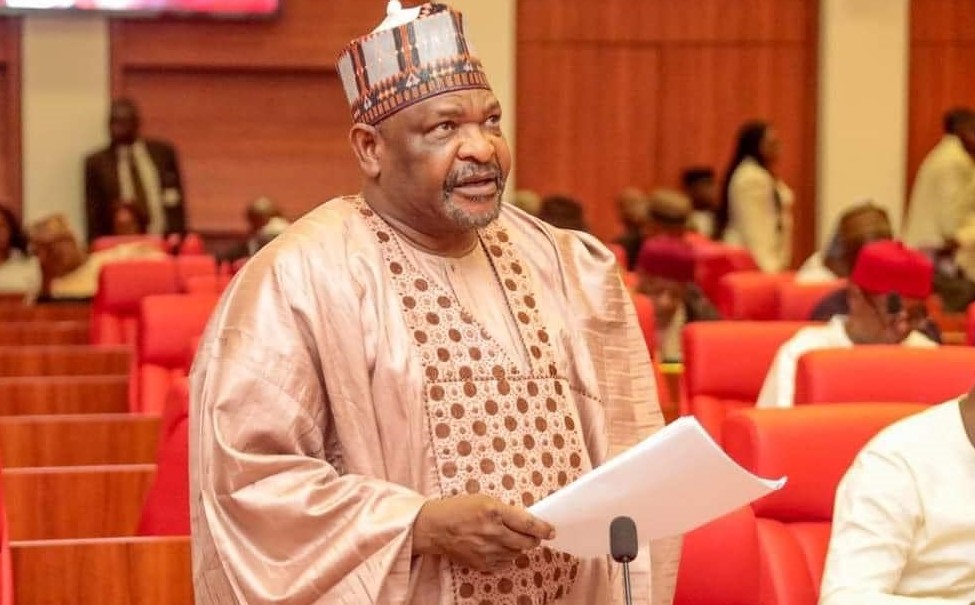
Bauchi Central Senator, Abdul Ningi, has called on the Nigerian government to immediately end diplomatic relations with South Africa over xenophobic attacks on Nigerian citizens.
Ningi made the call on Tuesday during plenary at the Senate.
His call came amid ongoing xenophobic attacks on Nigerians living in South Africa.
Recall that following the attacks, the Nigerian government has evacuated some willing and stranded Nigerians back to the country.
“End whatsoever diplomatic relations with South Africa. Nigerians have been killed left, right, and center, and there has never been any action except to condemn it by mouth.
“This xenophobic attack is not done by mouth but physically. Imagine, someone in his own house and place of business without any notice and then mobs begin to chase that man, killed and burned him.
“As we are talking today, over 1200 Nigerians are already being evacuated. And what did the government do? Caution. Caution what?
“Don’t Nigerians deserve to live in other countries? Even if they are criminal, are they supposed to be killed in that manner? And that is why countries like the United States is different. That’s why you could see the connection between the United States’ citizens and their country,” the Bauchi senator said. …For more, Complete your reading.
-

 Breaking News7 months ago
Terrorists Want ₦2m ‘levy’ in Katsina Community Despite Peaceful Agreement
-

 Breaking News8 months ago
Ex-EFCC Exhibit Keeper Kaduna Zonal Directorate, Allegedly Steals ₦22m
-

 Breaking News9 months ago
Niger Delta Group hails Tinubu, NUPRC for ₦373bn host community fund and 536 life-changing projects
-

 Breaking News6 months ago
Breaking News: Nigerian Air Force Reportedly Kills 750 Terrorists in Borno State
-

 Business9 months ago
House of Representatives probes $35m modular refinery project
-

 Breaking News9 months ago
UCL: Osimhen Statement after Galatasaray’s 3-1 Win over Bodo/Glimt
-

 Breaking News6 months ago
Nasarawa Insecurity: Suspects Apprehended, Man Hunt Ongoing – Gov Sule
-

 Business2 months ago
BREAKING NEWS: Zenith Bank Rewards Investors with ₦410.69bn Dividend at AGM