Business
Breaking News: National Grid Collapses Again, Wreaks Havoc on Nigerians, businesses

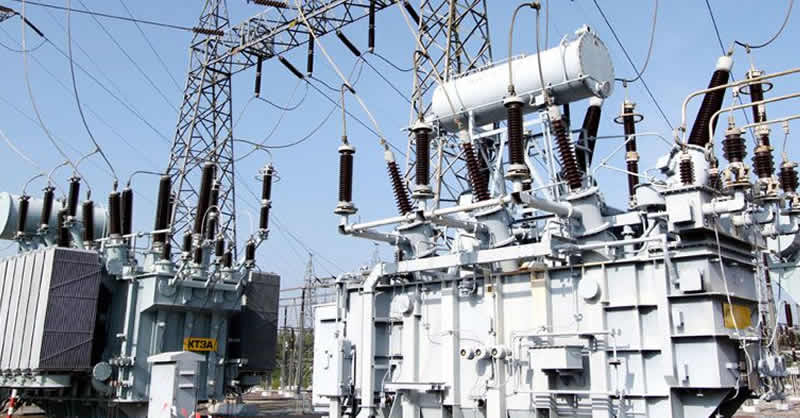
Nigerians experienced four national grid collapses on Monday, December 29, 2025, plunging the populous African country into blackout.
The grid collapse led to the loss of billions of Naira for businesses, firms, companies, and Nigerians who rely on the national grid as their primary source of electricity supply.
The grip collapsed around 2:02 pm on Monday, according to the Abuja Electricity Distribution Company, which led to an outage across its franchise in Abuja, Nasarawa, and Kogi states.
However, in an update on X on Monday by Nigeria National Grid, electricity allocation to electricity distribution rose from 50 megawatts in the afternoon of Monday when the grid collapsed to 2,958 MW as of 10:17 pm.
Accordingly, with the National grid restoration takeoff on Monday night, Abuja DisCo received 453 MW, Ikeja DisCo 447 MW, Eko DisCo 380 MW, Ibadan DisCo 354 MW, Benin DisCo 241 MW, Enugu DisCo 230 MW, Port Harcourt DisCo 210 MW, Kano DisCo 199 MW, Kaduna DisCo 191 MW, Jos DisCo 167 MW, and Yola DisCo 86 MW.
However, DAILY POST reports that electricity supply is yet to be restored to the majority of Nigerians as of Monday night, as major Discos confirmed blackouts.
DAILY POST reports that while the country experienced four national grid collapses in 2025, which were on February 12, March 7, Wednesday, September 10, and December 29, it collapsed more than 12 times the previous year. The incident re-echoes Nigeria’s over one-decade-old power sector challenges.
Speaking on the latest grid collapse, the Chief Executive Officer of the Centre for the Promotion of Private Enterprise, Dr. Muda Muda Yusuf, lamented that at this day and time the country is still battling with grid collapses.
According to him, businesses may experience huge losses following the grid collapse if it is not fixed within 24 hours.
“We thought that we had gone past this. Because this year has been relatively stable.
“But now we have this collapse. It’s not a good way to end the year. But we can only hope that it’s something that we fix very quickly,” he stated.
Similarly, former spokesperson for Abuja Electricity Distribution Company, Oyebode Fadipe, expressed concern over the recent collapse of Nigeria’s national power grid, describing the incident as troubling given the period of low electricity demand.
Fadipe noted that grid failures during festive periods are particularly worrisome because electricity load is usually reduced at that time of the year.
He explained that many businesses and industrial users typically shut down operations during the holidays, leading to lower pressure on the grid.
According to him, while reduced demand generally eases stress on the system, it does not completely eliminate the risk of a grid outage.
He pointed out that major technical faults or external disruptions could still trigger a collapse.
Fadipe stressed that the exact cause of the latest outage remains unclear, making it difficult to draw firm conclusions.
However, he raised the possibility of renewed vandalism of gas pipelines, recalling that similar incidents had recently affected power supply and were reportedly handled by the Nigerian Independent System Operator (NISO) for several days.
He lamented that persistent grid collapses at this stage of the power sector’s development reflect deeper structural challenges within the Nigerian Electricity Supply Industry (NESI).
Looking ahead, Fadipe said there is little indication that 2026 will be significantly different from previous years in terms of grid stability, unless deliberate steps are taken to address underlying issues.
He expressed hope that appropriate policies and reforms would be implemented to prevent further regression in the power sector and improve the reliability of electricity supply nationwide.
“The collapse of the grid at a time of low load demand frightens me.
“The pressure on the grid during festive periods is usually & generally low because a number of end users, especially companies, would have closed for the year.
“However, the drop in load is not enough reason to prevent grid outage, as other factors like a major fault could also trigger it.
“All said, the fact that we are still grappling with a grid system outage at this time in the life of the sector leaves much to be desired.
“Of what 2026 has, there is nothing to show that it will be different from what we saw in previous years.
“We only hope that the right policies will be put in place to ensure that the NESI does not go into regression,” he told DAILY POST.
DAILY POST reports that the recent grid comes at a time the Minister of Power, Adebayo Adelabu, failed to fulfill his promised 6,000 megawatts of electricity in 2025.
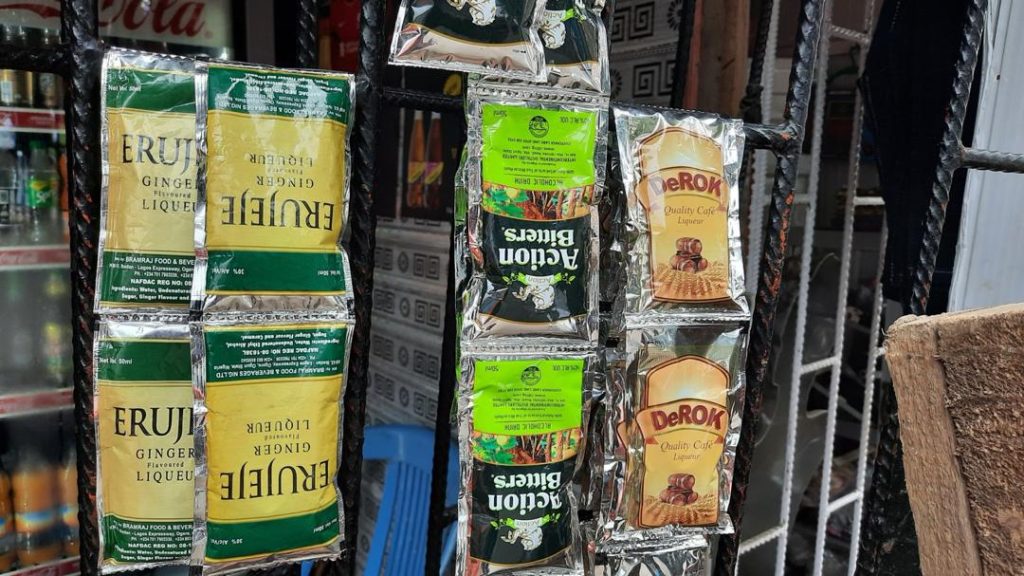
The Federal Government has ordered the National Agency for Food and Drug Administration and Control, NAFDAC, to immediately halt all enforcement actions regarding the ban on sachet alcohol and 200ml PET bottle products.
The offices of the Secretary to the Government of the Federation, OSGF, and National Security Adviser, ONSA, in a joint intervention, cited grave concerns over economic stability and potential security threats as reasons for the directive.
The statement warned that continued enforcement, in the absence of a fully implemented National Alcohol Policy, could “destabilize communities, worsen unemployment, and trigger avoidable security challenges”.
According to the statement signed by Terrence Kuanum, Special Adviser on Public Affairs to the SGF, the government clarified that while the National Alcohol Policy has been signed by the Federal Ministry of Health under the direction of President Bola Tinubu, NAFDAC must refrain from sealing factories or warehouses until the policy is fully operationalized.
The statement emphasized that the current “de facto banning” of the products without a harmonized framework is creating significant disruptions.
“The continued sealing of warehouses and de facto banning of sachet alcohol products is already creating economic disruptions and poses a growing security threat, particularly given the impact on employment, supply chains, and informal distribution networks across the country,” the statement warned.
The statement further revealed that the decision was influenced by a correspondence from the House of Representatives Committee on Food and Drugs Administration and Control, dated November 13, 2025.
The letter, signed by Deputy Chairman Uchenna Harris Okonkwo, highlighted existing National Assembly resolutions that cautioned against the proposed ban.
Reaffirming a previous suspension issued in December 2025, the statement stated the need to review legislative, public health and economic factors before a final decision is reached.
“Accordingly, all actions, decisions, or enforcement measures relating to the ongoing ban on sachet alcohol are to be suspended pending the final consultations and implementation of the National Alcohol Policy and the issuance of a final directive,” the statement emphasized.

The naira continued appreciation against the United States dollar at the official foreign exchange on Tuesday.
Central Bank of Nigeria data showed that the Naira further firmed up to N 1,351.02 against the dollar on Tuesday, up from N 1,354.26 traded the previous day.
This means that on a day-to-day basis the Naira gained N3.24 against the dollar.
Similarly, at the black market, the Naira appreciated by N5 to N1450 per dollar, up from N1455.
The development comes as the apex in a notice signed by its director of the trade and exchange department, directing banks to sell a maximum of $150,000 per week to licensed Bureau De Change operators.
DAILY POST reports that the country’s external reserves remained high at $47.03 billion as of 6th February 2026.
-

 Breaking News2 months ago
Breaking News: Nigerian Air Force Reportedly Kills 750 Terrorists in Borno State
-

 Breaking News3 months ago
Terrorists Want ₦2m ‘levy’ in Katsina Community Despite Peaceful Agreement
-

 Breaking News4 months ago
Ex-EFCC Exhibit Keeper Kaduna Zonal Directorate, Allegedly Steals ₦22m
-

 Breaking News5 months ago
Niger Delta Group hails Tinubu, NUPRC for ₦373bn host community fund and 536 life-changing projects
-

 News In Diaspora1 month ago
Nigerian JTF Arrests Woman Supplying Drugs to Boko Haram
-

 Breaking News3 weeks ago
Emergency: Arik Air Flight Landed at Benin Airport
-

 Breaking News3 weeks ago
New Young Players are Coming in Super Eagles – Ibrahim Gusau to Fans
-

 Business3 weeks ago
BREAKING: No Fewer Than 28 Ships to deliver Petrol, other Commodities at Lagos Ports