
Politics
Breaking News: ADC Presidential Primary Election Not Fraudulent – Atiku’s Aide Replies Babachir Lawal

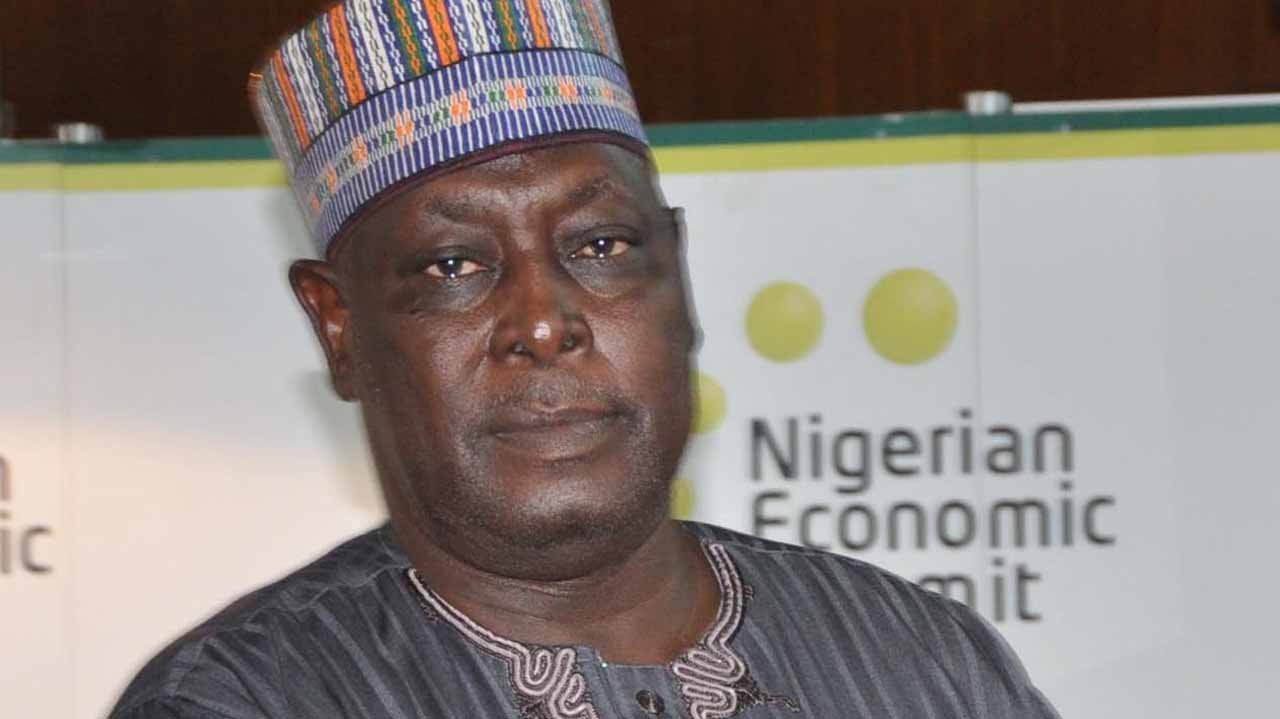
The Special Assistant to the African Democratic Congress, ADC, presidential candidate, Atiku Abubakar on Public Communication, Phrank Shaibu, has insisted that the primary election that produced the former Vice president as the party’s flag bearer was not fraudulent.
Shaibu downplayed dismissed allegations by the former Secretary to the Government of the Federation, SGF, Babachir Lawal that the ADC’s primary election was rigged.
In an interview on Channels Television’s Politics Today on Wednesday, Shaibu maintained that the ADC’s primary election was not manipulated.
Shaibu maintained that the burden of proving the allegations rests on Lawal.
According to him, Atiku was the most popular among the contestants, which included former Rivers State Governor Rotimi Amaechi and Mohammed Hayatu-Deen, making his victory unsurprising.
“Anybody who claims rigging or irregularity in the last election should check the places and locations they won. Where are the states that Rotimi Amaechi won?
“If you check the figures and the margins he got there, you will know that those are his strongholds. It was not a fraudulent process,” he said.
Shaibu also likened Lawal’s reaction to that of a baby throwing tantrums after being deprived of its mother’s breast.
“Babachir reminds me of a baby who is yanked off her mother’s breast while suckling. It is like a deprived suckling; definitely the baby will throw tantrums.
“He admitted on your show that his preferred candidate was Hayatu-Deen. He worked for him,” Shaibu said.
Peter Obi and Atiku Abubakar mull options against Bola Tinubu ahead of single-candidate summit Peter Obi and Atiku Abubakar mull options against Bola Tinubu ahead of single-candidate summit
Conflicting signals from major opposition figures and parties have cast doubt on the prospects of a united front against President Bola Tinubu in the 2027 elections, as each group appears unwilling to surrender its platform without firm guarantees on leadership and structure.
As reported by The Punch on Thursday, August 13, the controversy follows a call by the Group of 100 Nigerians, led by former All Progressives Congress (APC) chieftain Salisu Lukman, for opposition leaders to unite behind a single candidate.
The group urged former vice president Atiku Abubakar of the African Democratic Congress (ADC) and Nigeria Democratic Congress (NDC) presidential candidate Peter Obi, alongside their running mates Rotimi Amaechi and Rabiu Kwankwaso, to set aside individual ambitions and agree on a common candidate.
The group argues that a fragmented opposition cannot realistically defeat the ruling APC and has convened a summit in Abuja on Thursday, August 18, to advance the proposal.
Atiku, Peter Obi hold back on single opposition candidate proposal
Atiku’s Senior Special Assistant on Public Communication, Phrank Shaibu, welcomed the G-100’s efforts in general terms but declined to confirm whether the former vice president would attend the August 18 summit.
Shaibu said:
“His attendance at the August 18 summit will, however, be communicated once his schedule and participation are finalised.”
On the question of stepping down in favour of a single candidate, Shaibu was non-committal, not-ing only that Atiku was in ongoing consultation “with political leaders and stakeholders across the opposition” and that “at the appropriate time, the outcome of these consultations will be made public.”
The Obidient Movement, which backs Obi’s presidential bid, confirmed that an invitation had been extended to him but said the choice to attend was his alone. National Coordinator Tanko Yunusa told reporters:
“An invitation has been sent to him. We will see whether he will attend or not. It is left for him to decide on whether to go to such a meeting.”
Yunusa did add that he considered opposition unity “very good,” but could not confirm whether Atiku had separately reached out to Obi.
Labour Party and DLA resist merger calls
The Labour Party took a firmer stance, rejecting the idea of building a new coalition vehicle entirely. National Publicity Secretary Ken Asogwa argued that the party’s ties to the Nigeria Labour Congress and the Trade Union Congress gave it an organisational reach extending from the national level down to individual polling units that rivals could not replicate.
“The task before the opposition is not to reinvent the wheel but to unite behind the most viable platform. That platform is the Labour Party,” Asogwa said, calling on all political movements to fold their structures into the LP rather than form another body.”
The Democratic Leadership Alliance (DLA) was similarly cautious, with Deputy National Publicity Secretary Judith Aguenu confirming that the party was “not in talks with the G-100 or any other political party or group regarding the adoption or nomination of a single presidential candidate” at this stage.
The Coalition of United Political Parties offered the most enthusiastic response, with spokesman Agu Bryan pledging support for a consensus candidate should Obi, Atiku and others reach “a mutually acceptable arrangement in the overriding national interest.
“The August 18 summit is shaping up as an early test of whether the opposition can move beyond rhetoric and begin negotiating in earnest, with the divergent positions already on the table suggesting that the process will be far from smooth.
Politics
‘Nigeria is far bigger than just one electoral candidate’ — Peter Obi sends message to Osun voters
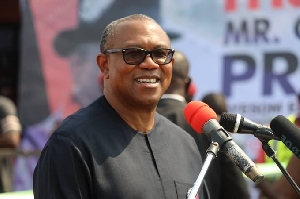
Peter Obi, the 2027 presidential candidate of the New Democratic Congress (NDC), has called on all stakeholders in the upcoming Osun State governorship election to uphold democratic standards and ensure that residents are allowed to vote without fear or pressure.
Obi addressed INEC, security agencies, political parties, candidates, civil society groups, religious and traditional leaders, the media, and the international community.
The former Anambra state governor urged each group to carry out their roles with professionalism and restraint.
He made this known in a statement posted on Thursday, August 13, 2026, via his verified X account @PeterObi.
Osun belongs to its people
Obi added that votes must be counted transparently, protected faithfully, and announced according to the genuine will of the electorate.
Peter Obi’s appeal to Osun residents
Beyond the institutions, Obi directed a personal appeal to the people of Osun, asking them not to allow politicians to drive wedges between neighbours, friends, and communities.
He warned against violence carried out in the name of electoral victory, saying Nigeria is bigger than any single candidate and that Osun is greater than any political party.
He warned against violence carried out in the name of electoral victory, saying Nigeria is bigger than any single candidate and that Osun is greater than any political party.
Osun election: Mixed reactions from Nigerians
The post sparked debate online, @saintIsaiah7 described the election as one that would “send a strong wave of signal to Nigerians about the forthcoming general election,” calling on INEC, the police, the army, the DSS, and the EFCC to resist any form of rigging or ballot irregularities.
@EbereMedia1991 was more skeptical, writing,
“As long as APC is still in power, it will be very hard for people to decide their choice because this party doesn’t believe in people’s vote and they don’t believe in free and fair election.
“@Auwalsp98 noted a broader crisis of confidence, saying,
“It seems like in Nigeria, the opposition party has no trust in INEC; people are always thinking whether free and fair elections will be held or not.”
The NDC’s official campaign account, @NDCWarRoom, directed a pointed message at the ADC, urging the party to collapse its structure and declare support for Governor Ademola Adeleke rather than play a spoiler role.
“The Osun election is between Accord and APC,” the account wrote, adding: “Practice what you preach. Don’t be a spoiler.”
@tonydaymn10 described Obi as “the people’s president” and urged voters to come out in large numbers, while @BigMarto_ expressed doubt that any free and fair process could take place under the current federal administration.
Peter Obi resigned from the African Democratic Congress on May 2, 2026, before being ratified as the NDC’s presidential candidate on May 29, 2026.
Peter Obi resigned from the African Democratic Congress on May 2, 2026, before being ratified as the NDC’s presidential candidate on May 29, 2026.
Osun guber election: GSI survey predicts winner
Recall that a survey by Geopolitics Survey International polled 2,100 residents across all nine federal constituencies in Osun state.
The GSI findings covered five key questions on local government leadership disputes and voting intentions ahead of the 2026 Osun governorship election.
Respondents cited specific reasons for backing their preferred candidate, including performance in office and labour-related concerns.
Osun election: Primate Ayodele releases prophecy on winner
Meanwhile, Legit.ng reported that Primate Babatunde Elijah Ayodele released a prophecy about the upcoming Osun governorship election, issuing warnings to key figures involved.
The outspoken cleric alleged that a party has made plans to contest the election result beyond the highly anticipated polls.
The 2026 Osun governorship election will take place on Saturday, August 15, 2026, to elect the governor of the state.
-

 Breaking News11 months ago
Niger Delta Group hails Tinubu, NUPRC for ₦373bn host community fund and 536 life-changing projects
-

 Breaking News10 months ago
Ex-EFCC Exhibit Keeper Kaduna Zonal Directorate, Allegedly Steals ₦22m
-

 Breaking News9 months ago
Terrorists Want ₦2m ‘levy’ in Katsina Community Despite Peaceful Agreement
-

 Business4 months ago
BREAKING NEWS: Zenith Bank Rewards Investors with ₦410.69bn Dividend at AGM
-

 Breaking News8 months ago
Breaking News: Nigerian Air Force Reportedly Kills 750 Terrorists in Borno State
-

 Business11 months ago
House of Representatives probes $35m modular refinery project
-

 Breaking News4 months ago
Plaintiff To Pay ₦1m Fines For Delay In Jonathan Eligibility Suit
-

 Breaking News4 months ago
DEFAMATION OF CHARACTER: SERAP On Appeal Against The ₦100m Judgment In Favour of DSS Officials