
Education
Unity schools: Reopen Unity School with Strong Security -Capt. Abdullahi Bakoji Adamu (rtd), Security Expert Tells Nigerian Govt


A security analyst, Amb. Capt. Abdullahi Bakoji Adamu (rtd), has warned that the Nigerian government’s decision to reopen the 47 Unity Colleges earlier closed due to security threats must be backed by concrete, long-term security measures, not official assurances alone.
Speaking in an exclusive interview with DAILY POST on Friday, Adamu said reopening the schools is a delicate but necessary policy choice.
He stressed that education remains a critical national asset that should not be disrupted for long periods.
“Education is too important to be sacrificed indefinitely. Prolonged closure of Unity Schools threatens national development, social cohesion, and youth stability,” he said.
He noted that from this perspective, the government’s decision to reopen the schools aligns with its constitutional responsibility to guarantee access to education.
However, the retired security expert cautioned that optimism must not override security realities.
“The original closure of these schools was based on real and credible threats such as kidnappings, banditry, and attacks on educational institutions. These threats have not disappeared; they have only evolved,” he warned.
According to him, reopening schools without addressing the root causes of insecurity would expose students, teachers, and parents to serious danger.
“Security is not measured by announcements but by preparedness, deterrence, and response efficiency. If the reopening is based merely on assurances rather than verifiable security benchmarks, it risks repeating past tragedies and eroding public confidence,” he said.
From a professional security standpoint, he listed key conditions that must be met, including permanent security deployment around and within school premises, rather than temporary patrols.
“There must be integrated intelligence sharing between the military, police, DSS, and local security structures,” he said.
He added that intelligence gaps remain a major weakness.
Adamu also emphasized the need for rapid response capability.
“Response must be within minutes, not hours. Delayed response has cost lives in the past,” he noted.
He further called for secure school infrastructure, including controlled access points, perimeter surveillance, and reliable emergency communication systems.
Beyond formal security agencies, the analyst stressed the importance of community involvement.
“Host communities must be active partners in intelligence gathering and early warning. Without community engagement, security efforts will always fall short,” he said.
Adamu warned that reopening schools based only on verbal assurances could lead to a repeat of past tragedies and damage public trust in government decisions.
“If reopening is based merely on promises rather than verifiable security benchmarks, it risks eroding public confidence,” he said.
“In conclusion, while reopening the Unity Schools is a positive step toward restoring normalcy and safeguarding the future of Nigerian children, it must be treated as a security-led operation, not an administrative decision. The success or failure of this policy will depend entirely on whether security measures are proactive, adaptive, and sustained,” the expert added
Recall that the Federal Government recently announced the reopening of 47 Unity Colleges that were earlier shut down due to security concerns.
The Ministry of Education made the announcement in a statement on Thursday, reaffirming the government’s commitment to safeguarding students and ensuring continuity of learning.
According to the ministry, “after the strengthening of security architecture within and around the affected schools, academic activities have fully resumed.”
The statement added that students have returned safely to their campuses, with some concluding their December academic programmes, while others have completed their examinations.
The ministry also assured parents, guardians, and the general public that the safety, welfare, and well-being of students remain a top priority.

The Federal Government has confirmed plans to replace the National Youth Service Corps’ traditional khaki uniform with locally produced Adire fabric as part of ongoing reforms aimed at repositioning the scheme.
The Minister of Youth Development, Ayodele Olawande, disclosed this on Thursday during an interview on Channels Television’s The Morning Brief, saying the move was intended to promote local manufacturing and ensure government spending supports the Nigerian economy.
“It’s Adire. So, Adire is being produced in Nigeria. We have them in Ogun, we have them in Kwara, we have textile industry. Let’s put our money back into the country,” he said.
File: Corps members
Olawande also said corps members would increasingly be posted according to their fields of study under the new framework, explaining that graduates with education qualifications, for instance, would be deployed to schools rather than being posted without consideration for their professional backgrounds.
“After you are leaving the camp, you are not just posted to a school just because NYSC wants you to be in school but because of the process you followed when in camp. So, that is going to give a framework of where you are going to be posted to,” he said.
On security, the minister said the government was considering posting prospective corps members to regions where they studied and were already familiar with the environment, particularly in areas facing security challenges.
Related News
FG hails suspension of Oyo teachers’ strike
Ex-Imo gov candidate backs FG’s move to end JSS, SSS separation
Stakeholders seek fresh bidding for $243m pipeline stake
According to him, the arrangement would reduce concerns among parents and prospective corps members while making the deployment process more practical.
“If you have interest that you want to go to the North-East why not, but if you don’t have interest, instead of redeploying you, paying people for camp, doing all those funny things, we said no, let us look at it and say who are those in that area, that can reside in those geographical areas and still give us the kind of number we are looking for since we are saying NYSC should be more impactful. So, that is what we are talking about,” he said.
The minister also dismissed reports suggesting the military would be removed from the NYSC, describing such claims as a misconception.
The reforms followed the approval by the Federal Executive Council on Monday of a comprehensive overhaul of the NYSC, the first major reform of the scheme since its establishment in 1973.
Under the approved reforms, the Federal Executive Council directed the Attorney-General of the Federation and the Federal Ministry of Youth Development to amend the NYSC Act and its regulations to accommodate the changes.
The new framework provides that the scheme’s operational leadership will be headed by a civilian, while the military will continue to provide security support for corps members nationwide.
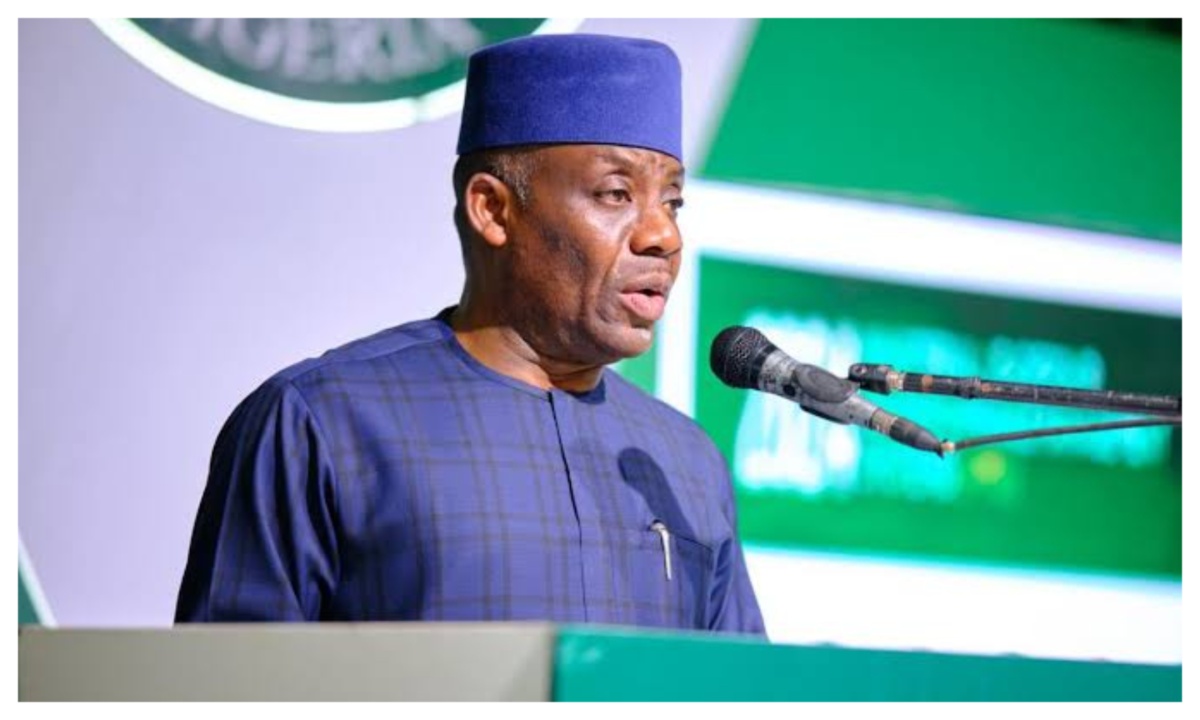
The Federal Government has expressed delight over the suspension of the strike embarked on by teachers in Oyo State, describing the development as a victory for dialogue and a step towards restoring uninterrupted learning.
The Minister of Education, Dr Tunji Alausa, said the suspension followed sustained engagement among the Federal Ministry of Education, the Oyo State Government and the leadership of the Nigeria Union of Teachers, NUT, at the national, zonal and state levels.
Alausa’s position is contained in a statement issued by the ministry’s Director of Press and Public Relations, Mrs Folasade Boriowo, made available to journalists on Thursday in Abuja.
”I am glad to report today that the strike has been suspended. Teachers are now returning to school to educate their students.
”This is the result of our collaboration and coordination with the leadership of the Nigeria Union of Teachers and the Government of Oyo State,” he said.
The minister commended Oyo Governor, Seyi Makinde, for resolving the dispute through dialogue.
He also appreciated the leadership of the NUT at the national, zonal and state levels for working towards an amicable resolution of the matter in the interest of learners.
Alausa reaffirmed the Federal Government’s commitment to ensuring uninterrupted access to quality education despite security challenges in parts of the country.
”Our children will remain in school and we will continue to educate them. We will not succumb to terror,” he said.
He also commended teachers across the country for their resilience and dedication to educating future generations.
The minister said that the Federal Government would continue to work with state governments, teachers’ unions, security agencies and other stakeholders to strengthen school safety, promote dialogue and protect every child’s right to quality education.
You may like
-

 Breaking News8 months ago
Terrorists Want ₦2m ‘levy’ in Katsina Community Despite Peaceful Agreement
-

 Breaking News8 months ago
Ex-EFCC Exhibit Keeper Kaduna Zonal Directorate, Allegedly Steals ₦22m
-

 Breaking News9 months ago
Niger Delta Group hails Tinubu, NUPRC for ₦373bn host community fund and 536 life-changing projects
-

 Breaking News7 months ago
Breaking News: Nigerian Air Force Reportedly Kills 750 Terrorists in Borno State
-

 Business9 months ago
House of Representatives probes $35m modular refinery project
-

 Business3 months ago
BREAKING NEWS: Zenith Bank Rewards Investors with ₦410.69bn Dividend at AGM
-

 Breaking News9 months ago
UCL: Osimhen Statement after Galatasaray’s 3-1 Win over Bodo/Glimt
-

 Breaking News7 months ago
Nasarawa Insecurity: Suspects Apprehended, Man Hunt Ongoing – Gov Sule