Breaking News
Grievances In Nigeria As Senate Moves To Hike Tax On Soft Drinks

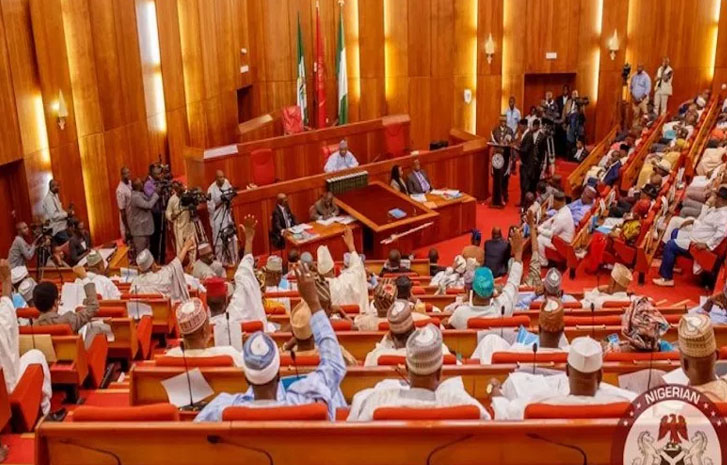
A sweeping wave of criticism has trailed the Nigerian Senate’s plan to increase excise duty on non-alcoholic beverages, as economists and Nigerians have kicked against the proposal.
The controversy follows the Senate Committee on Finance’s push to amend the Sugar-Sweetened Beverage (SSB) tax— currently a fixed N10 duty per liter under Section 21(3) of the Customs and Excise Tariffs (Consolidation) Act—into a percentage-based levy on the retail price. The amendment bill, sponsored by Senator Ipalibo Harry Banigo, proposes that revenues from the higher tax be channeled into the health sector.
But there has been intense pushback against the proposal.
The Centre for the Promotion of Private Enterprise had on Monday urged the Senate to discontinue the plan to increase excise duty on non-alcoholic beverages on the ground that it would lead to the shutdown of factories, a fresh hike in prices, and massive layoffs.
Similarly, in an interview with DAILY POST on Monday, Mazi Okechukwu Unegbu, a former president of the Chartered Institute of Bankers and a university don, Prof. Godwin Oyedokun, like CPPE, condemned the move to increase excise duty on non-alcoholic beverages.
FG should not kill Nigerians with taxes — Unegbu
On his part, Unegbu lamented that Nigerians are already battling with multiple taxation and hardship.
He said that any plan to increase tax should be suspended by the Nigerian government.
“They should not kill Nigerians with taxes all over the place. They should be able to be reasonable in terms of their proposals.
“So for now, I will recommend that the government should not increase any tax for now,” he said.
Excise duty hike will deepen hardship – Prof. Oyedokun
Economist and public finance expert, Prof. Godwin Oyedokun has cautioned the Federal Government against the proposed plan, warning that the move could worsen inflation, cripple small businesses, and undermine already fragile household incomes.
In a statement issued on Tuesday, Oyedokun said the proposal has triggered widespread concern because it targets products consumed daily by millions of Nigerians—including soft drinks, flavored beverages, energy drinks, and other low-cost bottled drinks that often serve as alternatives for families struggling with rising food prices.
He noted that the economic implications of the proposed tax are far-reaching and risk outweighing the government’s expected revenue gains.
According to him, the first impact would be an immediate rise in retail prices, as manufacturers typically transfer additional tax burdens to consumers.
“Households already battling high inflation will feel the squeeze, especially low-income earners, students, artisans, and families with children,” Oyedokun said.
He warned that small businesses—including roadside retailers, restaurants, event vendors, and neighborhood shops—would be among the worst hit, as higher prices could reduce demand and weaken daily earnings.
“For many micro and small traders, beverage sales are a key part of their cash flow. A drop in consumption could push some out of business,” he added.
The economist further expressed concern about potential job losses in the beverage value chain, which employs thousands of workers from factories to distribution networks.
Reduced sales, he said, could force manufacturers to cut production volumes and labor costs.
Oyedokun also questioned the premise that the tax hike would significantly boost government revenue.
He argued that consumers often respond to price increases by shifting to cheaper options, reducing consumption, or patronizing informal and unregulated markets—all of which could undermine projected fiscal gains.
He described the timing of the proposal as “misaligned with current economic realities,” noting that Nigerians are already grappling with record inflation, high transport costs, rising energy bills, and shrinking purchasing power.
“At a time when households need relief, another consumption tax feels counterproductive,” he said.
The economist also highlighted concerns over policy inconsistency, recalling that the Federal Government suspended similar excise duties in 2023 following warnings from manufacturers and labor groups.
A fresh attempt, he said, sends negative signals to investors who rely on stable policies to plan production and capital investments.
Oyedokun urged the government to consider alternative fiscal measures, such as expanding the tax net, improving tax administration, reducing leakages, and supporting sectors that generate large-scale employment.
“In summary, while the goal of increasing revenue is understandable, the social and economic costs of this excise duty hike appear far heavier than the benefits.
“Consumers, SMEs, and workers need breathing space in an economy already stretched thin,” he said.
Breaking News
Ogun State Government Announces Pension, Gratuity Backlog Clearance Between 2012 and 2020
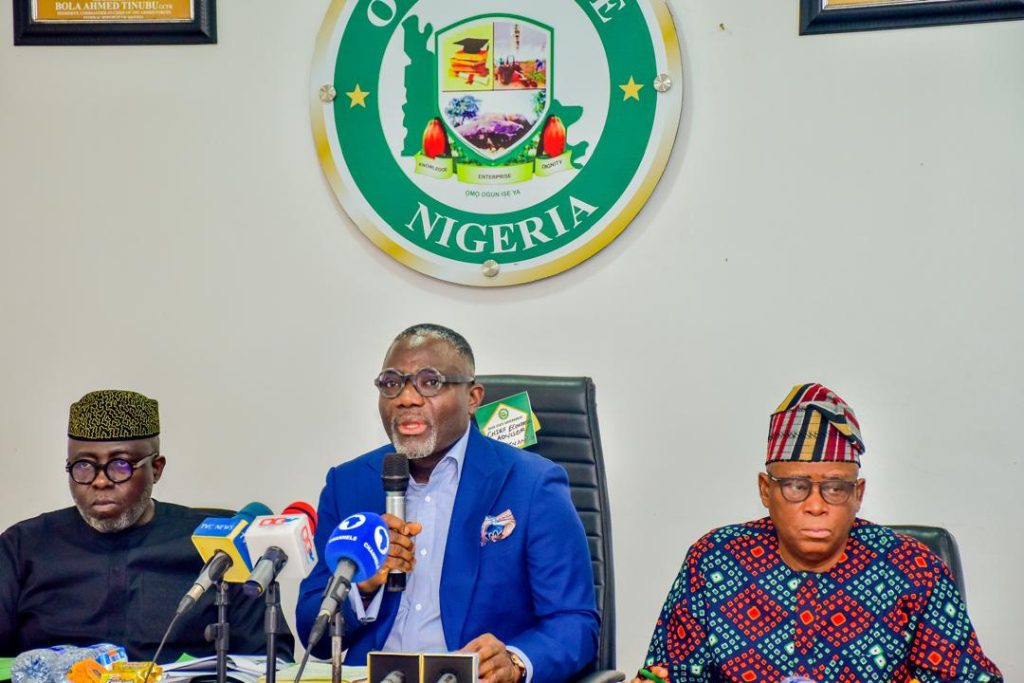
The Ogun State Government has announced the clearance of pension and gratuity arrears owed to workers who retired between 2012 and 2020, reaffirming its commitment to the welfare of retirees.
The Economic Adviser and Commissioner for Finance, Dapo Okubadejo, disclosed this on Tuesday during a media parley organised by the Ogun State Ministry of Budget and Planning.
Okubadejo explained that the backlog was linked to the Defined Benefits Scheme, under which retirees receive monthly pension payments, stressing that the present administration of Governor Dapo Abiodun has not defaulted on pension obligations since assuming office.
“Since the inception of this administration, we have not missed a single month of pension payment. What we inherited were arrears tied to the Defined Benefits Scheme,” he said.
According to him, annual pension payments rose from ₦6.7 billion in 2019 to ₦20 billion in 2025, with projections showing a possible increase to ₦40 billion by 2029.
He disclosed that the state had so far paid ₦23.3 billion in gratuities covering retirees from 2012 to 2020, alongside ₦32.8 billion in outstanding gratuities for local government retirees inherited by the administration.
Okubadejo added that between 2019 and July 2, 2025, the state disbursed ₦93.26 billion in pensions under the Defined Benefits Scheme and ₦94.78 billion to local government pensioners.
He assured that the remaining backlog would be cleared as Internally Generated Revenue (IGR) continues to improve, noting that over 300 workers who retired in July 2025 are currently receiving six-month palliatives pending the completion of their pension documentation.
The commissioner also described the newly approved Additional Pension Benefits (APB) as the first of its kind in Nigeria, adding that amendments to the state’s pension law would be pursued to formally integrate the scheme.
On the state’s fiscal outlook, Okubadejo revealed that the 2026 budget increased from ₦1.054 trillion in 2025 to ₦1.668 trillion, while Ogun’s economy expanded from ₦3.5 trillion in 2019 to ₦18.96 trillion in 2026.
He added that IGR grew from ₦50 billion in 2019 to ₦240 billion in 2025, with projections of ₦512 billion this year.
Also speaking, the Commissioner for Budget and Planning, Olaolu Olabimtan, said the 2026 budget reflects strong fiscal reforms, noting an 85 per cent budget execution rate in 2024 and sustained financial stability.
Other commissioners highlighted sectoral achievements, including massive road construction, increased healthcare funding, rail extension plans, education support programmes, and expanded housing projects across the state.
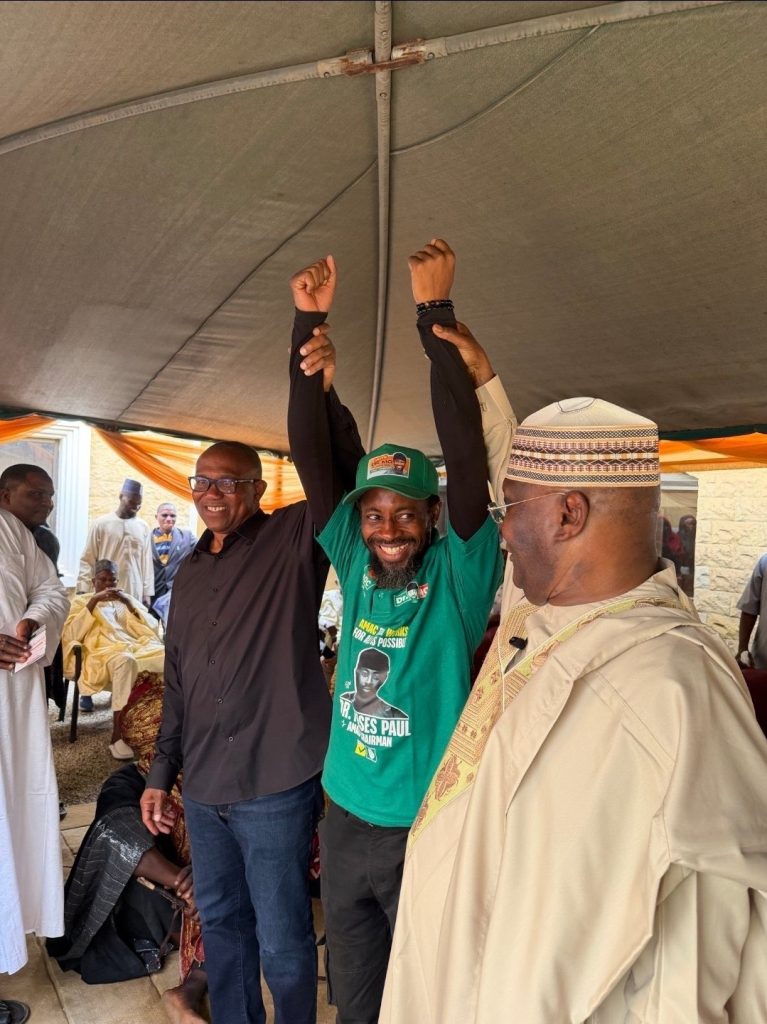
African Democratic Congress, ADC, chieftain, Peter Obi, has urged Nigerians to focus on the country’s future and vote for a change in leadership.
Obi spoke at a meeting with Hausa/Fulani chiefs in Abuja on Wednesday.
“We have to talk about the future of our country. All of you know what is happening to our country today. That’s why we are campaigning that you vote out this government,” he said.
He described the situation in Nigeria as dire, citing insecurity, hunger and hardship.
“today we have insecurity across Nigeria. We have hunger across Nigeria. We are suffering across Nigeria. The only thing that is working in Nigeria today is bad news. Every morning you wake up is bad news,” Obi stated.
The former Labour Party presidential candidate said a new administration would prioritize social services.
“We’re urging you to vote for a change and bring a new Nigeria, where our children will be in school. Our hospitals will work,” he added.
Obi also questioned government spending priorities, particularly in the health sector.
“today, if you’re sick in Nigeria you’re praying to Almighty God because we’re now in a country where our president spends 360 billion to buy and refit his plane and spends 36 million in capital vote for the Ministry of Health. There’s nothing working,” he said.
He appealed to Nigerians to use their votes to usher in what he described as a “new Nigeria” focused on improving citizens’ welfare and restoring key public services.
-

 Breaking News2 months ago
Breaking News: Nigerian Air Force Reportedly Kills 750 Terrorists in Borno State
-

 Breaking News3 months ago
Terrorists Want ₦2m ‘levy’ in Katsina Community Despite Peaceful Agreement
-

 Breaking News4 months ago
Ex-EFCC Exhibit Keeper Kaduna Zonal Directorate, Allegedly Steals ₦22m
-

 Breaking News5 months ago
Niger Delta Group hails Tinubu, NUPRC for ₦373bn host community fund and 536 life-changing projects
-

 News In Diaspora1 month ago
Nigerian JTF Arrests Woman Supplying Drugs to Boko Haram
-

 Business3 weeks ago
BREAKING: No Fewer Than 28 Ships to deliver Petrol, other Commodities at Lagos Ports
-

 Breaking News3 weeks ago
Emergency: Arik Air Flight Landed at Benin Airport
-

 Breaking News3 weeks ago
New Young Players are Coming in Super Eagles – Ibrahim Gusau to Fans