
Business
Central Bank of Nigeria ( CBN ): High interest rates and multiple taxes constrain businesses in September, 2025.


Households expect prices to increase coming months
•73% rural residents say inflation rate is high
By Elizabeth Adegbesan
Businesses and house holds have highlighted high interest rates, multiple taxes and poor infrastructure as top three business constraints in September, even as they expressed optimism about the macroeconomy in the coming months.
In its Business Expectation Survey, the Central Bank of Nigeria, CBN said: “The Confidence Index stood at 31.5 index points in the current month(September, 2025), reflecting the optimism of respondents regarding the macroeconomy. This optimism is projected to persist over the next six months, peaking at 51.8 index points.
“Respondents identified high bank charges (70.8), high/multiple taxes (70.8) andpoor infrastructure (70.7) as the top three (3) business constraints in September 2025, highlighting factors that directly impact on operational stability and profitability.
“At the bottom of the top ten constraints were Insufficient Power Supply (37.8) and Competition (40.4). This suggested that business constraints were more focused on financial factors than political challenges in the review period”.
Meanwhile, households have projected prices to increase in the coming months with their overall sentiment on the macroeconomy standing at -6.4 index points in September from-7.2 index points in August, indicating reduced pessimism.
In the CBN’s Households Expectations Survey Report for September 2025, the bank said: “Consumer sentiments on price changes stood at -6.4 index points in September 2025, indicating that respondent perceived prices were still high.
“Respondents also expect prices to increase next month, next three months and six months relative to current month.
“The overall consumer sentiment in September 2025 stood at -6.4 index points, an improvement from the -7.2 index points recorded in August 2025.
“The Economic Condition index improved from -4.3 index points recorded in August 2025 to -2.9index points in September 2025, indicating reduced pessimism about the broader economy.
“Family Financial Situation Index stood at -16.5 points in September 2025, an improvement from -17.0 in August 2025, indicating a slight easing of pessimism among respondents regarding their household finances. Family Income Sentiment recorded 0.1 index points in September 2025, indicating optimism for the first time since April 2025.”
In a similar vein, 73.9 percent of residents in rural areas are seeing inflation rate as high compared to their urban counterparts.
In its Inflation Expectation Survey Report for September 2025, CBN said: “Rural respondents (73.9 percent) indicated a higher perception of high inflation than their urban counterparts (72.4 percent).”
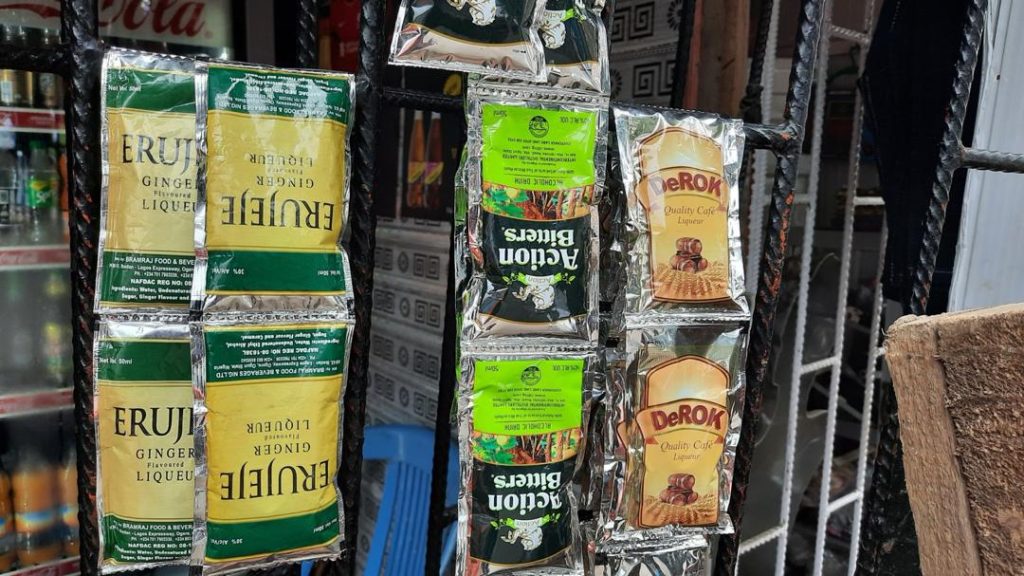
The Federal Government has ordered the National Agency for Food and Drug Administration and Control, NAFDAC, to immediately halt all enforcement actions regarding the ban on sachet alcohol and 200ml PET bottle products.
The offices of the Secretary to the Government of the Federation, OSGF, and National Security Adviser, ONSA, in a joint intervention, cited grave concerns over economic stability and potential security threats as reasons for the directive.
The statement warned that continued enforcement, in the absence of a fully implemented National Alcohol Policy, could “destabilize communities, worsen unemployment, and trigger avoidable security challenges”.
According to the statement signed by Terrence Kuanum, Special Adviser on Public Affairs to the SGF, the government clarified that while the National Alcohol Policy has been signed by the Federal Ministry of Health under the direction of President Bola Tinubu, NAFDAC must refrain from sealing factories or warehouses until the policy is fully operationalized.
The statement emphasized that the current “de facto banning” of the products without a harmonized framework is creating significant disruptions.
“The continued sealing of warehouses and de facto banning of sachet alcohol products is already creating economic disruptions and poses a growing security threat, particularly given the impact on employment, supply chains, and informal distribution networks across the country,” the statement warned.
The statement further revealed that the decision was influenced by a correspondence from the House of Representatives Committee on Food and Drugs Administration and Control, dated November 13, 2025.
The letter, signed by Deputy Chairman Uchenna Harris Okonkwo, highlighted existing National Assembly resolutions that cautioned against the proposed ban.
Reaffirming a previous suspension issued in December 2025, the statement stated the need to review legislative, public health and economic factors before a final decision is reached.
“Accordingly, all actions, decisions, or enforcement measures relating to the ongoing ban on sachet alcohol are to be suspended pending the final consultations and implementation of the National Alcohol Policy and the issuance of a final directive,” the statement emphasized.

The naira continued appreciation against the United States dollar at the official foreign exchange on Tuesday.
Central Bank of Nigeria data showed that the Naira further firmed up to N 1,351.02 against the dollar on Tuesday, up from N 1,354.26 traded the previous day.
This means that on a day-to-day basis the Naira gained N3.24 against the dollar.
Similarly, at the black market, the Naira appreciated by N5 to N1450 per dollar, up from N1455.
The development comes as the apex in a notice signed by its director of the trade and exchange department, directing banks to sell a maximum of $150,000 per week to licensed Bureau De Change operators.
DAILY POST reports that the country’s external reserves remained high at $47.03 billion as of 6th February 2026.
-

 Breaking News3 months ago
Breaking News: Nigerian Air Force Reportedly Kills 750 Terrorists in Borno State
-

 Breaking News4 months ago
Terrorists Want ₦2m ‘levy’ in Katsina Community Despite Peaceful Agreement
-

 Breaking News5 months ago
Ex-EFCC Exhibit Keeper Kaduna Zonal Directorate, Allegedly Steals ₦22m
-

 Breaking News6 months ago
Niger Delta Group hails Tinubu, NUPRC for ₦373bn host community fund and 536 life-changing projects
-

 Breaking News5 months ago
UCL: Osimhen Statement after Galatasaray’s 3-1 Win over Bodo/Glimt
-

 Breaking News5 months ago
Breaking News: Terrorists Invade Tarah community, Kidnap Nine, Injure One
-

 Breaking News5 months ago
Breaking: Robbery Suspects Caught After Leaving Phone At The Scene
-

 Breaking News3 months ago
Nasarawa Insecurity: Suspects Apprehended, Man Hunt Ongoing – Gov Sule