Business
BREAKING: Impact of Policy Easing on Nigeria’s Economic System

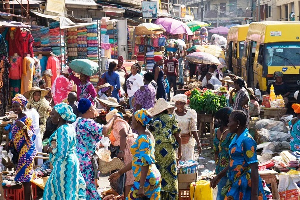
Nigeria’s economy is entering a new phase as the Central Bank cuts interest rates for the first time since 2020, signalling confidence in slowing inflation and relative exchange rate stability. SAMI TUNJI explores how the modest rate cut is symbolic, and lasting growth will depend on consistent reforms, stronger fiscal alignment, and sustained non-oil sector expansion
For much of its history, Nigeria’s economy has relied heavily on external conditions. Oil booms often provided fiscal buffers, while global downturns exposed deep vulnerabilities. The lesson has remained consistent. External winds can help, but domestic policies ultimately determine whether the country thrives or falters.
Recent shifts at the Central Bank of Nigeria and within government reforms suggest a new chapter. After a period of strict monetary tightening, the return of policy easing suggests more than just technical adjustments. It signals a new direction in how policymakers intend to balance inflation control with the pursuit of growth.
The CBN’s recent decision to cut the Monetary Policy Rate from 27.5 per cent to 27 per cent may look modest. Yet it is the first cut since 2020 and carries symbolic weight. It suggests confidence that inflationary pressures are easing and that supporting recovery has once again taken priority.
Inflation falls but remains stubbornly high
Inflation has been Nigeria’s most persistent economic headache. Rising food costs, transport expenses, and the knock-on effects of subsidy removal and exchange rate depreciation have left households squeezed. In its latest report on Nigeria, the World Bank noted that high food prices hurt poor Nigerians.
“Food inflation in Nigeria remains high and particularly harmful to the poor and economically insecure. While inflation has shown signs of easing, food price pressures remain high. This disproportionately hurts poorer households, whose food spending accounts for up to 70 per cent of the total,” the report read.
The PUNCH observed that Nigeria’s inflation rate has declined steadily this year, dropping from 24.48 per cent in January to 20.12 per cent in August, according to official data. The National Bureau of Statistics said the figure fell sharply in February to 23.18 per cent and maintained a downward trend through the first half of 2025. By June, inflation eased to 22.22 per cent before slipping further to 21.88 per cent in July. The August reading marked the fifth consecutive monthly decline and the lowest rate so far this year. On a month-on-month basis, inflation slowed to 0.74 per cent in August, down from 1.99 per cent in July, accentuating the pace of disinflation. In August 2025, core inflation, which strips out volatile food and energy items, fell 20.33 per cent, while food inflation dropped 21.87 per cent, helped by falling prices of rice, maize and millet.
For CBN Governor, Olayemi Cardoso and his Monetary Policy Committee, this was enough evidence to justify a first interest rate cut under Cardoso and the first by the apex bank since September 2020. At its September 2025 meeting, the MPC lowered the Monetary Policy Rate by 50 basis points to 27 per cent. At a press briefing after the 302nd MPC meeting in Abuja, Cardoso described the move as cautious but necessary, citing the lagged effect of earlier monetary tightening, fuel price moderation, and improved harvests as reasons to expect inflation to keep decelerating.
“The committee’s decision to lower the monetary policy rate was predicated on the sustained disinflation recorded in the past five months, projections of declining inflation for the rest of 2025 and the need to support economic recovery efforts,” Cardoso also said.
Exchange rate unification changes landscape
Among the most significant reforms of the past two years is the unification of exchange rates. Multiple windows had long created distortions and discouraged investment. By collapsing the rates into one, the CBN removed a major obstacle for investors.
The president of the Association of Bureaux De Change Operators of Nigeria, Aminu Gwadabe, said the reform has made the exchange rate a more effective buffer.
“Findings showed that in the past, many economies were reluctant to let their exchange rates move freely. But with better anchored inflation expectations and stricter macroprudential regulation, Nigeria has increasingly allowed the exchange rate to act as a shock absorber, and the central bank shifted its focus toward stabilising economic activity,” he said.
He argued that with stronger foundations and sustained reforms, Nigeria could convert its current resilience into lasting growth.
Businesses see symbolism more than relief
While the cut signals a softer stance, its practical impact on businesses is limited. Borrowing costs remain punishing. Partner and Corporate Finance Expert at TNP, Bukola Bankole, said most firms are still paying above 30 per cent for loans.
“By lowering the benchmark rate by 50 basis points to 27 per cent, the MPC made a modest but symbolic move, as it marks the first break from months of aggressive tightening. For businesses already borrowing at rates above 30 per cent, however, this adjustment will not ease financing costs immediately, but it signals recognition that growth cannot be perpetually stifled in the name of inflation control,” she said.
She added that Nigeria’s inflation problem is primarily cost-driven. “As we all know, inflation in Nigeria is not demand-driven. It is a cost push, reflecting exchange rate volatility, the knock-on effects of subsidy removal, high energy costs, and food supply disruptions. So certainly, against this backdrop, further hikes would have been the wrong medicine,” she said.
Bankole stressed the need for consistency. “I will say this MPC decision reflects an effort to balance vigilance on inflation with the need to create space for credit expansion and investment. The real challenge, however, remains consistency, as without predictable policy, stronger fiscal alignment, and structural reforms that address the root causes of inflation, this cut will remain symbolic, as with a lot of other actions previously taken,” she said.
“If those elements are, however, in place, then this small cut could truly mark the beginning of a more sustainable policy mix that supports growth without abandoning the fight for price stability.”
While welcoming the move, members of the Organised Private Sector argued that the reduction remains marginal and insufficient to ease the credit squeeze on manufacturers and small businesses. Director-General of the Manufacturers Association of Nigeria, Segun Ajayi-Kadir, earlier described the cut as welcome but inadequate. “Virtually every time the MPC meets, what we anticipate is a reduction in rates. This is welcome, but it has not gotten us anywhere near our expectations. Manufacturers need to borrow at no more than five per cent for that borrowing to be supportive of production,” he said.
Ajayi-Kadir emphasised that no bank would lend at a rate below the MPR, meaning credit costs remain unaffordable. “It signals a rethinking by the CBN, but manufacturers still await a time when rates will be significantly lower,” he added.
Strengthening financial system for long haul
Beyond rate adjustments, the CBN is pursuing structural reforms to reinforce financial stability. Among them is the planned increase in minimum capital requirements for banks from March 2026. The measure is designed to ensure lenders remain strong enough to support the government’s vision of a $1tn economy.
Cardoso has also sought to rebuild confidence in the bank’s credibility after years of interventionist policies. At a recent Monetary Policy Forum this year, themed ‘Managing the Disinflation Process’, Cardoso argued for greater alignment between fiscal and monetary authorities.
“Managing disinflation amidst persistent shocks requires not only robust policies but also coordination between fiscal and monetary authorities to anchor expectations and maintain investor confidence,” he said.
Cardoso also made clear that the CBN intends to firmly maintain orthodox policies. “As we shift from unorthodox to orthodox monetary policy, the CBN remains committed to restoring confidence, strengthening policy credibility, and staying focused on its core mandate of price stability,” he said.
Non-oil sector continues to anchor growth
In the second quarter of 2025, Nigeria’s economy expanded 4.23 per cent year-on-year, up from 3.13 per cent in Q1. Crucially, the oil sector, long a drag on the economy, rebounded 20.46 per cent, compared to just 1.87 per cent the previous quarter. This turnaround was credited mainly to improved security in the Niger Delta and the steady ramp-up of operations at the Dangote Refinery. The National Bureau of Statistics, in its latest Gross Domestic Product report, showed the economy expanding across oil and non-oil sectors.
The PUNCH observed that the non-oil sector still accounted for nearly 96 per cent of GDP. Agriculture grew 2.82 per cent, recovering from weak performance earlier in the year. Industrial output climbed 7.45 per cent, while services, though slowing, still delivered nearly four per cent growth.
The structure of GDP shows the importance of sustaining non-oil growth. Experts point to challenges in agriculture, energy, and infrastructure that continue to drag productivity.
Chairman of the Nigeria Economic Summit Group, Niyi Yusuf, said progress has been steady, but more work is needed. “This is steady progress in the right direction, and we need to stay the course, maintain momentum, and drive for broad-based growth across all sectors of the economy. We need more pro-growth regulations and regulators, a predictable justice system, more private sector investments in critical sectors and security of lives and assets to fully unlock the potential of the economy,” he said.
Global perspectives provide cautious optimism
In its latest Africa’s Pulse report, the World Bank placed Nigeria on an upward trajectory. “Nigeria’s economic activity continued expanding during the first half of this year (3.9 per cent y-o-y versus 3.5 per cent in the first half of 2024). Faster growth was driven by services (4.33 per cent), especially telecommunications and information services. Oil production grew modestly, from 1.5 million barrels per day in the second quarter of last year to 1.7 million bpd in the same period this year. The published GDP figures follow Nigeria’s National Bureau of Statistics rebasing, which involved changing the base year from 2010 to 2019, as well as methodological updates.”
The World Bank said Sub-Saharan Africa’s economy remains resilient despite global economic headwinds, projecting regional growth to accelerate from 3.5 per cent in 2024 to 3.8 per cent in 2025 and an average of 4.4 per cent in 2026–27.
Nigeria’s growth forecast was upgraded by 0.6 percentage points, one of the strongest revisions among major economies, driven by a rebound in oil production and modest investment flows. But the bank warned that inflation remains a key drag on household welfare and business confidence.
The report read, “Economic growth in Nigeria has been upgraded by 0.6 percentage points per year during 2024–27, mainly due to the rebasing effect. Activity is expected to increase slightly, from 4.1 per cent in 2024 to 4.2 per cent in 2025, and firm to 4.4 per cent in 2026–27. The projected higher growth of the Nigerian economy is likely to be driven by stronger performance in services—especially ICT, finance, and real estate.
“As a result of the reforms implemented by President Tinubu, the naira’s volatility has declined, and the external position has improved as reflected by increased reserves and a large positive current account surplus. A more competitive naira is expected to continue supporting some export diversification and compressed imports.
“Price pressures are expected to remain elevated, necessitating sustained monetary policy efforts to re-anchor inflation expectations. The disinflation path remains vulnerable to risks, including exchange rate pressures, potential supply shocks, and volatility in global markets, which could slow progress toward price stability.”


An aircraft belonging to Enugu Air has crashed at Benin City airport in Edo State.
The incident reportedly occurred on Thursday afternoon.
A video of the incident was shared on social media by an X user identified as @Oyindamola
“Enugu Air aircraft crash lands in Benin Airport this afternoon,” the X user wrote.
DAILY POST reports that the Enugu Air is owned and operated by the Enugu State government.
There’s was no official statement on the matter by the aviation authorities at the time of filing in this report.
Watch video.…For more, Complete your reading.
The Nigerian National Petroleum Company Limited, NNPCL, has increased the pump price of Premium Motor Spirit, PMS at its retail outlets for the second time in less than two days.
A market survey by DAILY POST showed that NNPCL raised its petrol price to N1,335 per litre on Wednesday from N1,270 per litre on Tuesday.
This means that the state-owned filling station increased its fuel price by N65 per litre.
The new price has been implemented at NNPCL filling stations in Wuse Zone 6 (Berger), Zone 4, and other outlets in Abuja and its environs.
Recall that on Tuesday, NNPCL increased its petrol pump price by N115 per litre to N1,270 per litre.
The latest increase comes amid continued petrol price volatility in the country’s downstream oil sector following Dangote Refinery’s resumption of the sale of refined petroleum products in U.S. dollars.
DAILY POST reports that crude oil prices rose by nearly 4 percent on Wednesday as airstrikes intensified in the Middle East.…For more, Complete your reading.
-

 Breaking News8 months ago
Terrorists Want ₦2m ‘levy’ in Katsina Community Despite Peaceful Agreement
-

 Breaking News9 months ago
Ex-EFCC Exhibit Keeper Kaduna Zonal Directorate, Allegedly Steals ₦22m
-

 Breaking News9 months ago
Niger Delta Group hails Tinubu, NUPRC for ₦373bn host community fund and 536 life-changing projects
-

 Business9 months ago
House of Representatives probes $35m modular refinery project
-

 Breaking News7 months ago
Breaking News: Nigerian Air Force Reportedly Kills 750 Terrorists in Borno State
-

 Business3 months ago
BREAKING NEWS: Zenith Bank Rewards Investors with ₦410.69bn Dividend at AGM
-

 Breaking News9 months ago
UCL: Osimhen Statement after Galatasaray’s 3-1 Win over Bodo/Glimt
-

 Breaking News7 months ago
Nasarawa Insecurity: Suspects Apprehended, Man Hunt Ongoing – Gov Sule